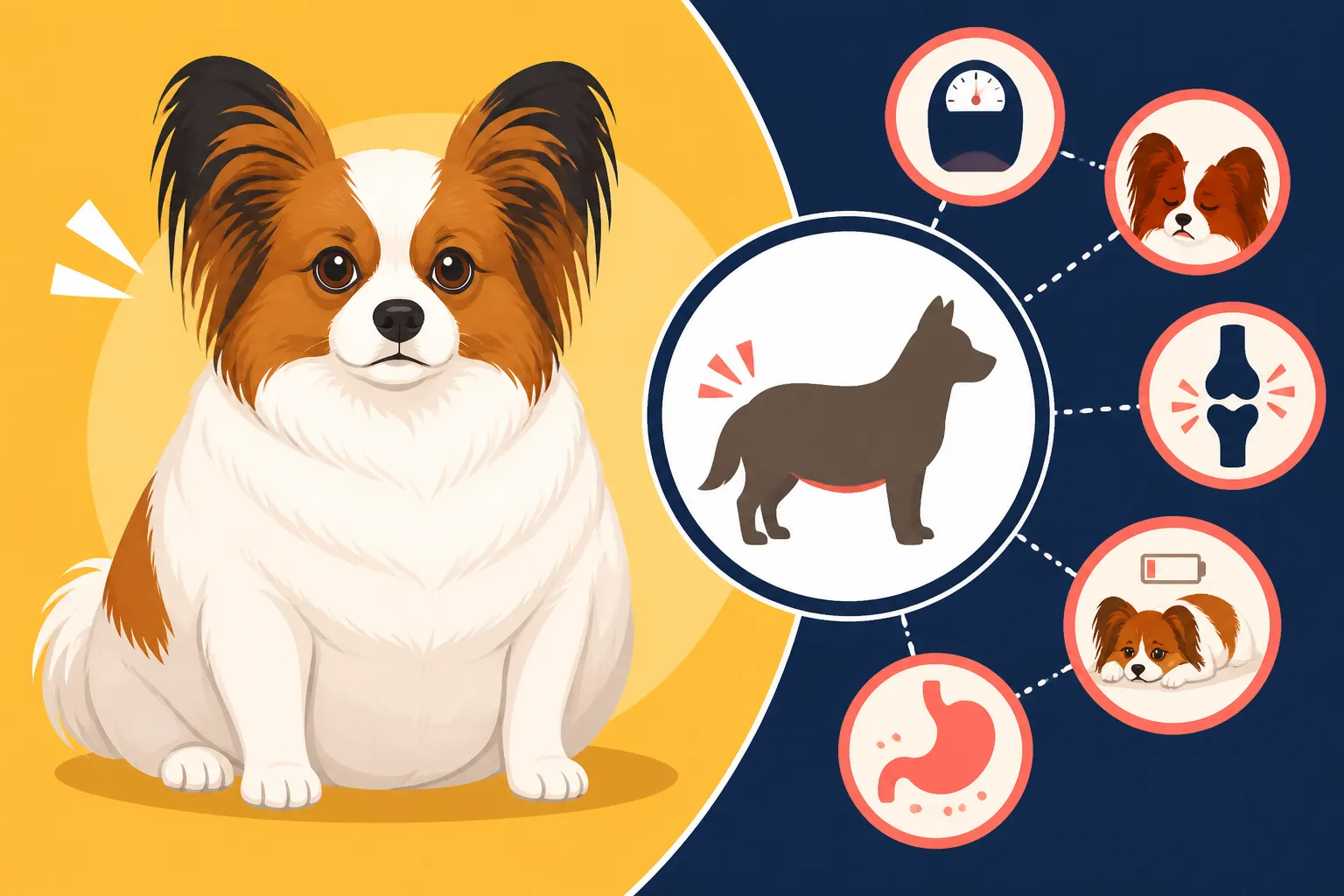
Signs a Papillon Is Overweight
It can be incredibly tricky to spot weight gain in a small, fluffy breed like the Papillon. Their beautiful, flowing coats often act like a clever disguise, making those extra ounces melt into an ethereal cloud of fur until suddenly, you realize your light-footed butterfly dog is starting to resemble more of a well-padded moth. This guide is here to help you peel back the layers, understand the subtle (and not-so-subtle) signs your Papillon might be carrying too much weight, and empower you with the knowledge to keep them healthy and spry.
The Subtle Art of Papillon Weight Gain – Why It's So Easy to Miss
Papillons are such delicate little creatures, and it's so natural for us as owners to want to spoil them rotten. A tiny extra treat here, a little bit more kibble there, and before you know it, those seemingly insignificant additions start to add up. The problem is, with their long, silky coats, it’s not always obvious that those delightful fringes are masking a bit of a potbelly.
The Papillon's Deceptive Feathering
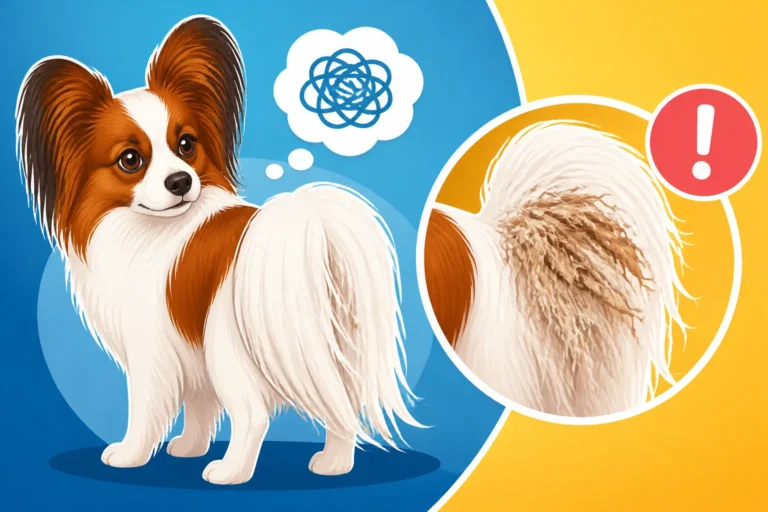
One of the biggest culprits in masking weight gain is, ironically, one of the Papillon's most defining and beautiful features: their long, flowing coat. Picture your sweet Papillon, with its magnificent butterfly ears and elegant tail plume. All that glorious feathering, especially around the chest, flanks, and hindquarters, can easily make a dog look fuller than they actually are. You might run your hand over their side and feel a soft cushion, dismissing it as just fluff. It’s a common mistake, one many of us have made. We think we're feeling coat, but we're actually feeling a bit of padding underneath. Why a Papillon's Coat Hides Weight Loss touches on this very issue from the opposite perspective, highlighting just how much their fur can conceal. It's truly a double-edged sword – stunning to look at, but a challenge for weight management observation.
Lifestyle Factors That Contribute to Creeping Pounds
Our modern lifestyles often play a huge role in our pets' weight, and Papillons are no exception. They're indoor dogs for the most part, often enjoying cozy naps on the sofa or snuggled in our laps. While this is one of the joys of owning a Papillon, it also means their daily activity might not be as high as a larger, more active breed. A few too many calories coupled with a sedentary routine can quickly lead to weight gain. Think about it: a few kibbles might be a drop in the ocean for a Golden Retriever, but for a tiny Papillon who might only need a quarter to a half cup of food a day, those extra bits really count. It's not about being neglectful, it's just about the cumulative effect of small indulgences in an otherwise loving home environment.
The "Treat Monster" Phenomenon
Let's be honest, who can resist those adorable, pleading Papillon eyes when they're begging for a treat? We all fall victim to it! The "treat monster" phenomenon is real, and it often starts with the best intentions. A tiny piece of cheese, a crumb from your dinner, a specially purchased dental chew – individually, they seem harmless. But if your Papillon gets a handful of these throughout the day, those calories add up, fast. Many commercial treats, even those marketed for small dogs, can be surprisingly high in calories. And if you're like me, sometimes we forget to account for those treats when we're measuring out their daily meal. It's an easy trap to fall into, especially when your little companion is so adept at convincing you they're absolutely starving.
How to Physically Assess Your Papillon's Body Condition
Since a Papillon's coat can be so misleading, the best way to determine their weight is by getting your hands on them and performing a thorough physical assessment. This isn't about looking at the number on the scale (though that's important too!), but about understanding their body condition, much like a veterinarian would.
The Rib Test: Feeling for Those Bony Landmarks
This is arguably the most crucial step in assessing your Papillon's weight. Gently run your fingers along your dog's sides, just behind their front legs. You should be able to easily feel their ribs, almost like the knuckles on your hand, without having to press hard. There should be a thin layer of muscle and skin over them, but no thick padding of fat. If you have to press down firmly to feel the ribs, or if you can't feel them at all, that's a significant red flag that your Papillon is carrying too much weight. Conversely, if the ribs feel prominent and sharp, almost like they're sticking out, your dog might be underweight. How to Feel a Papillon's Ribs provides a detailed guide on this technique, emphasizing the nuance needed to get it right. It takes a little practice, but once you know what to feel for, it becomes second nature.
The Waistline and Tummy Tuck Check
Next, move to their waistline. When viewed from above, a healthy Papillon should have a noticeable "tuck" or indentation behind their ribs, before their hips. Their body shape should resemble an hourglass, or at least a gentle curve, not a straight line or a widening barrel. If you look down at your Papillon and they have a straight line from chest to tail, or worse, if they bulge outwards, it's a strong indicator of excess fat. Now, move to their side profile. A healthy Papillon should have an abdominal tuck, meaning their belly should gently slope upwards from their chest to their hind legs. There shouldn't be a sagging or rounded belly. If their underside hangs low or creates a straight line parallel to the ground, that's another sign of being overweight.
Observing Your Papillon from Above and the Side
Beyond the hands-on tests, simply observing your Papillon can offer valuable clues. From above, as mentioned, look for that distinct waist. A Papillon that is well-conditioned will have a definite indentation. From the side, look at their overall silhouette. Their back should be relatively straight or slightly arched, but not saggy or rounded downwards. Their neck should blend smoothly into their shoulders, not appear thick or have rolls of fat.
Here's a quick reference table to help visualize the body condition:
| Body Condition Score | Ribs | Waistline (Top View) | Abdominal Tuck (Side View) | Overall Appearance |
|---|---|---|---|---|
| Too Thin | Easily visible, no fat cover | Extreme hourglass, severe tuck | Severe tuck, hollow flanks | Bones prominent, little muscle mass |
| Ideal | Easily palpable, thin fat cover | Clearly defined hourglass | Tucked up, not sagging | Well-proportioned, athletic |
| Overweight | Palpable with pressure, moderate fat | No hourglass, straight or bulging | Little to no tuck, rounded/saggy | Fuller body, some fat deposits |
| Obese | Difficult/impossible to feel | Wide/bulging, no visible waist | Pendulous abdomen, no tuck at all | Significant fat deposits, cumbersome movement |
This table provides a generalized guide. Always remember to consider your individual Papillon's build.
Behavioral Cues That Hint at Excess Weight
Physical assessment is vital, but don't overlook the subtle behavioral changes your Papillon might exhibit. Sometimes, these are the first real indicators that something isn't quite right, even before you notice a significant change on the scale.
Changes in Energy Levels and Playfulness
Has your once-bouncy Papillon, who used to leap off the sofa in a single bound to greet you, started moving a bit slower? Are they less enthusiastic about their favorite toys, or do they tire out more quickly during playtime? A noticeable drop in energy, a reluctance to engage in games they once loved, or shorter play sessions can all be signs that carrying extra weight is making them less agile and comfortable. They might still want to play, but their body just can't keep up the way it used to. This isn't just about getting older; even a young Papillon can show these signs if they're overweight.
Reluctance or Difficulty with Movement
This is a really important one to pay attention to. If your Papillon hesitates before jumping onto the couch (which they once cleared effortlessly), struggles to go up or down stairs, or seems stiff after resting, excess weight could be putting undue strain on their tiny joints. Papillons are already prone to certain orthopedic issues, like Patellar Luxation Is the Papillon Problem You Will Actually Meet, so adding extra pounds only exacerbates these underlying vulnerabilities. You might notice them "skipping" a step, or bunny-hopping with their back legs, which could be a sign of discomfort. Sometimes, they might just lie down more often, opting out of activities that require too much effort. Consider installing ramps for furniture if this becomes an issue; Whether a Papillon Should Jump Off the Sofa discusses the impact of such jumps on their delicate structure.
Increased Panting or Breathing Difficulties
Even with their beautiful long coats, Papillons don't typically overheat easily unless it's genuinely scorching hot or they've been exercising vigorously. If your Papillon is panting more than usual after minimal exertion, or seems to be breathing harder even when resting, it could be a sign that the extra weight is putting a strain on their respiratory and cardiovascular systems. Fat deposits can accumulate around the chest cavity, making it harder for their lungs to expand fully. This isn't just uncomfortable for them; it can be a serious health concern that warrants immediate attention. Always consult your vet if you notice consistent or severe breathing difficulties.
Health Implications of an Overweight Papillon
It’s easy to think of a little extra fluff as harmless, especially on such a small dog. But for a Papillon, those extra pounds can have significant and lasting impacts on their health and overall well-being. This isn't just about looking good; it's about giving them the best possible chance at a long, healthy life.
Exacerbating Joint Issues Like Patellar Luxation
Papillons, like many small breeds, are genetically predisposed to conditions such as patellar luxation, where the kneecap slips out of place. What Patellar Luxation Does to a Papillon details the mechanics and impact of this condition. Even a mild case can become painful and debilitating if your dog is carrying extra weight. Every added ounce puts more pressure on those delicate knee joints, increasing friction and wear, and potentially accelerating the degeneration of cartilage. Imagine trying to walk with a backpack full of bricks all day – that's what it can feel like for your Papillon's tiny knees when they're overweight. It can lead to early-onset arthritis and increase the likelihood of needing costly and invasive surgery. This is why managing their weight is not just a preference, but a critical component of preventative health care. Why an Overweight Papillon Strains Its Knees further explores this direct correlation, emphasizing the serious consequences.
Increased Risk for Other Health Concerns
Beyond joint problems, excess weight in Papillons can open the door to a host of other serious health issues. Just like in humans, obesity in dogs is linked to conditions such as diabetes, heart disease, and high blood pressure. Their small bodies are simply not designed to carry extra fat, and the internal organs have to work much harder under the added strain. Overweight dogs are also more susceptible to certain types of cancer and liver disease. Even seemingly minor issues, like skin fold infections (though less common in Papillons with their single coat) or problems with anesthesia during necessary procedures, can be complicated by excess weight. It can also impact their ability to regulate body temperature, making them more prone to overheating.
Impact on Overall Quality of Life and Longevity
Ultimately, being overweight significantly diminishes your Papillon's quality of life. They might be in constant discomfort, unable to enjoy walks or playtime to their fullest. Their joyful, energetic spirit can be dulled by the physical burden. An overweight Papillon simply can't experience life with the same zest as a healthy one. Furthermore, obesity is a known factor in shortening a dog's lifespan. We all want our beloved Papillons to live as long as possible – they truly are family members. How Long a Papillon Lives highlights their impressive longevity, but this is only achievable when they are kept in optimal health. Allowing them to become overweight steals precious years from them and from you.
Taking Action: What to Do If Your Papillon Is Overweight
Discovering your Papillon is overweight can feel a bit disheartening, but please don't beat yourself up! The good news is that you've identified the problem, and now you can take proactive steps to help them get back to a healthy weight. It's a journey, not a sprint, and consistency is key.
Consulting Your Veterinarian
The very first and most important step is to schedule a visit with your veterinarian. They can accurately assess your Papillon's current weight and body condition, rule out any underlying medical conditions that might be contributing to weight gain (though this is rare), and help you develop a safe and effective weight loss plan. Your vet can recommend a specific target weight, advise on appropriate food types and portion sizes, and suggest a safe exercise regimen tailored to your dog's individual needs and any pre-existing conditions like What Patellar Luxation Does to a Papillon. They might suggest a prescription weight-management diet or advise on specific commercial foods. Don't skip this step – professional guidance is invaluable. They can also discuss potential costs, as seen in What a Papillon's Yearly Vet Visit Costs, so you're prepared.
Adjusting Diet and Portion Sizes
Once you have your vet's recommendations, it's time to get serious about diet. This is usually the biggest factor in weight loss.
- Measure Everything: Stop "eyeballing" portions. Invest in a proper measuring cup or, even better, a small digital kitchen scale to weigh out your Papillon's kibble accurately. Even a few extra grams a day can make a difference for such a small dog. How Much an Adult Papillon Eats provides general guidelines, but your vet's specific advice should take precedence.
- Choose the Right Food: Your vet might suggest a lower-calorie, high-fiber kibble designed for weight management. These foods help your dog feel fuller without consuming too many calories. Look for brands that focus on quality ingredients. Many popular pet supply retailers like Chewy or Amazon offer a wide selection of these specialized diets, often with detailed nutritional information to help you compare.
- Rethink Treats: This is a tough one, but crucial. Cut out high-calorie treats. Instead, offer small pieces of fresh vegetables like green beans, carrots, or apple slices (without seeds) as healthy alternatives. If you must use commercial treats, break them into tiny pieces and use them sparingly. Remember to factor any treats into their daily calorie allowance.
- Consider Fresh Options: Some owners find success with fresh-prepared meal services like Ollie, which can offer precisely portioned, nutritionally balanced meals. Always discuss such changes with your vet first to ensure they meet your Papillon's specific dietary needs.
Boosting Activity Levels Safely
Diet is primary, but increased activity supports weight loss and improves muscle tone.
- Daily Walks: Aim for consistent, moderate daily walks. Two 15-20 minute walks a day are generally good for a Papillon, but adjust based on your dog's stamina and health. Start slow if your Papillon is very out of shape, and gradually increase duration and intensity.
- Playtime: Engage in interactive playtime indoors or in a securely fenced yard. Games like fetch, hide-and-seek with toys, or even just chasing a feather wand can get their heart rate up and burn calories. Remember, a Papillon might be small, but they're still dogs who love to play!
- Mental Stimulation: Don't forget mental exercise! Puzzle toys that dispense kibble can make mealtime longer and more engaging, burning a few extra calories and stimulating their bright minds.
- Avoid High-Impact Jumps: If your Papillon is overweight, high-impact activities like jumping off furniture should be strictly minimized to protect their joints. Ramps or pet stairs can be incredibly helpful here. Getting Weight Off a Papillon delves deeper into creating a comprehensive plan that combines both diet and exercise effectively.
Helping your Papillon achieve and maintain a healthy weight is one of the most loving things you can do for them. It might require a bit more vigilance and discipline on your part, but seeing them regain their youthful bounce and vitality is truly rewarding. It ensures they live their fullest, happiest, and longest life by your side.
Disclaimer
This article is for general informational purposes only and does not constitute professional advice. Laws, prices and regulations vary by location and change over time. Consult a qualified professional for guidance on your specific situation.