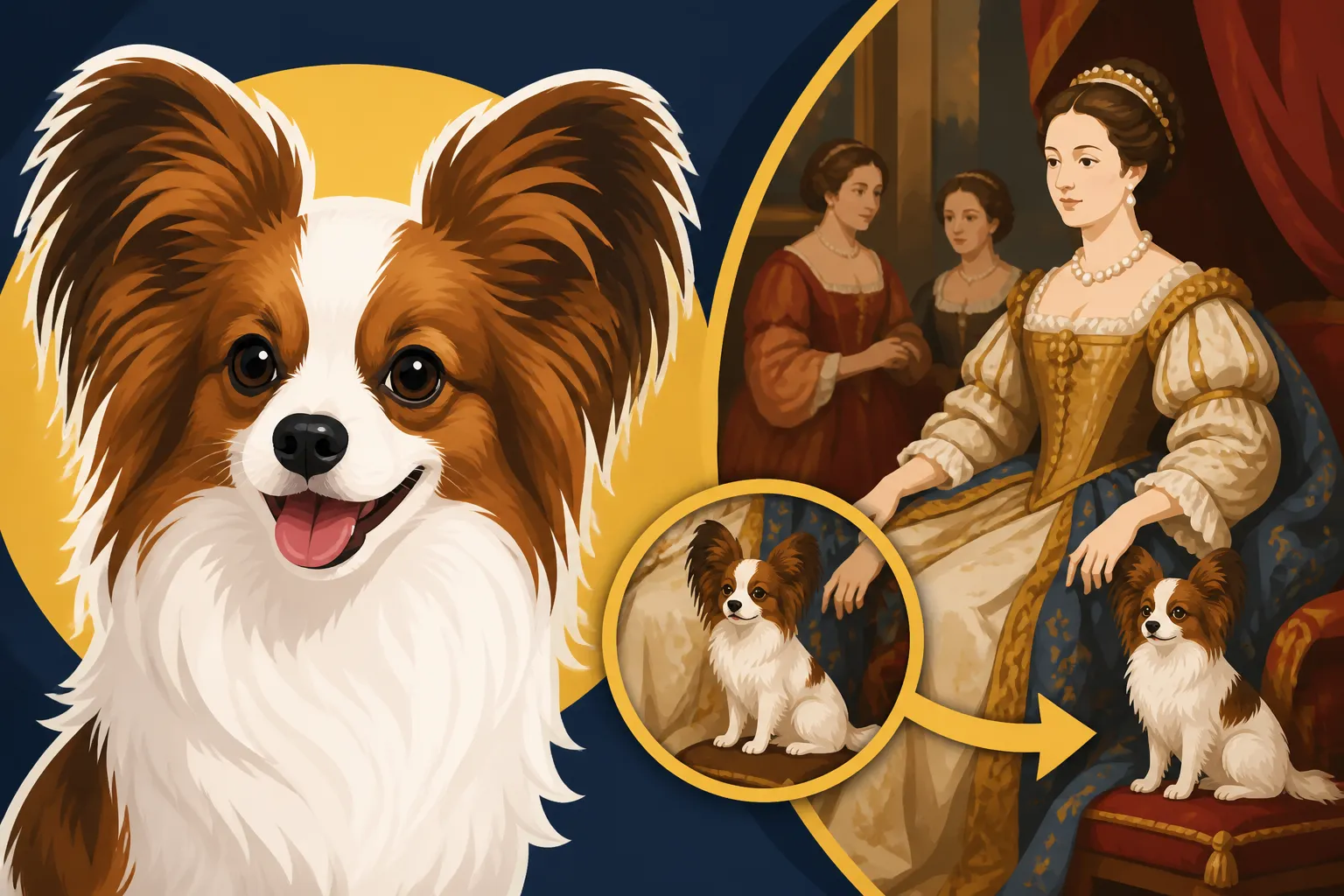
Whether the Papillon Appears in Spanish Court Paintings
It's a fascinating journey to trace the history of our beloved Papillons, especially when you start wondering if their aristocratic ancestors graced the canvases of old European masters. Many of us have seen those regal portraits with tiny, elegant dogs, and it naturally sparks curiosity: were those our butterfly-eared friends, or a very similar relative? This guide will dive into the history of small companion dogs in art, specifically exploring whether the distinct Papillon breed, as we know it, ever made an appearance in Spanish court paintings.
The Long History of Dwarf Spaniels in European Nobility
Before the Papillon, with its distinctive erect, butterfly-like ears, truly came into its own, there was a widespread love for small companion dogs, often referred to generally as "dwarf spaniels." These tiny canines were staples in the courts and homes of European nobility for centuries, valued for their charm, affectionate nature, and their undeniable ability to provide warmth and comfort.
The Broad Appeal of Small Companion Dogs in Royal Courts
Imagine the grand, often cold, castles and manor houses of Renaissance and Baroque Europe. Life, even for the wealthy, could be rather austere compared to our modern comforts. Small dogs offered more than just companionship; they were living hot water bottles, nestling in laps or under cloaks, providing a tangible source of warmth. Beyond that, they served as status symbols, often adorned with collars of precious metals and gemstones, reflecting their owner's wealth and refinement. These little dogs were also seen as fashion accessories, carried by noble ladies and gentlemen alike, appearing in countless portraits as loyal, cherished members of the household. They were far more than just pets; they were confidantes, entertainment, and a testament to the softer side of courtly life. The very presence of such a delicate creature suggested a pampered existence, a world away from the harsh realities faced by common folk. Indeed, the history of these dogs stretches back far, as you can read in The Papillon Has Seven Hundred Years of Portraits Behind It.
The "Titian Spaniel" – An Early Canine Celebrity
When we talk about the ancestors of the Papillon, particularly the drop-eared Phalene type, one name often comes up: the "Titian Spaniel." This isn't a formally recognized breed by modern standards, but rather a descriptor for the small, long-haired, drop-eared spaniel-like dogs frequently depicted in the works of the Venetian master Titian and his contemporaries during the 16th century. These dogs typically had soft, flowing coats, elegant heads, and a refined appearance, making them perfect subjects for the opulent portraits of the era. They were clearly beloved, often placed prominently in the arms or at the feet of their aristocratic owners, capturing a sense of intimacy and luxury.
These "Titian Spaniels" represent a key ancestral type, a common pool of small, continental dwarf spaniels from which many modern toy breeds, including the Papillon, eventually developed. They were particularly popular in Italy and Flanders, and their influence spread across Europe. They exemplified What a Dwarf Spaniel Was, a small, decorative dog, and understanding their look helps us trace the visual lineage of the Papillon. Their presence in art tells us so much about the social role these dogs played, highlighting their importance not just as pets, but as integral parts of the elite's self-image.
Hunting for Papillon-Like Dogs in Spanish Masterpieces
Now, let's turn our gaze to the Iberian Peninsula. Spanish court painters, much like their counterparts in other European nations, frequently included dogs in their portraits. But were these dogs specifically Papillon ancestors, or other types of small canines?
Diego Velázquez: Depicting Nobility and Their Pets
Diego Velázquez, the renowned court painter to King Philip IV of Spain in the 17th century, is famous for his incredibly realistic and penetrating portraits. If anyone were to capture a Papillon-like dog in Spanish court life, it would be him, right? When we look at his masterpieces, we certainly see dogs. However, many of the more prominent canine subjects in Velázquez's works, such as those in "Las Meninas" or "Philip IV on Horseback," tend to be larger breeds—Mastiffs, Greyhounds, or other hunting dogs, often depicted in a more symbolic or stately manner. These larger dogs often symbolized power, loyalty, or the hunt, befitting their royal owners' status.
While Velázquez did paint smaller dogs occasionally, they often appear to be more robust, almost terrier-like, or simply generic small dogs without the distinct elegance and head shape we associate with the Papillon's ancestors. For instance, in "Las Meninas," the famously grumpy dog in the foreground is clearly a Mastiff, dwarfing the princess. There are sometimes smaller, less defined dogs in other portraits, but none consistently display the delicate features and distinct drop-ear fringe of the "Titian Spaniel" or the later butterfly ears of the Papillon. It’s a testament to the artist's focus on his human subjects and their grand context that the canine companions, when present, tend to be either symbolic giants or more generic background elements.
Francisco Goya: A Later Lens on Spanish Canine Companions
Moving into the late 18th and early 19th centuries, Francisco Goya, another giant of Spanish art, also painted members of the royal family and aristocracy. Goya’s work is known for its psychological depth and, at times, its unflinching realism, capturing both the splendor and the decay of his era. When it comes to dogs, Goya's most famous canine subject is perhaps the haunting "Dog" (sometimes known as "Head of a Dog") from his Black Paintings series, which depicts just the head of a dog peeking over a dark, barren expanse. This abstract and melancholic image, however, tells us little about specific breeds in court.
In his more traditional portraits, such as "The Family of Charles IV," we again see a variety of human subjects, but small companion dogs are not a dominant feature. If they appear at all, they are often discreet, and like Velázquez's dogs, they don't strongly resemble the specific type of dwarf spaniel that directly led to the Papillon. By Goya's time, while small dogs were still popular, the specific aesthetic of the Papillon, particularly with its erect "butterfly" ears, was still consolidating its identity, largely driven by breeding trends in France and Belgium. Goya's paintings, therefore, rarely offer clear evidence of Papillon-type dogs as we envision them today.
The Distinguishing Feature: When Did the Butterfly Ears Emerge?
The crucial distinction here is the ears. The word "Papillon" literally means "butterfly" in French, referring to the large, erect, fringed ears that give the breed its iconic look. Its drop-eared counterpart is called the Phalene, meaning "moth." Both types can be born in the same litter, demonstrating their close genetic relationship. However, the erect-eared Papillon we recognize today is a relatively later development in the breed's history. For centuries, the ancestors of the Papillon were predominantly drop-eared "dwarf spaniels" or Phalene types. The erect ear only became fashionable and carefully bred for much later, particularly in the 17th and 18th centuries in France and Belgium.
Therefore, even if we were to find small, long-haired spaniels in Spanish court paintings, they would almost certainly be the drop-eared variety. These would be considered ancestors of both the Papillon and the Phalene, part of that broader "dwarf spaniel" family, but not the specific "Papillon" with its erect ears. The emergence of the butterfly ear was a deliberate breeding choice, gaining immense popularity in French and Belgian courts, which then influenced the breed's development globally. For more on this, check out When the Erect Ear First Appeared and Papillon Means Butterfly and Phalene Means Moth.
Why a True "Papillon" Is Unlikely in Earlier Spanish Art
While Spanish royalty certainly appreciated small dogs, the specific characteristics and geographical origins of the Papillon make its widespread appearance in earlier Spanish court paintings quite improbable.
Geographical Focus: The Papillon's French and Belgian Roots
The Papillon, as a distinct breed with its signature erect ears, is most strongly associated with France and Belgium. It was in these countries that breeders consciously cultivated the "butterfly" ear type from the existing pool of continental toy spaniels. The breed's popularity soared in French court circles, with figures like Madame de Pompadour and Marie Antoinette famously owning these charming little dogs. Their development was tied to specific regions and aristocratic tastes that flourished in those locales.
Spain, while connected through royal marriages and political ties, often had its own cultural and breeding trends. The focus in French and Belgian kennels on developing the erect ear, which eventually gave the Papillon its name, meant that these specific features became firmly established there first. While dogs certainly traveled with their owners across borders, the Papillon's rise to prominence and its recognizable form happened primarily outside of Spain in its formative centuries. To understand its origins more deeply, consider Where the Papillon Comes From.
The Dominance of Other Small Breeds in Iberian Peninsula
It's not that Spanish courts lacked small, charming dogs; rather, they tended to favor other breeds or types that were either indigenous or more commonly imported from other regions. The Maltese, for example, with its ancient lineage and distinctive white coat, was incredibly popular across many European courts, including Spain. Other small, shaggy white dogs, often lumped under general "Bichon" types, also made their way into royal households. These dogs offered similar companionship and status but carried different physical traits than the direct ancestors of the Papillon.
The aesthetic preferences for small dogs could vary significantly from one European court to another. While the "dwarf spaniel" type was a broad category, the specific refinements and ear types that led to the Papillon were cultivated in distinct breeding centers. Spain had its own traditions, and the artistic depictions reflect these local or preferred canine companions, which often diverged from the French and Belgian trends that shaped the Papillon.
Here’s a small comparison to help illustrate the differences:
| Feature | Early "Dwarf Spaniel" (e.g., in Titian/Velázquez) | Modern Papillon (Defined Breed) |
|---|---|---|
| Ear Type | Typically drop ears (Phalene type) | Erect, butterfly-like ears (Papillon type) |
| Size | Small, toy-sized | Small, toy-sized |
| Build | Fine-boned, elegant | Fine-boned, elegant |
| Coat | Long, silky, fringed | Long, silky, fringed |
| Prominence in Art | Widespread across European courts | More defined presence in French/Belgian art |
| Key Distinction | General type, precursor to many toy breeds | Specific breed with distinct ear carriage |
Beyond the Canvas: The Enduring Charm of the Modern Papillon
While direct evidence of the erect-eared Papillon in Spanish court paintings is scarce, the journey through art history still enriches our understanding of the breed's heritage and the broader role of companion dogs throughout the centuries.
Interpreting History Through Canine Art
Studying old paintings is an invaluable way to understand the past, but it also comes with its nuances. Artists, even those as realistic as Velázquez and Goya, were capturing a moment, often with a specific symbolic or aesthetic purpose in mind. Breeds themselves were not as standardized as they are today, and many dogs in paintings represent general types rather than precisely defined breeds. It’s like looking at a family tree; you can see resemblances and common ancestors without seeing an exact modern counterpart in every branch. The small, lively companion dog, with its long, silky coat and often expressive eyes, certainly has a long and celebrated lineage across Europe, even if the "butterfly" ear became a signature feature later on. The broader category of dwarf spaniels had an extensive reach, as evidenced by Which Courts Kept Dwarf Spaniels and Why Renaissance Ladies Carried a Dwarf Spaniel.
Caring for Today's Agile and Intelligent Companion
Today's Papillon is a vibrant, intelligent, and highly adaptable companion, celebrated for far more than its historical presence in paintings. These dogs are known for their quick wit, agility, and boundless energy, making them stars in dog sports like agility and obedience. Their elegant appearance, with that flowing coat and magnificent ear fringe, still makes them stand out, but it's their personality that truly wins hearts.
Caring for a modern Papillon involves appreciating their unique needs, from their fine, single coat that requires regular, gentle brushing to keep it free of mats, to their active minds that thrive on mental stimulation and training. Good nutrition is key, ensuring they have the energy for their busy lives, and finding appropriate foods and supplies is easier than ever. You can find a wealth of excellent resources for everything from their specialized diet to the right brushes for their beautiful coats on platforms like Chewy. Their small size means they can thrive in various living situations, but their need for interaction and engagement is universal. They are truly "more dog than they look," a tiny package bursting with intelligence and joy, ready to charm their way into your life, just as their ancestors did centuries ago.
Disclaimer
This article is for general informational purposes only and does not constitute professional advice. Laws, prices and regulations vary by location and change over time. Consult a qualified professional for guidance on your specific situation.