Whether Papillon Owners Would Choose One Again
A Papillon can be a delightful companion: bright, affectionate, and ready to learn. But the same dog may also bark at every hallway noise, struggle with being left alone, or need more training and dental care than a new owner expected. This guide explains why many Papillon owners would choose the breed again, what gives others pause, and how to judge whether one fits your life.
Why Papillon owners often choose the breed again
A small dog with a big appetite for life
Papillons are often described as lively, alert, and clever, and those traits can make everyday life with one feel unusually interactive. A Papillon may learn household routines quickly, notice the sound of a delivery at the door, and be ready for a game or short training session when you thought the afternoon was quiet. Owners who enjoy an engaged companion often find this personality a major reason to choose the breed again.
Their size can also make them practical for homes where a large dog would be difficult to manage. A Papillon can usually join its person on errands or travel more easily than a bigger dog, provided the outing is safe and the dog is comfortable. But “small” does not mean “low effort.” These dogs still need exercise, social experiences, regular care, and thoughtful supervision.
Many people are drawn to the Papillon’s expressive face and distinctive fringed ears. Looks may start the attraction, but a dog’s temperament and daily needs determine whether the match lasts. If you are still learning what makes the breed distinct, What a Papillon Weighs and How Tall It Stands and The Papillon Against the Pomeranian and the Chihuahua offer useful context for comparing size and type.
Intelligence makes training rewarding, but not automatic
A Papillon’s quick mind can make training fun. Many enjoy learning cues, tricks, and small household jobs, especially when sessions are brief and rewards are worthwhile. An owner who likes teaching a dog may find that the relationship grows through everyday practice: waiting at a door, settling on a mat, or coming when called in a secure area.
That intelligence can also create friction. A dog that learns quickly may learn unwanted habits just as quickly, including barking for attention or dashing through an open doorway. Papillons need consistency, rather than harsh correction. If one person allows a behavior and another tries to stop it, the dog may keep testing which response works.
Owners who enjoy training are more likely to see the breed’s cleverness as a pleasure rather than a chore. Those who want a dog that simply entertains itself for long stretches may find the Papillon demanding. For a closer look at the mental side of living with one, see The Papillon Is the Smartest Toy Breed There Is and What a Papillon Needs Every Day.
What can make an owner hesitate
Barking, companionship, and time alone
Papillons are alert dogs, and some are quick to announce footsteps, visitors, other dogs, or unfamiliar sounds. In a detached house, that may feel like useful communication. In an apartment or a home with thin walls, frequent barking can become stressful for the owner and the neighbors. Early practice can help, but it works best when the household responds consistently and gives the dog other ways to settle.
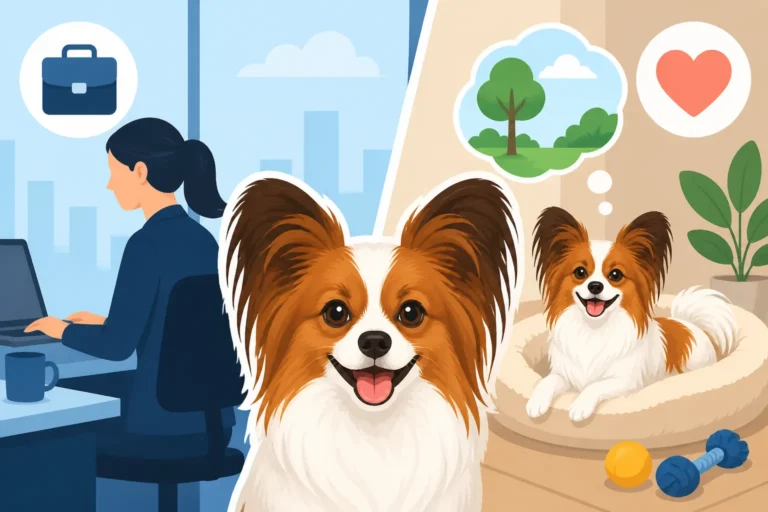
The breed’s attachment to people is another double-edged quality. A Papillon that follows its owner from room to room may feel wonderfully companionable. Yet a dog that has never learned to spend time alone calmly can struggle when the owner goes to work, runs errands, or closes a door for a meeting. Gradually building independence is kinder and more realistic than expecting a puppy to cope with a long absence immediately.
Owners who would choose a Papillon again often make room for companionship and training in their routine. That does not mean being with the dog every minute. It does mean planning predictable activity, practicing short absences, and arranging appropriate care when the schedule changes. If your workday is long, think carefully about what support you can provide before choosing any highly people-oriented dog. How Long a Papillon Copes Alone and Signs a Papillon Has Separation Anxiety can help you understand the distinction between ordinary adjustment and a more serious struggle.
Small size brings practical responsibilities
A Papillon’s compact body can be convenient, but it also means owners need to take handling and the home environment seriously. A fall from furniture or a rough interaction with a much larger dog may pose a real risk. Children should learn not to pick the dog up without help, squeeze it, or treat it like a toy. Supervision matters even when a dog is friendly and the child means well.
Some owners also find that the breed’s dental needs demand more attention than expected. Small mouths can be crowded, and regular tooth brushing is easier to maintain than trying to catch up after plaque has accumulated. Routine veterinary care, nail trimming, grooming, and monitoring weight are part of responsible ownership—not optional extras because the dog is small.
For a new owner estimating the everyday commitment, it helps to separate the tasks by frequency:
| Responsibility | What it may look like in daily life | Why it matters |
|---|---|---|
| Training and enrichment | Short practice sessions, play, or food puzzles | Helps channel energy and keep the dog engaged |
| Exercise and outings | Walks and safe opportunities to explore | Supports fitness and provides variety |
| Companionship | Planned interaction and gradual alone-time practice | Helps the dog settle into household routines |
| Coat care | Regular brushing and checking feathering for tangles | Prevents small knots from becoming uncomfortable mats |
| Dental care | Tooth brushing and veterinary dental discussions | Helps address oral health before problems become advanced |
| Safe handling | Close supervision around furniture, children, and larger dogs | Reduces avoidable injury risks |
If you are comparing care routines, Brushing a Papillon's Teeth in a Very Small Mouth explains why dental care deserves a place in the weekly routine. For home safety, Setting Up a House That Protects a Papillon's Knees is a useful companion read. Owners shopping for appropriately sized supplies sometimes browse Chewy to compare product dimensions, but fit and safety matter more than choosing an item simply because it is labeled for a small dog.
Who is most likely to choose a Papillon again
The owner who enjoys an involved companion
A Papillon may suit someone who likes a dog with opinions, curiosity, and a willingness to participate. This could be a person who enjoys teaching tricks, taking the dog on suitable outings, or building small routines into the day. The owner does not need to be an athlete or a competitive trainer, but they should be prepared to offer more than a quick trip outdoors and a bowl of food.
The breed can also be a rewarding match for someone who appreciates a dog that notices what is happening around it. That alertness can make a Papillon feel present and connected. It can also mean that a quiet household is not guaranteed. A thoughtful owner will look at how the dog responds to sounds and visitors, then work on calm behavior rather than expecting the dog to stop being alert altogether.
A good match depends on the individual dog, too. Age, early experiences, health, and temperament all shape daily life. A puppy may require significant work on house training and confidence, while an adult dog may already have established habits. If considering adoption, ask what the dog is like when left alone, around children and other animals, and in noisy environments. Who the Papillon Actually Suits and What Papillon Owners Wish They Had Known can help you make those questions more specific.
The owner prepared for grooming and health routines
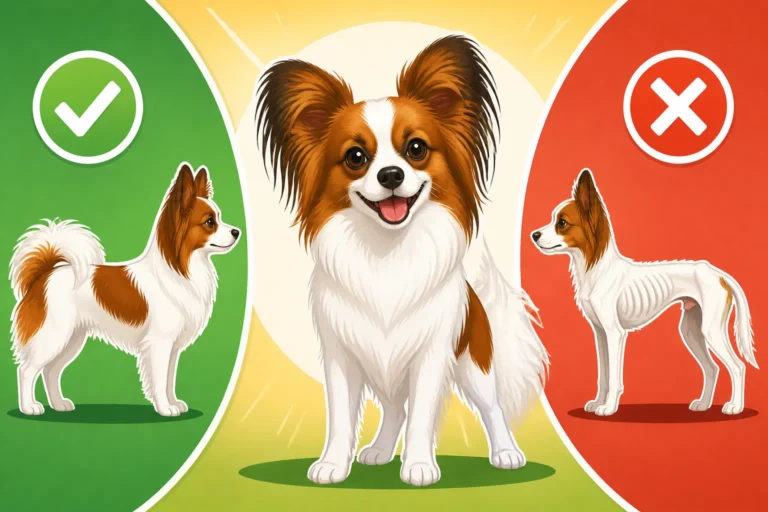
Papillons do not have the same grooming needs as every long-coated breed, but their feathering still needs regular attention. Brushing is especially useful around areas where tangles can form, such as behind the ears and in the longer coat on the legs and tail. Owners who expect a completely maintenance-free coat may be surprised by the small but recurring effort.
Health care is another part of the decision. No breed is free of health concerns, and an individual Papillon’s needs should be discussed with a veterinarian. Owners should be ready for routine checkups and to act if they notice changes in movement, appetite, vision, breathing, or behavior. Choosing a responsible breeder or asking detailed questions when adopting can also help you understand the dog’s history and what care may be appropriate.
When comparing grooming tools or dental supplies, Chewy may be one place owners look for product options, alongside local pet shops and veterinary recommendations. For a Papillon, the useful question is not which product is most heavily marketed; it is whether the brush, comb, toothbrush, or harness is comfortable, correctly sized, and suitable for the dog. Chewy can also be a convenient place to compare different item dimensions, but your veterinarian or groomer can help when you are unsure what is safe for your dog’s coat or body.
How to decide whether you would choose one again
Picture an ordinary week, not an ideal one
It is easy to imagine a Papillon at its best: learning a trick, trotting through a park, or curling up beside its person. A more reliable decision comes from picturing the less polished parts of an ordinary week. What happens when the dog barks during a work call? Who will practice alone time? Can you fit in walks and play when the weather is poor? Will you keep up with brushing and tooth care even when you are busy?
It also helps to consider the dog’s needs at different life stages. A puppy’s schedule and supervision needs differ from those of a settled adult. An older dog may need changes to exercise, home access, or veterinary care. A Papillon’s long-term companionship can be a major joy, but it is also a commitment that can continue well beyond the years a new owner first pictures. For more on that time horizon, see How Long a Papillon Lives.
Try this simple decision check before bringing one home:
- Write down how much time you can reliably give the dog on a typical weekday.
- Identify who will handle walks, training, grooming, and veterinary appointments.
- Consider whether barking would create problems in your home or neighborhood.
- Plan how the dog will be cared for during work, travel, or unexpected schedule changes.
- Ask a breeder or rescue about temperament, health history, and the dog’s experience with everyday situations.
- Be honest about whether you enjoy training and interaction or mostly want a quiet, independent pet.
A realistic answer to “Would I choose one again?”
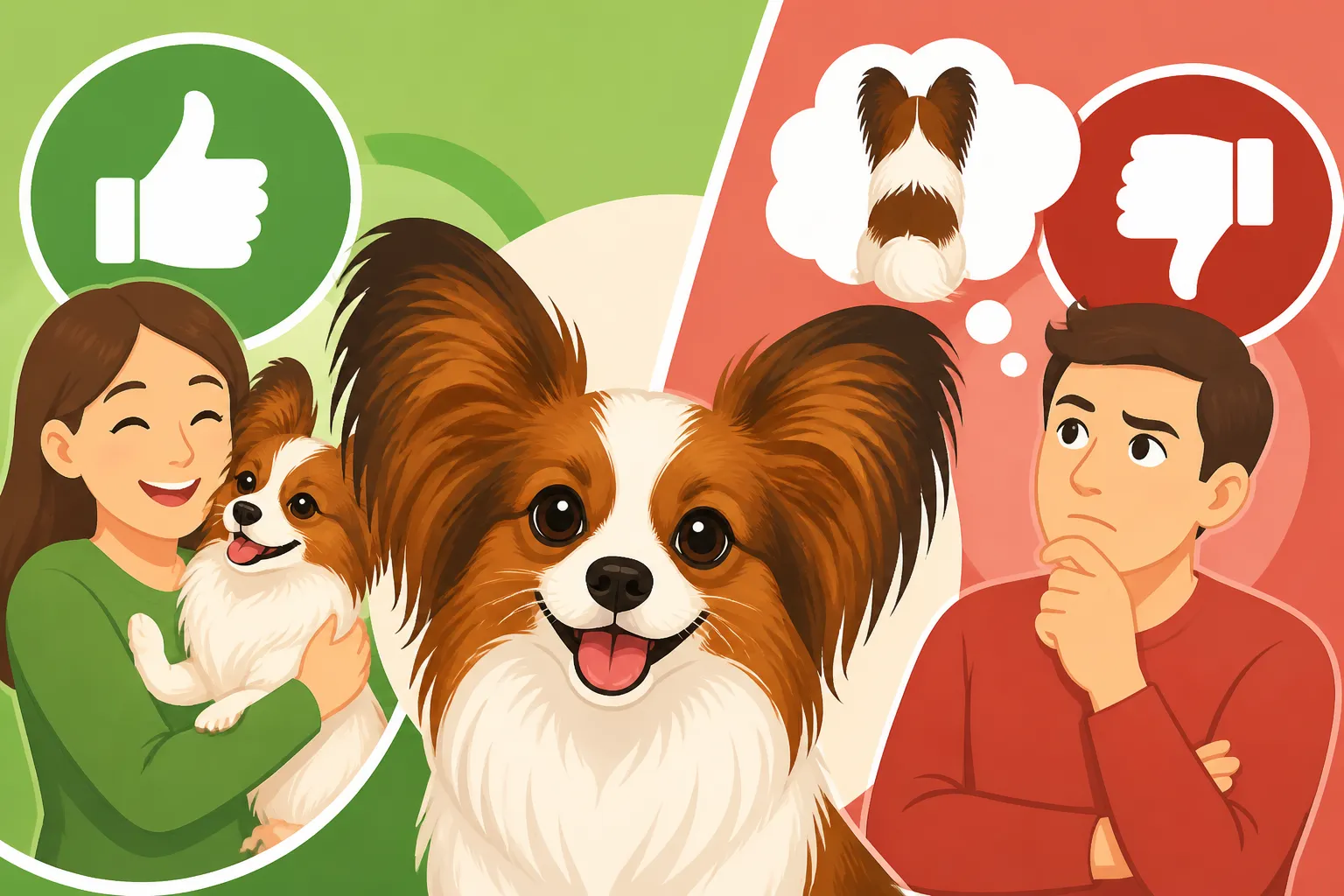
Many owners who value an affectionate, clever, energetic little companion may answer yes. Their reasons often include the Papillon’s trainability, playful character, portability, and close connection with people. They may appreciate that a small dog can still enjoy active games and learn complex routines.
Other owners may love their dog while recognizing that they would choose a different breed next time. Barking, difficulty coping alone, health needs, or the amount of daily engagement can be a poor fit for some households. That answer does not mean the dog was a mistake or a bad companion. It may simply mean the owner learned what they need from a pet.
The most useful question is not whether Papillon owners as a group would choose one again. It is whether you would choose this kind of dog, with its strengths and demands, for your actual home and schedule. If you enjoy a bright dog who wants to be involved, and you can provide patient training, companionship, and routine care, a Papillon may be a deeply satisfying choice. If you need a dog that is reliably quiet, independent, and low-interaction, it is worth considering whether another temperament would suit you better.
Disclaimer
This article is for general informational purposes only and does not constitute professional advice. Laws, prices and regulations vary by location and change over time. Consult a qualified professional for guidance on your specific situation.