How a Papillon Responds to Correction
It can be incredibly disheartening when you're trying to teach your beloved Papillon something important, only for them to seem to shrink away, shut down, or even become more defiant in the face of what you might consider a mild correction. Many Papillon owners find themselves baffled, wondering why their intelligent little butterfly dog doesn't respond to traditional methods of discipline the way other dogs might. This guide is here to shed light on the unique way Papillons respond to correction, helping you understand their sensitive nature and implement training techniques that build trust and cooperation, rather than fear or confusion.
The Papillon's Innate Sensitivity and What It Means for Training
Papillons are renowned for their intelligence and vivacious spirit, but beneath that confident exterior often lies a deeply sensitive soul. They are not built for harshness, nor do they thrive under heavy-handed discipline. Understanding this fundamental aspect of their temperament is the first step towards effective and humane training.
Their Delicate Disposition
Unlike some more robust breeds that might shrug off a sharp "No!" or a stern leash correction, a Papillon is likely to take such interactions deeply to heart. They are incredibly attuned to human emotion, tone of voice, and body language. A raised voice or a sudden, firm gesture that you might intend as a quick deterrent can often be perceived by a Papillon as a significant threat or a severe rejection. This isn't them being dramatic; it's simply how their nervous system is wired. They don't typically have a high pain tolerance, either emotionally or physically, and their small size means they feel physical pressure much more intensely.
Imagine being in a foreign country where you don't speak the language, and someone suddenly shouts at you or gives you a sharp tug. Your instinct wouldn't be to understand and comply; it would likely be to feel confused, scared, and possibly defensive. A Papillon experiences something similar when subjected to corrections that don't make sense to them or feel intimidating. This sensitivity is part of their charm, making them wonderfully affectionate and empathetic companions, but it requires a gentle hand in training. When considering how to guide your Papillon, remember How Sensitive a Papillon Is and tailor your approach accordingly.
High Intelligence and Quick Learning
Despite their delicate nature, Papillons are absolute sponges when it comes to learning. They consistently rank among the most intelligent dog breeds, often surprising new owners with how quickly they pick up new commands, tricks, and routines. This intelligence means they don't need excessive repetition or forceful methods to grasp concepts. In fact, their quick minds can often become bored or frustrated if training isn't engaging and positive.
Because they are so smart, Papillons are also incredibly adept at reading situations and learning what works for them. If a particular behavior gets them attention, even negative attention, they might repeat it. If a correction is inconsistent or confusing, they'll pick up on that too, leading to frustration for both dog and owner. Their intelligence means they respond best to clear, consistent, and reward-based communication, which leverages their desire to please and their capacity for understanding. Harnessing their smarts means making learning a game, not a chore, and respecting their ability to figure things out without brute force. They truly are among The Papillon Is the Smartest Toy Breed There Is, and their training methods should reflect this high intellect.
Their Desire to Please (or Not, If Confused)
Many Papillons possess a strong desire to please their human companions, especially when they understand what's being asked of them and are rewarded for compliance. This inherent trait makes them fantastic candidates for positive reinforcement training. When they associate a behavior with a positive outcome – a treat, praise, a favorite toy, or even just your happy smile – they are much more likely to repeat it.
However, this "desire to please" can quickly turn into confusion or avoidance if corrections are too harsh, unclear, or frightening. A Papillon that doesn't understand why it's being corrected, or one that fears the correction itself, will often shut down. They might freeze, try to escape, or simply avoid interaction altogether. This isn't stubbornness; it's a coping mechanism. They're trying to escape discomfort or the unknown. If your Papillon consistently seems to "ignore" you after a correction, it's a strong indicator that the method is counterproductive. They might not be trying to be difficult, but rather are too stressed or confused to respond appropriately. This is why understanding What Motivates a Papillon is far more effective than trying to intimidate them.
Why Traditional Corrections Often Fall Short with a Papillon
Many traditional dog training methods, especially those rooted in older, dominance-theory ideas, rely heavily on various forms of correction. For a Papillon, these methods are not just ineffective; they can be actively harmful to their confidence and your bond.
The Problem with Physical Corrections
Any form of physical correction, such as tapping on the nose, leash jerks, or even holding them down, is generally a terrible idea for a Papillon. Their small, delicate bodies are easily injured, and their sensitive nature means such actions are perceived as frightening and aggressive. A sharp tug on a collar could easily cause damage to their delicate trachea, a common concern for small breeds, and can certainly make them wary of future leash walks.
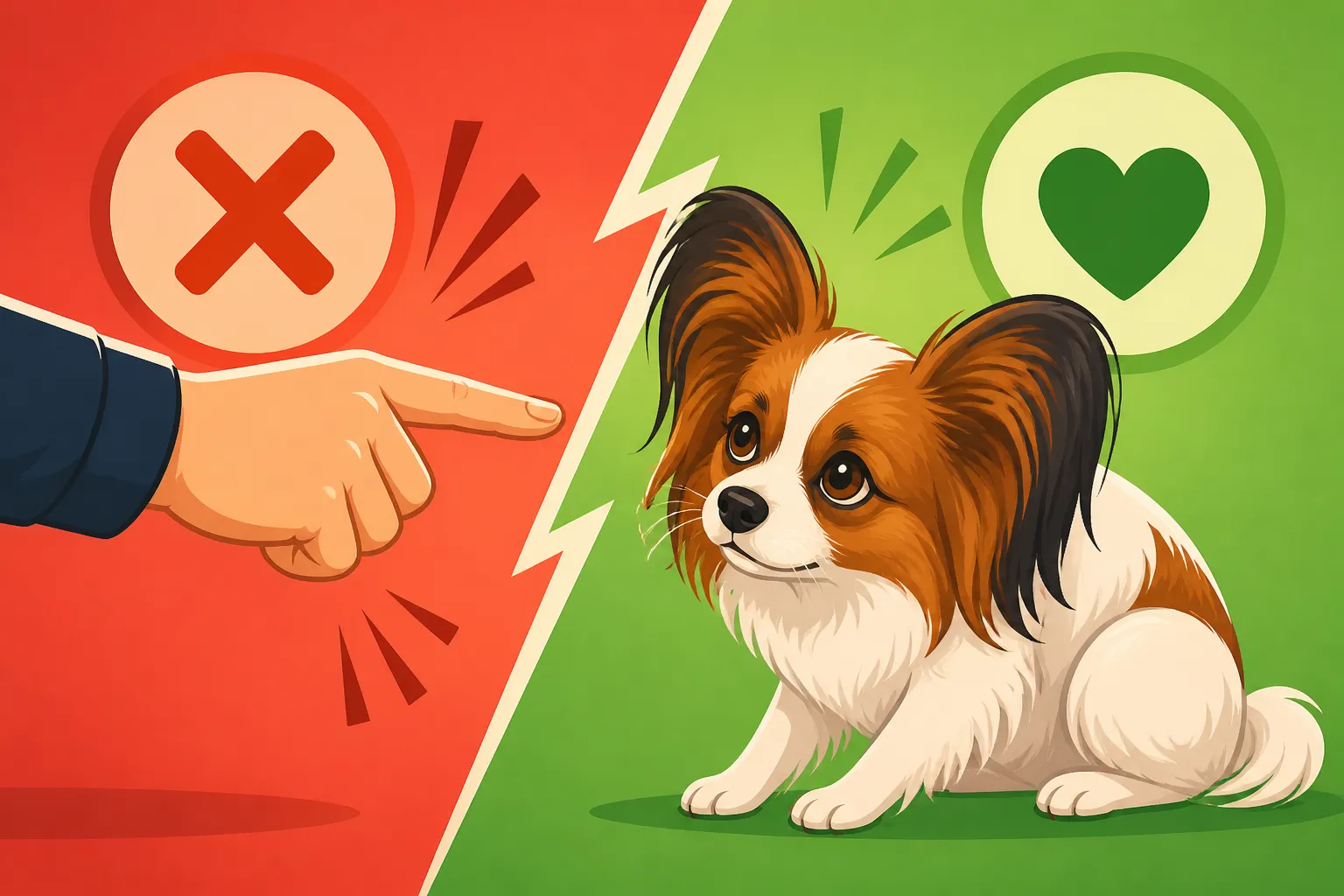
Beyond the physical risk, these types of corrections erode trust. Your Papillon looks to you for safety, guidance, and affection. When you become a source of pain or intimidation, that trust is broken. Instead of learning what not to do, they learn to fear your hands, your approach, or even just being near you when a specific stimulus is present. This can lead to a dog that is cowering, anxious, or even defensively aggressive, all of which are counter to building a happy, well-adjusted companion. It's crucial to understand Why Harsh Correction Fails on a Papillon and how detrimental it can be.
The Impact of Harsh Verbal Reprimands
While not physically painful, harsh verbal reprimands can be just as damaging to a Papillon's delicate psyche. A loud, angry tone of voice can be incredibly distressing for them. Remember, they are highly attuned to your emotions. If you sound frustrated or angry, they will feel that energy, even if they don't fully comprehend the words. This can lead to a Papillon becoming anxious, trying to hide, or even barking more in an attempt to alleviate their own stress.
The goal of a correction is to clearly communicate that a certain behavior is undesirable. For a Papillon, a sharp, angry "No!" often just communicates "Human is angry!" without conveying why. This makes it difficult for them to learn. They might stop the behavior in that moment due to fear, but they haven't learned an alternative. Instead, they might simply learn to perform the undesirable behavior when you're not around or not paying attention. Effective communication with a Papillon involves a calm, clear tone, even when you're setting boundaries, which we'll discuss further.
Why Fear-Based Training Backfires
Training methods that rely on fear or intimidation, often masked as "correction-based" or "aversive" training, are simply incompatible with a Papillon's temperament. These methods aim to suppress unwanted behaviors by making the dog uncomfortable or afraid to perform them. While it might seem like a quick fix in the short term, the long-term consequences can be devastating.
A Papillon subjected to fear-based training might become:
- Shy or Cautious: They might withdraw from new experiences, people, or other dogs.
- Anxious or Stressed: Constant worry about "doing something wrong" can lead to chronic stress, manifested in behaviors like excessive panting, licking, or pacing.
- Aggressive: A dog that is constantly afraid might eventually lash out defensively, viewing aggression as its only recourse when feeling threatened. This is a particularly dangerous outcome for any dog, let alone a small, vulnerable Papillon.
- Untrusting: The bond between you and your Papillon will suffer, replaced by a relationship based on apprehension rather than mutual respect and affection.
Instead of teaching your Papillon what not to do through fear, the most effective approach teaches them what to do, through positive reinforcement, building confidence and strengthening your relationship.
Embracing Positive Reinforcement: The Papillon's Preferred Training Method
For a Papillon, positive reinforcement isn't just a gentle option; it's hands-down the most effective and humane way to train them. It builds a strong bond, fosters confidence, and encourages enthusiastic learning because it makes training a rewarding and enjoyable experience for your little dog.
The Power of Treats and Praise
Papillons are often highly food-motivated, which makes high-value treats an incredibly powerful tool in positive reinforcement. When your Papillon performs a desired action, immediately following it with a small, delicious treat and enthusiastic verbal praise ("Yes!" "Good dog!") tells them exactly what they did right. This immediate reward creates a strong positive association with the behavior.
It's not just about the food, though. Your happy voice, a gentle scratch behind the ears, or a moment of play with a favorite toy can also be powerful motivators. The key is to find what your Papillon values most. Some Papillons are treat fiends, while others might work harder for a game of fetch or a snuggle. Experiment with different rewards to discover their personal currency. Remember that training sessions should be short and sweet for a Papillon, keeping them engaged and eager. How Short a Papillon's Training Session Should Be is a critical factor for success. You can find a vast array of suitable training treats and puzzle toys on Amazon to keep your Papillon engaged and learning.
Clicker Training for Precision
For precise communication, especially when teaching new or complex behaviors, clicker training is an invaluable tool for a Papillon. A clicker is a small device that makes a distinct, consistent sound. The magic of clicker training lies in "charging" the clicker: you pair the sound of the click with a high-value treat repeatedly, so your Papillon learns that "click = treat."
Once charged, the clicker becomes a precise marker. When your Papillon performs exactly the behavior you want, even a tiny approximation of it, you click the instant they do it, then immediately follow with a treat. This allows you to communicate with incredible clarity. For a smart Papillon, this precision is liberating; they quickly understand what earns them the reward. It eliminates guesswork and frustration, making training a fun problem-solving game for them. Many owners find that a Papillon can grasp a new concept with a clicker in far fewer repetitions than with other methods. To learn more about this effective method, you might investigate online resources or programs, some of which are offered by trainers like BAXTER & Bella.
Consistency and Clear Communication
No matter which positive reinforcement tools you use, consistency and clear communication are paramount, especially with an intelligent breed like the Papillon. Everyone in the household needs to be on the same page regarding commands, rewards, and expectations. If one person uses a different word for "sit" or allows a behavior that another person corrects, your Papillon will become confused.
Consistency also means always rewarding the desired behavior, especially in the initial learning stages, and always communicating calmly. If your Papillon jumps up on visitors, don't sometimes reward it with attention and sometimes try to correct it. Decide on the desired behavior (e.g., four paws on the floor) and consistently reward that. Clear communication involves using simple, one-word cues, and body language that is calm and inviting, not intimidating. A consistent environment, where expectations are clear and rewards are plentiful for good behavior, will help your Papillon flourish and become a confident, well-behaved companion.
Addressing Common Behavior Challenges with Positive Correction
Even with the best intentions, Papillons, like all dogs, will present behavior challenges. The key is to address these challenges using positive, gentle methods that work with their sensitive nature.
Managing Excessive Barking
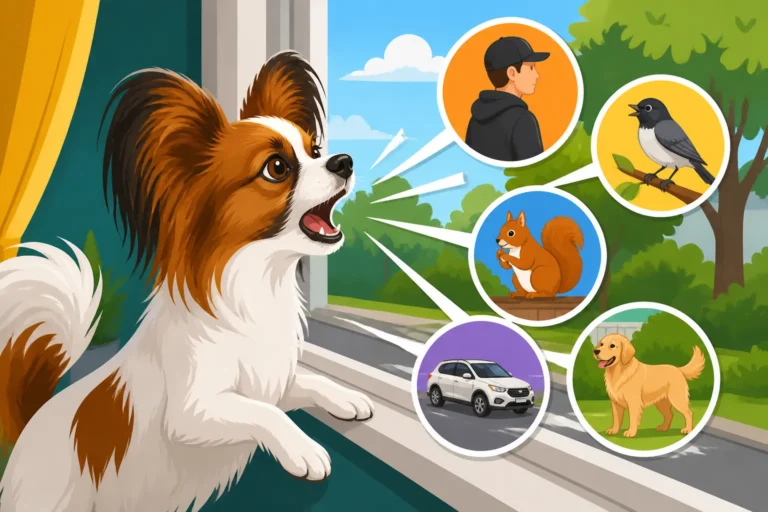
Papillons are known for being vocal, and their enthusiastic barking can sometimes get a little out of hand, especially if they’re alerting you to every leaf that blows past the window. What a Papillon Barks At can be varied, from strangers to other dogs or even just boredom. Instead of punishing barking, which can increase anxiety and make the problem worse, focus on teaching an alternative, incompatible behavior, or a "quiet" cue.
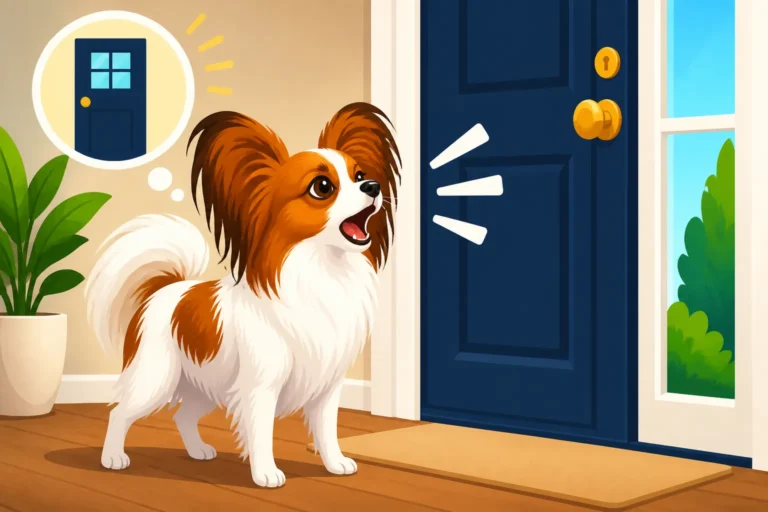
For instance, when your Papillon barks at the doorbell, teach them to go to their mat or a designated "place" instead. Practice this when the doorbell isn't ringing, rewarding heavily when they successfully go to their spot. Then, gradually introduce the doorbell sound, starting softly and rewarding profusely when they go to their mat instead of barking. You can also teach a "quiet" command:
- Let your Papillon bark a few times.
- Hold a high-value treat near their nose. The scent will usually make them pause their barking to sniff.
- The instant they are quiet, say "Quiet!" and give the treat.
- Repeat many times, gradually increasing the duration of quietness before the reward.
This teaches them that being quiet on command gets them something good. Over time, you can fade the treats and use praise. For more detailed steps, refer to How to Teach a Papillon a Quiet Cue.
Gentle House Training Approaches
House training can be a particularly frustrating challenge for any dog owner, and Papillons are no exception. Their small bladders mean they need frequent potty breaks, and a single accident in the house is often perceived as a major transgression. Harsh corrections for accidents are extremely counterproductive. A Papillon that is scolded for an indoor accident will learn to fear your reaction, not that going potty inside is wrong. They might start hiding to relieve themselves or even become afraid to go when you're watching, which makes supervising them effectively impossible.
The golden rule of house training a Papillon is to prevent accidents and richly reward successes. This means:
- Frequent Potty Breaks: Take your Papillon out very frequently, especially after waking up, eating, and playing.
- Supervision: When inside, keep your Papillon on a leash near you or in a puppy-proofed area or crate. This prevents them from wandering off and having an accident unnoticed.
- High-Value Rewards: Every single time your Papillon goes potty outside, immediately praise them enthusiastically and give a fantastic treat. Make it the best thing that ever happened to them.
- Clean Accidents Thoroughly: Use an enzymatic cleaner to eliminate odors that might attract them back to the same spot.
If an accident happens inside, clean it up without scolding. It's usually a sign that you missed a cue or didn't get them out fast enough. For more tips on this process, consider How Long House Training a Papillon Takes. You can find excellent enzymatic cleaners and other house training aids on Amazon.
Teaching Leash Manners Without Force
Leash walking should be an enjoyable experience for both you and your Papillon, but many small dogs develop habits like pulling or darting due to inconsistent training or inappropriate collars. For a Papillon, a flat buckle collar is generally sufficient, but a comfortable harness is often preferred as it removes any pressure from their delicate neck and trachea. When choosing a harness, ensure it fits well and doesn't rub. Brands often available on Amazon or through pet specialty stores provide a variety of comfortable options.
To teach polite leash manners:
- Reward Loose Leash Walking: Every time your Papillon walks nicely beside you with a loose leash, click and treat. If they pull, simply stop walking. The moment the leash goes slack, start walking again. This teaches them that pulling gets them nowhere, but a loose leash keeps the walk moving.
- Change Directions: If your Papillon is forging ahead, change direction without warning. They'll have to pay attention to where you're going to keep the leash loose.
- Make Yourself Interesting: Don't be a boring lamppost! Engage your Papillon with cheerful chatter, occasional treats, and quick games to keep their attention on you, not just the environment.
- Avoid Retractable Leashes: These teach dogs that pulling is acceptable because they continuously extend. A standard 4-6 foot leash is ideal for training good habits.
This approach builds a positive association with walking on a leash and teaches them to pay attention to you, rather than causing discomfort or fear with jerks or corrections.
When Professional Help is Needed
Even the most dedicated Papillon owner can encounter behavioral challenges that feel overwhelming or beyond their expertise. Recognizing when to seek professional help is a sign of responsible pet ownership, not a failure.
Recognizing the Limits of DIY Training
You might be diligently following all the positive reinforcement principles, but your Papillon is still struggling with a particular issue, or perhaps new, more complex behaviors are emerging. This is perfectly normal. Dog behavior can be nuanced, and sometimes an outside perspective from a trained professional is exactly what's needed.
Signs it might be time to call in a pro include:
- Escalating Behaviors: If barking is turning into incessant howling, or timidness is becoming genuine aggression, these require immediate professional intervention.
- Your Frustration Levels: If you find yourself consistently feeling frustrated, angry, or at your wit's end, it’s a sign that the current approach isn’t working for you or your dog. A professional can help bridge that communication gap.
- Safety Concerns: Any behavior that poses a risk to your Papillon, other people, or other animals (e.g., biting, severe fear aggression) absolutely necessitates expert guidance.
- Lack of Progress: If you've been consistent with positive methods for several weeks or months and aren't seeing any improvement, a trainer can help identify underlying issues or refine your techniques.
Remember that What a Papillon Does All Day can also influence behavior, and a professional can help you structure their environment and routine for success.
Finding a Qualified Positive Reinforcement Trainer
When seeking professional help, it is absolutely critical to choose a trainer who uses only positive reinforcement, force-free, and fear-free methods. For a sensitive breed like the Papillon, anything less can cause significant harm. Do not hesitate to ask trainers about their methods and philosophy.
Look for certifications from reputable organizations, such as the Certification Council for Professional Dog Trainers (CCPDT) or the Karen Pryor Academy (KPA). These certifications indicate that a trainer has met rigorous standards and adheres to ethical, science-based training practices. A good trainer will:
- Observe and Assess: They will spend time watching your Papillon in various situations to understand the root cause of the behavior.
- Develop a Personalized Plan: Training should not be one-size-fits-all. They will create a plan tailored to your dog's specific needs, your lifestyle, and your goals.
- Teach You: A great trainer doesn't just train your dog; they teach you how to understand and communicate effectively with your dog, empowering you to continue the training.
- Be Patient and Empathetic: They should show respect and understanding for both you and your Papillon.
Avoid any trainer who suggests using choke chains, prong collars, e-collars, alpha rolls, or any method that relies on pain, fear, or intimidation. For a Papillon, these methods are not only unethical but will almost certainly lead to a breakdown in trust and potentially create new, worse behavioral problems.
Considering Online Resources and Programs
For many owners, online resources and virtual training programs can be an excellent starting point or a supplemental tool. They offer flexibility and access to expert advice from the comfort of your home. Many reputable trainers and organizations offer comprehensive online courses, webinars, and even one-on-one virtual consultations.
Programs like BAXTER & Bella, for example, offer extensive online puppy training programs that focus entirely on positive reinforcement. They can walk you through foundational skills, address common puppy challenges, and provide ongoing support, all from a force-free perspective. These types of platforms can be particularly helpful for:
- Busy Schedules: Learn at your own pace, on your own time.
- Geographic Limitations: Access top trainers no matter where you live.
- Foundational Skills: Build a strong training base before tackling more complex issues.
- Cost-Effectiveness: Often more affordable than in-person private lessons.
While online resources are fantastic, remember to critically evaluate their methods to ensure they align with positive reinforcement principles. Look for programs that emphasize reward-based training, clear communication, and building a trusting relationship with your Papillon.
| Correction Type | Method | Impact on Papillon | Training Outcome |
|---|---|---|---|
| Physical Correction | Leash jerks, nose taps, physical restraint | Fear, pain, broken trust, anxiety, defensive aggression | Suppression of behavior (often temporary), avoidance |
| Harsh Verbal Reprimand | Shouting, angry tone, sharp "No!" | Fear, stress, confusion, anxiety, shutdown | Dog learns human is angry, not what to do |
| Ignoring Undesirable | Turning away from jumping, withholding attention | Dog learns behavior doesn't get desired outcome | Behavior slowly fades (if consistently applied) |
| Positive Interruption | "Kissing" sound, happy voice redirect | Distraction, curiosity, redirects attention | Behavior interrupted, opportunity to redirect |
| Positive Reinforcement | Clicker, high-value treats, praise, play | Engagement, excitement, confidence, desire to please | Dog learns desired behavior enthusiastically |
When it comes to your charming and intelligent Papillon, the goal of correction isn't to instill fear or simply stop a behavior in its tracks. Instead, it's about clear communication, building understanding, and guiding them towards behaviors that are more appropriate and enjoyable for everyone. By embracing positive reinforcement, understanding their sensitive nature, and seeking professional guidance when needed, you'll foster a relationship built on trust and cooperation, allowing your Papillon to thrive as a happy, confident companion.
Disclaimer
This article is for general informational purposes only and does not constitute professional advice. Laws, prices and regulations vary by location and change over time. Consult a qualified professional for guidance on your specific situation.