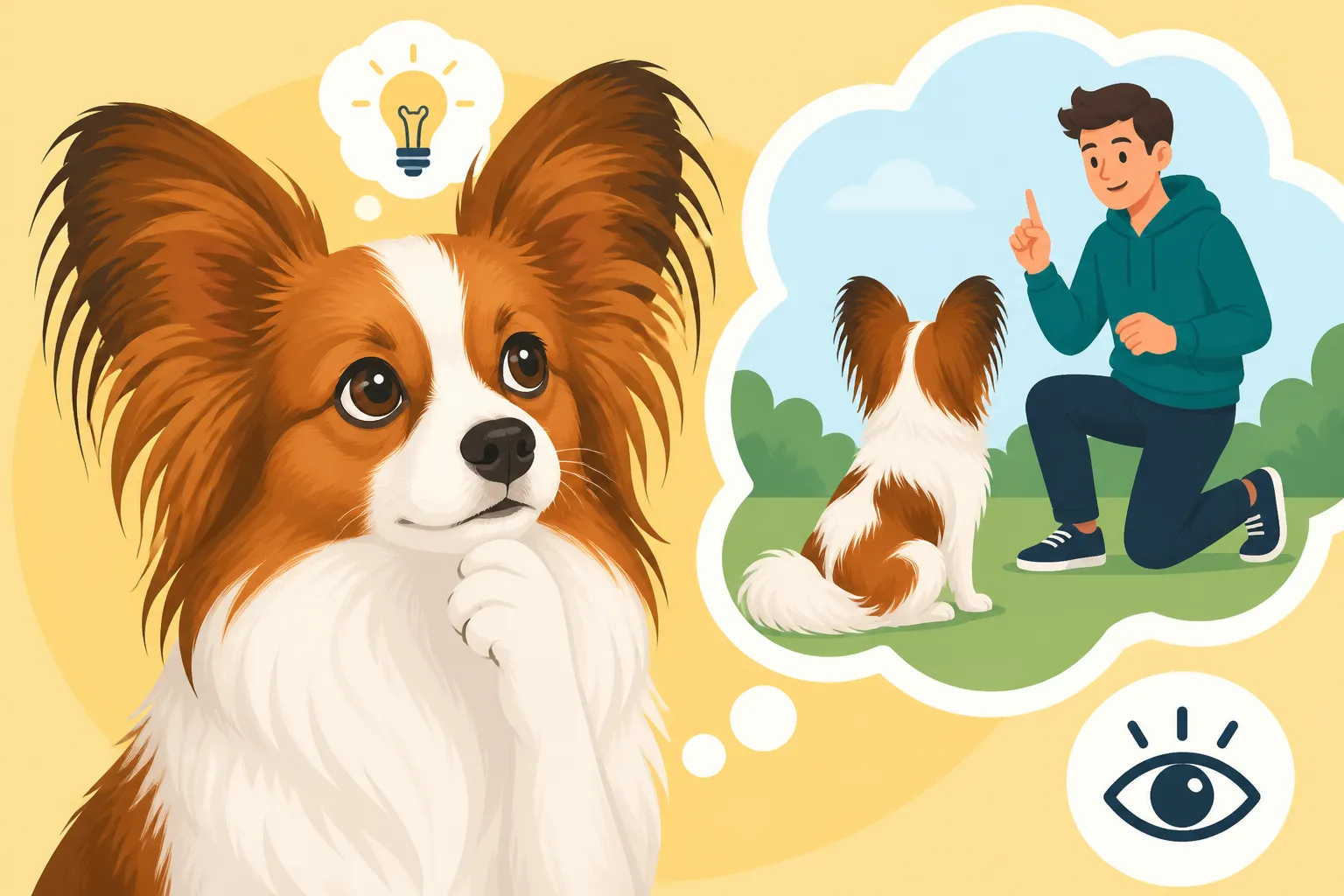
Whether a Papillon Learns by Watching
It's a common thought many of us have when we watch our clever little Papillons: are they really watching us, taking everything in? It feels like they are, especially when they pick up on routines or even mimic quirky things we do. This guide dives deep into the fascinating world of observational learning in Papillons, exploring just how much our butterfly-eared companions learn by simply watching us and the world around them, and how you can use this natural ability to your advantage in training.
Understanding Observational Learning in Dogs: More than Just Mimicry
When we talk about observational learning, we're not just talking about a dog seeing you pick up a treat bag and immediately understanding "treat time!" That's more about association and routine. True observational learning, in its more complex forms, involves a dog watching another individual perform an action and then, without direct instruction, being able to replicate some aspect of that action or use the information gained to solve a problem. It’s a subtle but powerful form of intelligence that many dog owners underestimate.
Dogs are incredibly attuned to our behaviors, our body language, and even our intentions. They’ve evolved alongside us for thousands of years, becoming masters at reading human cues. This isn't just about "sit" and "stay" – it's about understanding the nuances of our daily lives. Think about how your Papillon knows when you're getting ready for a walk versus when you're just heading to the kitchen for a snack. They're observing patterns, actions, and sequences that lead to different outcomes. While dogs might not perfectly imitate complex human actions like, say, baking a cake, they are certainly picking up on countless smaller pieces of information that inform their own behavior. This keen awareness is why The Papillon Is the Smartest Toy Breed There Is, often surprising owners with their quick grasp of new concepts.
The Difference Between True Imitation and Social Facilitation
It's important to differentiate between true imitation and what's known as social facilitation or local enhancement. Social facilitation is when a dog's likelihood to perform a behavior increases simply because another dog or person is doing it. For example, if one dog starts barking, other dogs nearby might join in, not because they've learned the specific bark, but because the presence of the barking stimulus makes them more likely to bark themselves. Local enhancement is when an observer's attention is drawn to a specific location or object by the demonstrator's actions, making them more likely to interact with that object. If you watch your Papillon open a puzzle toy, another Papillon might then be more inclined to investigate that specific toy, even if they don't mimic the exact opening technique.
True imitation, which is rarer, would involve a dog watching another dog open a specific type of latch on a gate and then, on their first attempt, replicating the motion to open the same latch. Most canine observational learning falls somewhere between these two, leaning heavily towards social facilitation and local enhancement, especially when it comes to learning from other dogs. However, when learning from humans, the level of cognitive understanding often appears to be deeper. Our Papillons observe us constantly, absorbing information about our environment, routines, and even our emotional states. They're constantly trying to predict what comes next based on what they see us do. This capacity for learning contributes significantly to How Fast a Papillon Learns a New Cue and their overall trainability.
The Papillon's Unique Aptitude for Watching and Learning
Papillons, with their bright, alert eyes and famously intelligent minds, are often exceptional observers. They're a breed known for their sharp wits and intense focus on their people, which makes them prime candidates for learning through observation. Unlike some breeds that might be more independent or less "tuned in" to human subtleties, Papillons thrive on interaction and often see their human companions as the center of their universe. This constant attention means they are absorbing a tremendous amount of visual information.
Their size also plays a role in their observational skills. Being small, they often navigate a world designed for much larger beings. They learn quickly to observe where things are, how doors open, where treats are stored, and even the subtle body cues that precede a walk or a car ride. This isn't just cute; it's a survival mechanism that has evolved into a highly refined skill. Many Papillon owners will tell you stories of their dogs learning complex sequences of events just by watching them. For example, you might notice your Papillon picking up on the sequence of events that leads to dinner: you walk to the pantry, open the specific cabinet, grab the food bag, and then move to their bowl. Over time, they anticipate each step, sometimes even nudging you along!
Learning from Other Dogs
One of the most common ways Papillons demonstrate observational learning is by watching other dogs. If you have multiple dogs, or if your Papillon regularly interacts with other well-trained dogs, you might see this in action. A younger, less experienced Papillon can learn everything from appropriate play etiquette to house training habits by watching an older, more established dog. For instance, if an older dog consistently goes to the back door to signal they need to go outside, a new puppy might quickly pick up on this behavior by watching and then trying to mimic it, often with great success. This is a brilliant example of social learning, where the younger dog benefits from the established habits of the older one.
This also extends to learning boundaries and acceptable behaviors. If an older dog knows not to jump on the sofa unless invited, a younger Papillon observing this might also internalize that rule more quickly than if you were to teach it solely through direct training. They see the consequence (or lack thereof) for the older dog and adjust their own behavior accordingly. This can be especially helpful if you're bringing a new puppy into a home with an existing, well-behaved dog. The older dog can, in essence, become a silent, furry mentor.
Learning from Human Behavior and Routines
Beyond other dogs, Papillons are absolute sponges when it comes to observing human behavior. They watch our hand movements, our facial expressions, and our body language with an intensity that can be almost unsettling! This is why they are so responsive to subtle cues in training, sometimes even anticipating what you're going to ask before you fully give the command. They've watched you repeat the sequence hundreds of times. This can be fantastic for training Which Tricks a Papillon Picks Up First, as they often learn quickly through a combination of your verbal cues, hand signals, and their own observation.
Consider daily routines: your Papillon knows the sound of your car, the jingle of keys, the specific way you pick up their leash, or even the tone of voice you use when it's time for bed. These aren't explicitly taught commands; they are learned through repeated observation of patterns and the consequences that follow. If you consistently put your phone on a charger by the bed every night, your Papillon might learn that this action signals it's almost time for their final potty break before tucking in. They've observed the pattern and associated it with the next predictable event. This incredible attentiveness is part of what makes them such engaging and responsive companions, and it's a testament to their deep connection with their human families.
Practical Strategies for Leveraging Observational Learning with Your Papillon
Since Papillons are such keen observers, you can absolutely use this to your advantage in their training and daily lives. It's about being mindful of your own actions and creating opportunities for your dog to learn by watching, rather than always needing direct instruction. This doesn't replace traditional training, but it certainly enhances it and can make learning feel more organic and fun for your little dog.
Demonstrating Desired Behaviors
One straightforward way to leverage observational learning is by demonstrating the behavior yourself, or by having another dog demonstrate it. Let's say you want your Papillon to use a new dog ramp to get onto the sofa. Instead of just pushing them onto it, first, walk up and down the ramp yourself a few times, making it look easy and rewarding. You can even lure another confident dog up and down it with treats. Your Papillon, observing this, might be more inclined to try it, especially if they see a positive reward at the end. Ramps and Steps Cost for a Papillon can be a significant investment, so helping your Papillon learn to use them effectively is key.
When introducing new objects or situations, always demonstrate calm, confident behavior yourself. If you act hesitant or nervous around a new vacuum cleaner, your Papillon will likely pick up on that apprehension. If you calmly introduce it, show it's not a threat, and even offer treats nearby, they will learn from your composure. This is also how dogs pick up on your mood before, say, a trip to the vet. If you’re anxious, they’ll learn to associate that pre-visit anxiety with the vet, regardless of the actual experience there.
Shaping Behavior Through Consistent Routines
Consistency is the cornerstone of observational learning. The more predictable your routines are, the more opportunities your Papillon has to observe patterns and learn what comes next. This is particularly true for house training. If you consistently take your puppy outside immediately after waking up, after eating, and before bed, they will quickly learn the association between those events and going potty outdoors. This repetitive observation of your actions and the subsequent outdoor trip reinforces the behavior. A product like a clicker, easily found on Amazon, can also help mark the exact moment of a desired behavior, reinforcing the learning process.
Think about little things: always putting your keys in the same spot, always preparing their food in the same order, always having a specific "cuddle time" on the sofa. Your Papillon is watching these routines and building a mental map of their world. When things are consistent, they feel more secure and are better able to anticipate and even participate in the rhythm of the household. This applies to basic obedience as well; When to Start Training a Papillon Puppy is usually around 8 weeks, and establishing consistent routines from day one is paramount.
Leveraging the Presence of a Confident Role Model
If you have another well-adjusted, confident dog, they can be an invaluable asset for your Papillon's learning. This is especially true for young puppies or rescue dogs who might be shy or unfamiliar with certain aspects of home life. Let's say your new Papillon is hesitant about walking on a leash. Walking them alongside a confident, leash-savvy dog can sometimes work wonders. The new dog observes the older one trotting happily, accepting the leash, and enjoying the walk. This exposure can make the experience less intimidating and more appealing for the learner.
This concept can extend to social situations too. If you want your Papillon to be comfortable around new people or other dogs, having them observe a calm, friendly canine companion interact positively can be incredibly beneficial. However, always ensure the role model dog is truly a good influence and that the interactions are safe and positive for both animals. Never force an interaction, and always supervise closely. Online training platforms, such as BAXTER & Bella, often provide resources on how to best introduce new dogs and leverage positive social influences in a structured way.
Realistic Expectations: What Your Papillon Can and Cannot Learn by Watching
While Papillons are incredibly smart and observant, it's important to have realistic expectations about the limits of observational learning. They are not humans, and their cognitive abilities, while impressive, differ from ours. You won't be able to teach your Papillon to do the laundry by letting them watch you, no matter how many times you demonstrate!
The primary limitation is that dogs generally struggle with true, complex imitation, especially involving novel motor skills that aren't part of their natural canine repertoire. They might pick up on environmental cues and sequences, but replicating a precise, multi-step human action is often beyond their grasp. Furthermore, observational learning is often most effective when the observed behavior is intrinsically rewarding, or when it leads to a desirable outcome. If there's no motivation or clear benefit for the Papillon to perform the observed action, they're much less likely to adopt it. What Motivates a Papillon is usually food, praise, or play, so ensure these are part of the learning equation.
| Learning Type | Description | Papillon's Aptitude | Best Use Cases |
|---|---|---|---|
| Direct Instruction | Explicit commands, luring, shaping, repeated practice. | Excellent. Highly responsive to cues, enjoys learning, How Fast a Papillon Learns a New Cue is very quick. | Basic obedience (sit, stay), complex tricks, specialized skills like agility. |
| Observational | Learning by watching others (human or dog) perform behaviors/routines. | Very Good. Highly attentive, picks up on patterns and sequences, sensitive to social cues. | House training, adapting to new household routines, social manners, overcoming fear of new objects/situations. |
| Social Facilitation | Increased likelihood of performing a behavior due to others doing it. | High. Highly social, can be influenced by group behavior, especially with other dogs. | Encouraging play, group barking (can be good or bad!), exploring new environments alongside a confident companion. |
| Local Enhancement | Attention drawn to a specific location or object by a demonstrator. | Good. Curious and intelligent, will investigate where others have focused their attention. | Introducing new toys, encouraging exploration of a specific area, finding hidden treats. |
The Importance of Reinforcement
Even when a Papillon seems to learn something by watching, positive reinforcement is still absolutely critical. Observational learning might shorten the learning curve or make your dog more open to trying a new behavior, but solidifying that behavior requires your explicit praise, treats, or play. If your Papillon sees another dog go up the ramp and then gets a treat, and then they try it and also get a treat, that behavior becomes much more strongly ingrained. Never assume they've got it just because they watched; always follow up with positive reinforcement to build confidence and understanding. This approach is much more effective than Why Harsh Correction Fails on a Papillon.
Think of a Papillon who watches you open a treat container. They might learn that the sound of the lid means treats are coming. But if they never get a treat when you open it, that association will eventually fade. The observed action needs to consistently lead to a desired outcome for the learning to stick. So, whether you're using treats, toys, or enthusiastic praise, consistent reinforcement makes all the difference. Many Papillon owners find that How Food Motivated a Papillon Is means treats are a powerful tool, but positive words and a good game of fetch are also excellent motivators.
Knowing When to Step In with Direct Training
Observational learning is a fantastic supplement to training, but it's rarely a complete replacement for direct instruction. For precise commands, safety behaviors like a reliable recall, or complex sequences in dog sports, direct training with clear cues, shaping, and consistent reinforcement is essential. Your Papillon might observe other dogs performing agility obstacles, but they still need hands-on guidance and practice to learn the proper technique, speed, and safety for themselves.
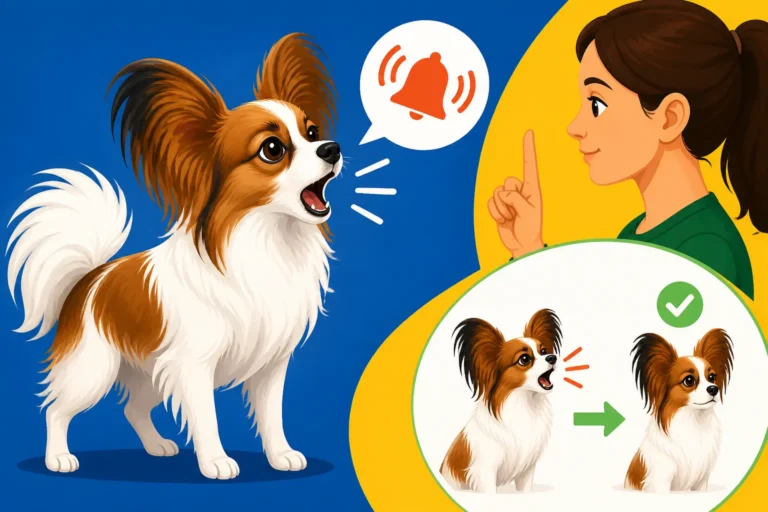
Moreover, if your Papillon is observing undesirable behaviors, whether from another dog or even accidentally from you, it's crucial to intervene with direct training to redirect them. If your other dog barks excessively at the mail carrier and your Papillon starts to mimic this, you can't just hope they'll un-learn it by watching something else. You need to actively teach a "quiet" cue or an alternative behavior. Observational learning is powerful, but it's a tool in your training arsenal, not the entire toolbox. The First Year With a Papillon Puppy is a critical time for foundational training, and a balanced approach leveraging all learning methods will yield the best results.
Disclaimer
This article is for general informational purposes only and does not constitute professional advice. Laws, prices and regulations vary by location and change over time. Consult a qualified professional for guidance on your specific situation.