How High a Fence a Papillon Needs
It’s a common misconception that because Papillons are small, delicate-looking dogs, they’re content to simply lounge on a cushion and can’t possibly get themselves into trouble. Anyone who has lived with one of these intelligent, athletic little dynamos knows better! Papillons are often underestimated, but they can be surprisingly agile and determined escape artists. This guide will help you understand your Papillon’s potential for adventure and how to create a secure outdoor space to keep them safe.
Understanding Your Papillon's Athleticism and Escape Potential
When you look at those beautiful butterfly ears and dainty paws, it’s easy to picture a Papillon as a fragile companion. But beneath that elegant exterior lies a vibrant, often fearless spirit with a surprising amount of athleticism. These aren't just lapdogs; they are dogs with a history of being highly trainable and incredibly active when given the chance.
More Than Just a Lapdog: The Papillon's Hidden Agility
Papillons are often celebrated for their intelligence, frequently ranking among the smartest breeds. This keen mind comes with an active body, and many Papillon owners find themselves drawn to dog sports like agility. They absolutely excel in these venues, flying over jumps and weaving through poles with an enthusiasm that belies their size. Their light bone structure and surprisingly powerful hindquarters allow them to spring into action with ease. If you've ever seen a Papillon launch themselves off a sofa or effortlessly clear a small obstacle in the living room, you know exactly what I'm talking about. This natural athleticism and drive mean that they’re perfectly capable of assessing their surroundings and, if motivated, finding a way over or through a barrier that might seem impenetrable to us. They have an innate curiosity and a desire to be part of the action, which can quickly turn into an escape attempt if not properly managed. This breed truly shines in activities that challenge both their minds and bodies, and if those needs aren't met, they might just seek their own adventure.
It’s easy to dismiss a Papillon’s athletic prowess because of their size. We tend to associate jumping and scaling with larger, more robust breeds, but a Papillon's compact frame and high energy levels make them incredibly nimble. They don't need a huge running start to gain momentum; a small space is often all it takes for them to launch themselves upwards. Think of it less like a heavy dog trying to heave itself over a wall and more like a spring-loaded toy darting upward. Their curiosity is boundless, and if they see something interesting on the other side of a fence, their little brains are already calculating the best way to get there. They’re problem-solvers by nature, and sometimes, the problem they're trying to solve is "how do I get out?"
Reasons a Papillon Might Try to Escape
Knowing that your Papillon might try to escape is one thing; understanding why is another entirely. Their motivations are often quite simple and very dog-like, regardless of their size. Addressing these root causes can be just as important as the physical barrier you put in place.
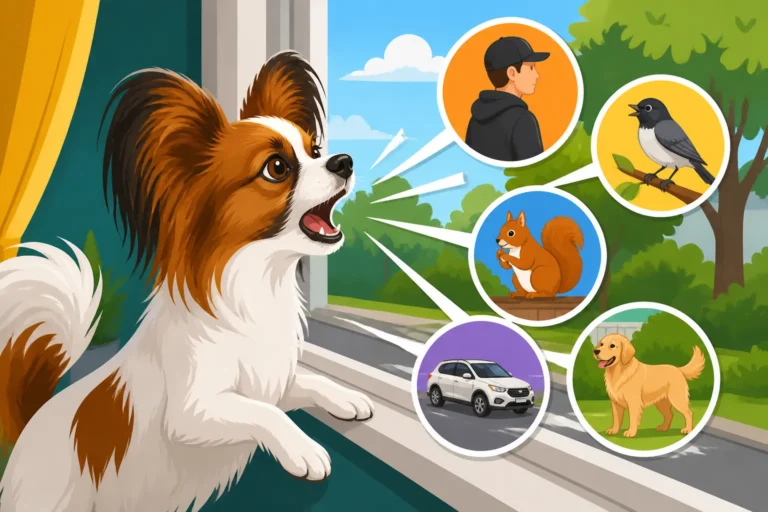
One of the primary drivers for a Papillon's escape attempts is often their surprisingly strong prey drive. A fluttering butterfly, a scurrying squirrel, a bird landing on a nearby branch, or even a leaf skittering across the lawn can transform your sweet lapdog into a focused, determined hunter. Their instincts kick in, and the desire to pursue that fleeting movement can override any training or perceived barrier. You might find them staring intently at a fence, plotting their next move as a robin hops just out of reach. Understanding How Much Prey Drive a Papillon Has is key to anticipating these impulses.
Another common factor is sheer boredom or a lack of mental stimulation. A Papillon left alone in a yard with nothing to do can quickly become restless. Their sharp minds need engagement, and if they aren't provided with appropriate outlets, they’ll create their own entertainment, which might include trying to find an exit. A dog that is under-exercised or under-stimulated physically and mentally is a prime candidate for an escape artist. They need activities that challenge them and keep them thinking. What Mental Work a Papillon Needs is crucial for these bright little dogs.
Seeking companionship can also be a motivator. If a Papillon is left alone for long periods in a yard, especially without human interaction or other dogs, they might try to find their way back to their people. While true separation anxiety often manifests as destructive behavior indoors, a strong bond can still compel them to seek out their family. They love being near you, and if they feel isolated, they will sometimes try to remedy that. Curiosity about what's happening outside their perimeter is also a big one – the world beyond the fence is always more interesting, especially if they hear other dogs, people, or interesting smells.
Assessing Fence Height Requirements for a Papillon
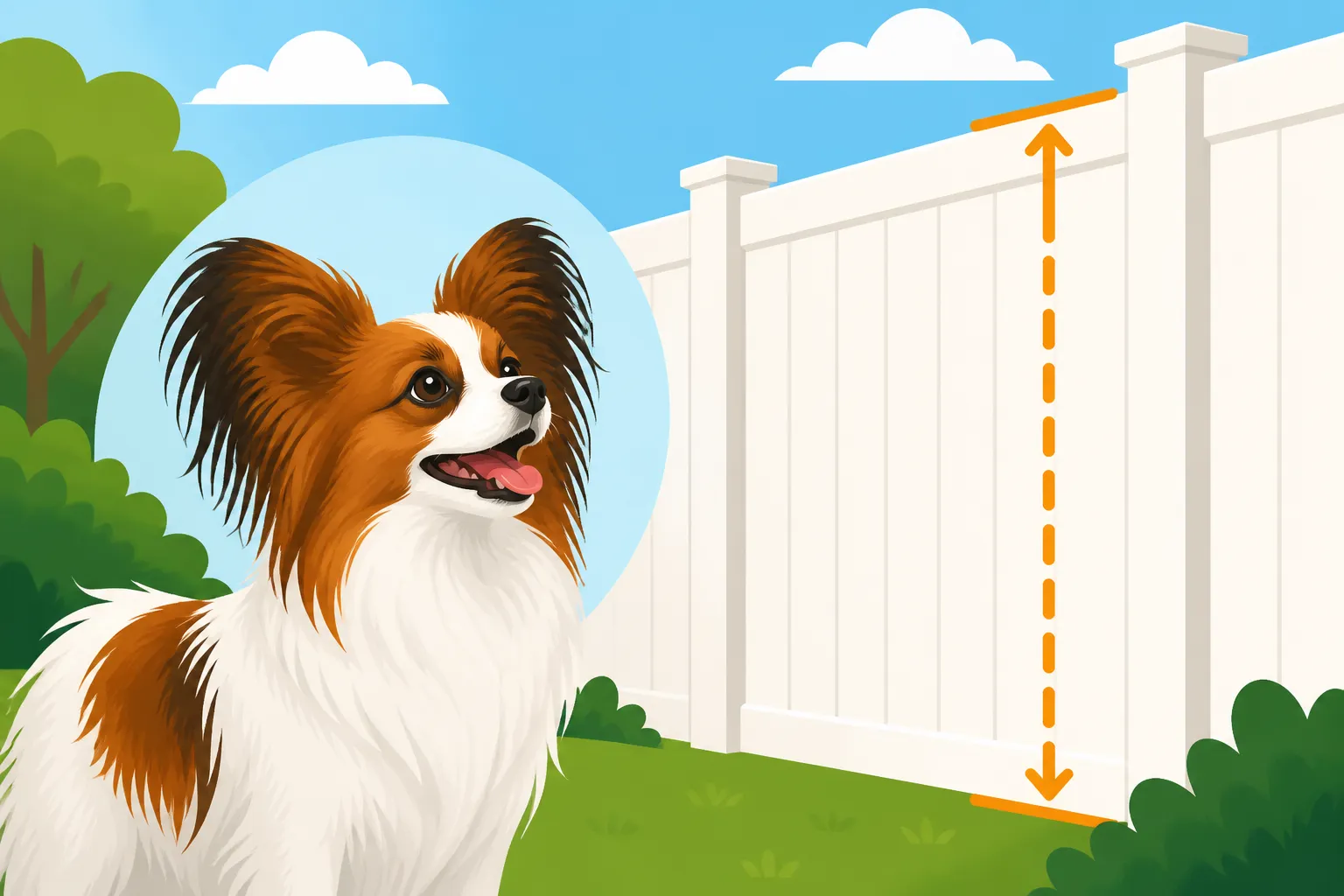
So, how high does that fence really need to be? This isn't a "one size fits all" answer, as much as we wish it were. While a Papillon is small, their leaping ability and determination mean you can't just assume a low picket fence will do the trick.
The Standard Recommendation vs. the Papillon Reality
For many breeds, general recommendations for fence height might start at around 4 feet for smaller dogs, going up to 6 feet for larger, more athletic breeds. The critical thing to remember with a Papillon is that their small size doesn't necessarily translate to a low jumping capability. We often think of dogs scaling fences by pulling themselves over, but Papillons are more likely to simply jump over. Their light weight means they don't need much force to propel themselves upwards. A Papillon might not be able to pull itself over a 4-foot chain link fence, but it could very well clear a 3-foot solid fence with a running leap if it's sufficiently motivated.
I've heard stories from other Papillon owners about their little dogs clearing obstacles that seem impossible for a dog of their stature. One friend had a Papillon who could effortlessly clear a garden gate that was nearly as tall as she was. It truly comes down to their drive, their athleticism, and their sheer confidence. They genuinely don't seem to realize they are small dogs; they carry themselves with the bravado of a much larger canine. So, while a 3-foot fence might contain a very sedate, older Papillon, it's generally not a safe bet for a healthy, active one, especially a youngster. You really need to think beyond the minimum.
Factors Influencing Your Papillon's Jumping Ability
Several elements contribute to whether your Papillon will attempt, and succeed, in clearing a fence. It's not just about the fence itself, but also about the dog and the environment.
First, consider your individual dog's drive and motivation. Some Papillons are naturally more adventurous, confident, and energetic than others. A Papillon actively competing in agility might possess greater jumping prowess and a stronger desire to explore than a more reserved, less active companion. Their personality plays a huge role; a highly curious or easily bored Papillon is far more likely to test the boundaries of a fence. Just like people, every dog has a unique temperament and energy level, and this will directly impact their escape artistry.
Second, be mindful of any proximity to jump aids. This is a crucial, often overlooked factor. A dog house, a pile of firewood, a sturdy bush, a garden bench, or even a trash can placed too close to the fence can instantly transform a perfectly adequate barrier into a launching pad. In snowy climates, accumulated snow drifts against the fence can create a natural ramp right to the top, giving your Papillon a clear path to freedom. Always assess your yard from your dog's perspective, looking for anything that could give them a leg up. What looks like a harmless garden ornament to you might be a stepping stone for them.
Finally, the fence material and design matter significantly. A chain link fence, while providing a decent height, also offers a ladder-like structure that an agile Papillon can easily scale. Their tiny paws can find purchase in the mesh, allowing them to climb surprisingly quickly. A solid fence, like wood or vinyl, is generally harder to climb, making it a better choice if the height is sufficient. However, if the fence has horizontal rails or decorative gaps, these could still offer toe-holds. Moreover, while a well-trained Papillon might be less inclined to test boundaries, consistent supervision, especially during initial outdoor adventures, is non-negotiable. Even the most well-behaved dog can succumb to a sudden urge to chase a rabbit. Remember, How Reliably a Papillon Comes When Called off-leash in a confined yard can be a very different scenario from when they spot a squirrel just outside the fence line.
| Fence Type | Pros | Cons | Papillon Suitability |
|---|---|---|---|
| Solid Wood | Aesthetic, good visual barrier, hard to climb. | Can be expensive, requires maintenance, can rot/warp. | Good |
| Vinyl | Low maintenance, good visual barrier, durable. | Higher upfront cost, can be less aesthetically flexible. | Good |
| Chain Link | Relatively inexpensive, easy to install. | Extremely climbable, offers clear view of outside distractions. | High Risk |
| Welded Wire/Mesh | Good visibility, can be cost-effective, unclimbable if small mesh. | Less aesthetically pleasing, may not deter larger wildlife. | Good (if small mesh) |
| Electric/Invisible | No physical barrier, aesthetically pleasing. | Requires training, not a physical barrier, does not deter people/animals entering. | High Risk |
Note: For electric/invisible fences, while they can be useful for containment in some scenarios, they offer no physical protection for your Papillon from other animals or people entering your yard, nor do they prevent your dog from chasing something into a busy street if highly motivated. They are not recommended as a primary containment method for Papillons.
Practical Fencing Solutions and Security Measures
Now that we understand why a Papillon might try to escape, let's talk about tangible solutions. It's about combining the right physical barriers with smart preventative measures.
Recommended Fence Heights and Types
For most healthy, active Papillons, a fence of at least 4 feet high is a good starting point. However, if your Papillon has shown any inclination to jump or climb, or if they are particularly high-energy and motivated, a 5 to 6-foot solid fence is a much safer bet. When I say "solid," I'm really thinking about materials that don't offer toe-holds.
Solid wood fences, such as privacy fences, are excellent because they don't provide climbing opportunities and they block visual distractions that might tempt your Papillon. Vinyl fences offer similar benefits with the added advantage of being very low maintenance. If you're considering a chain-link fence, please proceed with extreme caution. While a 4-foot chain link might seem tall enough, a determined Papillon can use the mesh as a ladder. If you absolutely must use chain link, consider adding a "coyote roller" to the top, which is a round, spinning bar that prevents dogs from getting a grip to pull themselves over. An inward-facing lean of wire mesh along the top can also deter jumpers. For wire mesh or welded wire, ensure the gaps are small enough that your Papillon can't squeeze their head or body through, as they are notoriously good at wriggling into tight spaces. Look for mesh with openings no larger than 2×4 inches, or ideally even smaller.
Addressing the "Under" and "Through" Escape Routes
It's not just about going over the fence; Papillons can also find their way under or through it. These little dogs are explorers, and any perceived weakness in your perimeter is an invitation for adventure.
While Papillons aren't typically avid diggers like some terrier breeds, it's not entirely out of the question, especially if they catch the scent of something interesting on the other side. To prevent digging, you can bury a layer of chicken wire or hardware cloth along the base of the fence, extending it inwards about 1-2 feet. Alternatively, pouring a concrete footer or laying pavers along the fence line provides a solid barrier. This extra effort can save you a lot of worry in the long run. If your Papillon does show a propensity to dig, understanding How Much a Papillon Digs will help you reinforce the right areas.
Squeezing through gaps is another common escape method for small, flexible dogs. You'd be amazed at the tiny spaces a motivated Papillon can squeeze through. Walk your entire fence line, looking for any gaps. Pay particular attention to gates, where the fence meets the ground, and any areas where panels might have separated slightly. Small dogs are masters of exploiting these weaknesses. Fill any gaps with hardware cloth, additional wood slats, or even concrete if necessary. For gates, ensure they close securely and latch properly. Consider adding a secondary latch or even a padlock for extra security, especially if you have children or frequent visitors who might not be as diligent about closing it tightly.
Finally, keep an eye on your landscaping. Overhanging branches from trees or dense bushes growing too close to the fence can provide an easy boost or hidden path over the barrier. Trim back any vegetation that could aid your Papillon in their escape efforts. The goal is a clear, uncluttered perimeter that doesn't offer any unintended assistance to your clever canine.
Beyond the Fence: Holistic Security for Your Papillon
A secure fence is paramount, but it's just one part of a comprehensive safety strategy for your Papillon. True security involves a combination of environmental control, training, and attentive care.
First and foremost, supervision is key. No fence, no matter how high or robust, is truly foolproof, especially when dealing with a smart, motivated Papillon. Never leave your Papillon unsupervised in the yard for extended periods, especially when they're first getting accustomed to the space, or if they have a history of escape attempts. Even a brief moment of distraction can be enough for them to find a weak spot. It only takes a second for a bird to fly by and tempt them over.
Next, prioritize training. A Papillon with a strong recall and a solid "leave it" command is less likely to bolt or fixate on something outside the fence. Consistent, positive reinforcement training from a young age can instill good habits and strengthen your bond, making your dog more likely to respond to your commands even when distracted. Consider online training programs like BAXTER & Bella, which offer comprehensive resources that can be tailored to your Papillon's needs and help you build a strong foundation. These programs emphasize positive reinforcement and can be incredibly effective for intelligent breeds like Papillons. How Fast a Papillon Learns a New Cue is often surprising, making them excellent candidates for advanced training.
Enrichment is also vital. A bored Papillon is a mischievous Papillon. Provide plenty of toys, puzzle feeders, and opportunities for mental stimulation to keep their active minds engaged. You can find a huge variety of interactive toys and puzzle feeders on platforms like Amazon that will challenge your Papillon and prevent them from seeking entertainment by trying to escape. Rotate toys regularly to keep things fresh, and incorporate short training sessions into their daily routine. Understanding What a Papillon Does All Day will help you tailor their activities to prevent boredom.
Lastly, remember the importance of secure leash walks. Even if your yard is perfectly fenced, regular, supervised walks outside the property are crucial for your Papillon's physical and mental well-being. These walks offer new sights, sounds, and smells, satisfying their innate curiosity and preventing cabin fever. Always use a secure harness that fits well to prevent slips, and ensure your leash is in good condition. You might be surprised to learn How Far a Papillon Should Walk Daily to truly satisfy their exercise needs. A well-exercised and mentally stimulated Papillon is generally a content Papillon, and a content Papillon is less likely to dream of escaping.
What to Do If Your Papillon Is an Escape Artist
Despite your best efforts, sometimes a Papillon just finds a way. If your clever little friend has already proven themselves to be an escape artist, it's time for some serious troubleshooting and potentially, professional intervention. Don't despair; it's a common issue that can be managed.
Troubleshooting Your Current Fence
The first step is to become a detective. Walk the entire perimeter of your fence, both inside and out, daily. Look for anything new or subtle that could be aiding an escape. Did a small branch fall near the fence? Did a rock shift, creating a tiny gap at the bottom? Are there any newly exposed holes or weak spots where the material might be degrading? You'd be amazed at how quickly a small weakness can become a major egress point for a determined Papillon.
Check for any objects near the fence line – this includes garden tools, kids' toys, outdoor furniture, or even overgrown weeds that create a subtle platform. Remove anything that could provide even a slight boost. If adding height to your entire fence isn't feasible, consider adding an extension to specific sections. Lattice panels, rolls of strong wire mesh, or even clear polycarbonate sheets can be secured to the top of your existing fence to increase its height without a full replacement. Ensure these extensions are smooth and don't offer any climbing opportunities.
For those determined diggers or squeezers, an "L-footer" or simply burying chicken wire or hardware cloth along the bottom edge, extending inward into the yard, can be a game-changer. This creates a barrier under the ground that your Papillon will encounter if they try to dig out. For gaps, don't just patch them; reinforce them. Use strong, weather-resistant materials to ensure the repair is as durable as the original fence, if not more so. Remember, every little detail matters when you're trying to outwit a smart, motivated Papillon.
Behavioral Adjustments and Professional Help
If you've shored up your fence and your Papillon is still finding ways out, it's time to look at behavioral adjustments and perhaps seek professional guidance. Sometimes, the problem isn't just the fence; it's what's driving the desire to escape.
First, increase their exercise and mental stimulation, truly turning up the dial. Are they getting at least two good walks a day, even if it's just around the block? Are they engaging in play sessions that leave them happily tired? Are you utilizing puzzle toys or teaching new tricks to challenge their minds? A tired Papillon is often a well-behaved Papillon. These highly intelligent dogs need a job, even if that job is just learning to fetch specific toys by name or mastering a new agility skill in the living room. Puzzle Toys Satisfy a Papillon to a great extent, and integrating them into their daily routine can significantly reduce boredom-driven escape attempts.
Review your training methods, ensuring consistency across all family members. Is everyone on the same page with commands and expectations? Reinforce their recall intensely, even in the yard, using high-value treats. Make coming to you the most rewarding thing they can do. If the escape attempts are driven by an underlying issue like anxiety, such as Signs a Papillon Has Separation Anxiety, or an extremely high prey drive that you can't manage alone, it's absolutely okay to consult a professional dog trainer or a veterinary behaviorist. These experts can assess your specific situation, identify triggers, and develop a tailored plan that combines behavioral modification techniques with environmental management. They can offer insights and strategies that might not be obvious to an owner, helping you create a safer, happier environment for your Papillon.
Disclaimer
This article is for general informational purposes only and does not constitute professional advice. Laws, prices and regulations vary by location and change over time. Consult a qualified professional for guidance on your specific situation.