Whether Puzzle Toys Satisfy a Papillon
We've all been there: you're trying to keep your bright, energetic Papillon happy and engaged, but life gets busy. You might pick up a fancy new puzzle toy, watch your little butterfly dog solve it in minutes, and then wonder, "Is that really enough for them?" It’s a completely valid question, because while these clever gadgets are fantastic, they're only one piece of the rich tapestry of mental stimulation our Papillons crave and truly need to thrive. This guide will dive deep into how puzzle toys fit into your Papillon's world and what else they might be yearning for.
The Papillon Mind: More Than Just a Pretty Face
Let's be honest, Papillons are absolutely adorable with those big, butterfly ears and expressive eyes. It’s easy to get caught up in their charming looks and forget the powerhouse brain ticking away underneath all that lovely fringe! But make no mistake, these tiny dogs are intelligent, often surprisingly so, and their mental needs are just as significant as their physical ones. Ignoring their cognitive capacities is a surefire way to end up with a bored, and potentially mischievous, little companion.
Why Mental Stimulation Matters So Much for Papillons
If you've spent any time with a Papillon, you know they're not just content to sit on the sofa all day, even if they enjoy a good cuddle. These dogs are sharp. They're often ranked incredibly high in canine intelligence, with some sources even claiming The Papillon Is the Smartest Toy Breed There Is. This isn't just a fun fact; it's a critical aspect of their care. A smart dog with nothing to do is a dog looking for a job, and if you don't provide a constructive one, they'll invent their own, which might not always align with your household rules.
Think about it: a Papillon often wants to be involved in everything you do. They're observant, quick to learn, and love a challenge. Without adequate mental outlets, this intelligence can quickly turn into boredom, leading to behaviors like excessive barking, chewing on things they shouldn't (What a Bored Papillon Destroys), or even becoming anxious or destructive. They were historically bred as companions, yes, but companions who were alert, interactive, and could entertain themselves and their noble owners, not just decorative objects. Their history tells us they've always been thinkers.
The Limitations of Physical Exercise Alone
Of course, physical exercise is essential for any dog, and Papillons, despite their size, can be quite athletic. They love a good walk, a romp in a secure yard, or even a session of fetch. However, simply exhausting their bodies won't necessarily tire out their minds. You could walk your Papillon for an hour, and while their legs might be tired, their brain could still be buzzing, looking for its next intellectual conquest.
Many owners find themselves scratching their heads when their dog, after a long hike, still seems restless or prone to mischief. That's often because the physical exertion didn't engage the part of their brain that needs to solve problems, interpret cues, or strategize. For a Papillon, who possesses such a keen intellect, merely running around is like giving a brilliant scholar a jump rope – fun for a bit, but not truly satisfying their deeper cognitive needs. We need to remember that these aren't big, muscular working dogs that get their mental fill from hours of strenuous physical labor; their mental stimulation comes from engaging their quick wits.
Diving Deep into Puzzle Toys: What Are We Talking About?
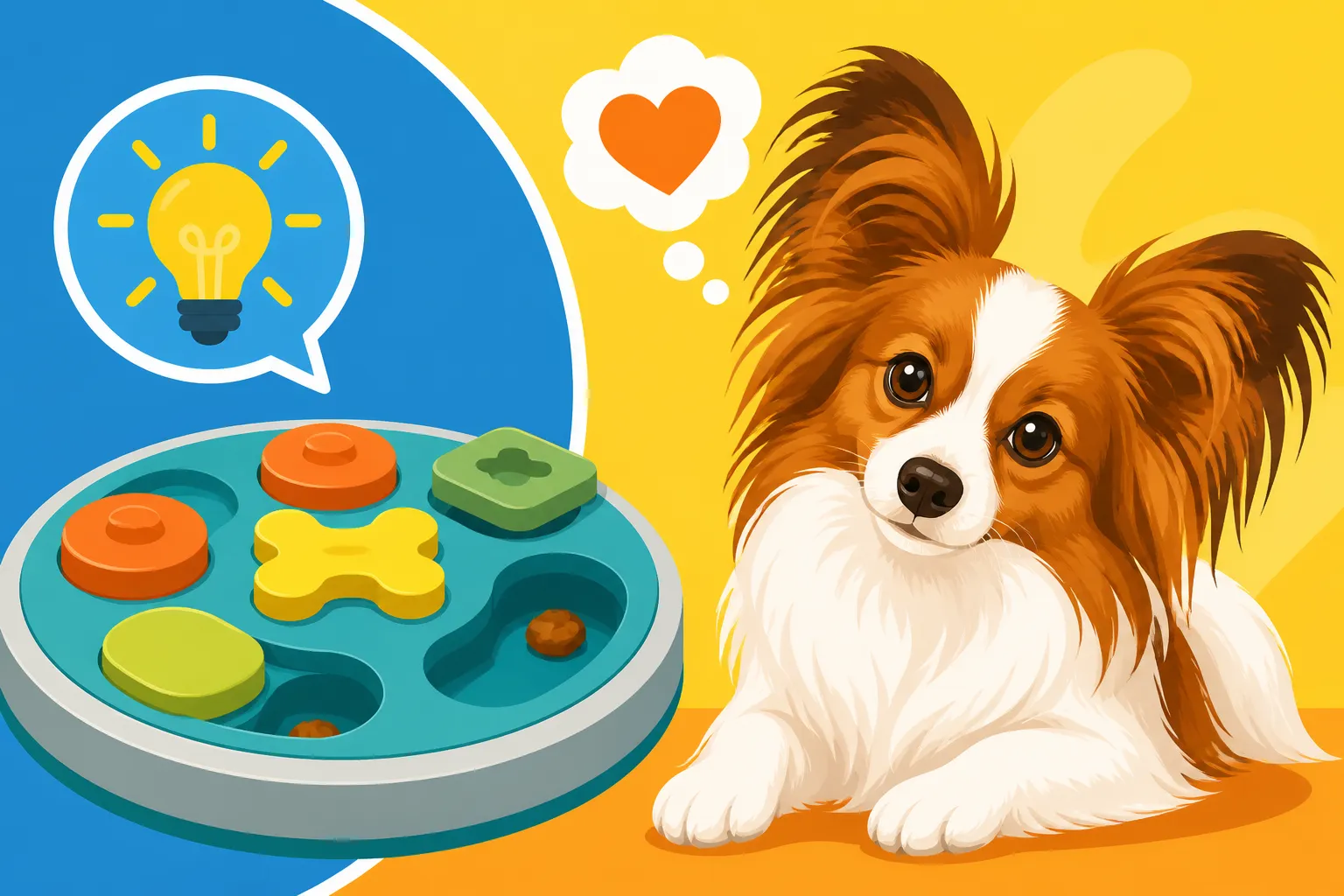
So, if physical exercise isn't the whole answer, where do puzzle toys fit in? They are an excellent tool for engaging your Papillon's mind, providing a safe, solitary, and often rewarding challenge that taps into their natural instincts. But "puzzle toy" is a broad term, and understanding the different types and how they work can help you make the best choices for your furry friend.
The Spectrum of Puzzle Toys for Papillons
Puzzle toys come in all shapes and sizes, designed to cater to various skill levels and dog personalities. For a Papillon, it's important to choose toys that aren't too large for their small mouths and paws, but challenging enough to hold their interest.
- Beginner Toys: These are often treat-dispensing toys where the reward is easily accessible with a nudge or roll. Think simple rubber Kongs that you can stuff with a delicious, easily extracted treat, or a basic treat ball that drops kibble when rolled. These are great for introducing the concept and building confidence. Many options can be found easily on platforms like Amazon.
- Intermediate Toys: These require a bit more thought. Sliding or lifting components hide treats, and your Papillon needs to figure out the sequence or motion to reveal them. Snuffle mats, where treats are hidden deep within fabric fringes, fall into this category, encouraging their natural scent-hunting abilities.
- Advanced Toys: These involve multiple steps, levers, or complex movements. Some might require your Papillon to remove one piece before they can slide another, or to lift a lid and then push a drawer. These can be truly fascinating to watch your Papillon tackle, and they offer a significant mental workout.
When looking at these, remember that a Papillon's small size means you often need to look for "small dog" or "mini" versions, not just for safety but also for them to be able to manipulate the pieces effectively.
How Puzzle Toys Engage a Papillon's Brain
At their core, puzzle toys tap into several fundamental canine behaviors and cognitive skills:
- Problem-Solving: Every puzzle toy presents a challenge: "How do I get that yummy thing out of there?" Your Papillon has to analyze the situation, try different approaches (nosing, pawing, licking), and learn from trial and error. This process is deeply satisfying for an intelligent dog.
- Scent Work: Many puzzle toys, especially snuffle mats or those with hidden compartments, encourage your Papillon to use their nose to locate the treats. This is a natural instinct for dogs, and engaging their olfactory senses is incredibly enriching and tiring. It’s a simplified version of Whether a Papillon Can Do Scent Work, providing a great mental workout in a contained space.
- Fine Motor Skills: Manipulating small parts, nudging sliders, or carefully extracting treats helps develop dexterity and coordination. For a small dog like a Papillon, this can be particularly beneficial.
- Focus and Persistence: Solving a puzzle requires concentration. It teaches your Papillon to stick with a task, even when it's a little tricky, building their attention span and resilience.
It’s truly amazing how a seemingly simple object can provide such a comprehensive brain workout, transforming a few minutes of quiet "work" into genuine satisfaction for your Papillon.
Choosing the Right Puzzle Toy for Your Papillon
With so many options out there, how do you pick the best one for your particular Papillon? It's not just about what looks cool; it's about what truly suits them.
| Feature | Consideration for Papillons |
|---|---|
| Difficulty | Start simple! An overly complex toy can be frustrating, not fun. Build up gradually. If your Papillon solves a toy in seconds, it might be time for a step up. |
| Durability | Papillons generally aren't destructive chewers like some larger breeds, but quality still matters. You want toys that withstand repeated use and cleaning without falling apart or breaking into small pieces. |
| Material | Food-grade plastic, natural rubber, or sturdy fabric (for snuffle mats) are usually good choices. Avoid flimsy materials or anything with sharp edges. |
| Size | Crucial for Papillons. Ensure openings are big enough for their tongue/nose but not so big they can swallow pieces. Pieces they need to manipulate shouldn't be too large for their little paws. |
| Cleaning | Treats can get messy! Look for toys that are easy to wash, either by hand or in the dishwasher, to prevent bacteria buildup. |
| Engagement Type | Some Papillons are more nose-driven, others more paw-driven. Observe how your dog approaches challenges and pick toys that align with their natural tendencies. |
Remember your Papillon's individual personality. A shy Papillon might do better with a quieter, less intimidating toy, while a bold one might relish a more elaborate challenge. Always introduce new toys under supervision to ensure your dog understands how to use it safely and effectively.
Are Puzzle Toys Enough? A Holistic View of Papillon Enrichment
This is the million-dollar question, isn't it? After all this talk about how great puzzle toys are, can they really be the only answer to a Papillon's mental stimulation needs? The short answer is: probably not entirely on their own. They're an absolutely fantastic component, a critical piece of the puzzle (pun intended!), but they're most effective when integrated into a broader, well-rounded enrichment strategy.
The "Yes, And…" Approach to Papillon Satisfaction
Think of puzzle toys as a strong "yes!" – yes, they are wonderful for mental engagement. But the full picture for a truly satisfied Papillon involves "and…" — and training, and socialization, and interactive play, and quiet cuddle time.
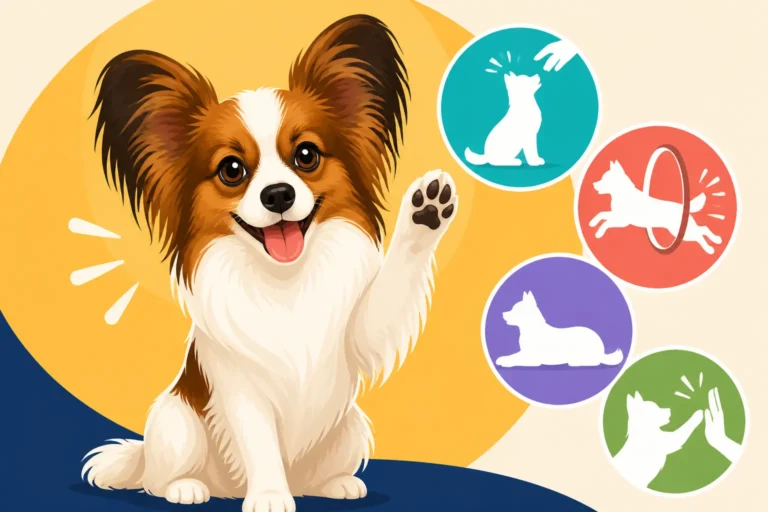
- Training and Learning: Papillons live to learn. Seriously, they do! They pick up new cues astonishingly fast, as you'd know if you've ever tried to teach one a trick. How Fast a Papillon Learns a New Cue is often a surprise to new owners. Engaging them in regular, short training sessions, whether it's basic obedience or fun tricks like weaving through your legs, builds their confidence, strengthens your bond, and provides immense mental satisfaction. Programs like BAXTER & Bella, which focus on positive reinforcement and engaging owners in the training process, perfectly align with a Papillon's intelligent and sensitive nature.
- Socialization: While puzzle toys provide solitary mental work, Papillons are social creatures. Safe, positive interactions with other well-behaved dogs and people are vital for their emotional and mental well-being. Even if they're small, they need to know how to navigate the world around them. How a Papillon Behaves With Large Dogs can be surprisingly confident, but they need good experiences to build that social intelligence.
- Interactive Play: This isn't just about physical activity; it's about bonding and dynamic mental engagement. Playing fetch, hide-and-seek with you, or even just chasing a flirt pole can be mentally stimulating because it involves predicting your movements, responding to cues, and problem-solving in real-time.
It's about creating a rich, varied environment that addresses all facets of their intelligent little personalities.
Beyond the Toy: Other Forms of Mental Engagement
Don't limit your thinking to just toys! There are so many other ways to challenge and delight your Papillon's brain:
- Trick Training: As mentioned, Papillons excel at this. How many tricks can a Papillon learn? A surprising number! Start with simple things like "shake a paw" or "spin," and then move on to more complex sequences. The process of learning, practicing, and performing these tricks is incredibly rewarding for them.
- Scent Work and Nose Games: Beyond a snuffle mat, you can hide treats around the house and encourage your Papillon to find them. Start easy and gradually increase the difficulty. You can even invest in a beginner scent work kit. This is a wonderfully calming and mentally taxing activity.
- Novelty and Exploration: Break up the routine! Take a different route on your daily walk. Explore a new, safe park (being mindful of their small size). Introduce them to new, positive sights, sounds, and smells. New experiences demand their brain to process and adapt, which is a fantastic form of enrichment.
- "Life Skills" Training: Teach them to retrieve specific items (Teaching a Papillon to Retrieve), carry a small bag, or wait politely at doors. These practical skills are not only useful but also give your Papillon a sense of purpose.
All these activities contribute to a mentally healthy and balanced Papillon, preventing boredom and enriching their lives in profound ways.
Recognizing When Your Papillon Needs More
So, how do you know if your current enrichment efforts, including puzzle toys, are hitting the mark? Your Papillon will tell you! Learn to read their cues:
- Destructive Behaviors: If they're chewing on furniture, shoes, or digging inappropriately, it's a huge red flag. A well-exercised and mentally stimulated Papillon is far less likely to resort to these behaviors.
- Excessive Barking: While Papillons can be prone to barking (Why a Papillon Barks So Much), constant or aimless barking often indicates boredom or anxiety. They're trying to tell you something!
- Restlessness or Hyperactivity: Even after a walk and a puzzle toy, if your Papillon is pacing, unable to settle, or seems overly energetic, their mind might still be under-stimulated.
- Seeking Attention Negatively: Nipping, jumping up repeatedly, or pawing at you might be a desperate plea for engagement.
- Lethargy or Depression: On the flip side, a lack of interest in play, food, or interaction could signal under-stimulation or other issues.
It's all about observation. If you notice these signs, it's not a failure on your part, but an invitation to re-evaluate and enhance your Papillon's daily routine. Maybe they need a more challenging puzzle toy, a longer training session, or a new type of mental game.
Integrating Puzzle Toys into Your Papillon's Daily Routine
Puzzle toys aren't just for rainy days or when you're desperate for a few minutes of peace. They can and should be a consistent, valuable part of your Papillon's regular schedule. Consistency is key to building good habits and ensuring your dog gets the regular mental workout they need.
Making Puzzle Time a Regular Event
Establishing a routine helps your Papillon anticipate and enjoy their puzzle time. It becomes a special activity they look forward to.
- Morning Kick-Start: A great way to begin the day is to offer a puzzle toy with part of their breakfast kibble. It engages their brain right away, provides a slow feed, and can help set a calm tone for the day.
- Post-Walk Cool-Down: After physical exercise, a puzzle toy can help transition your Papillon from an excited state to a calmer, more focused one. It's a mental cool-down, just as important as a physical one.
- Independent Play: When you need to focus on work or household chores, a puzzle toy can provide invaluable independent entertainment. This is where those hours of What a Papillon Does All Day can be filled productively.
- Preventing "Toy Fatigue": Don't leave all puzzle toys out all the time. Rotate them! Introduce new ones regularly, or bring out old favorites after a break. This keeps the novelty alive and prevents your Papillon from getting bored with the same old challenge. You can have a stash of toys on platforms like Amazon and swap them out weekly.
By integrating them purposefully, puzzle toys become a staple, not just a novelty, ensuring consistent mental enrichment.
Safety First: Supervising Puzzle Play
While puzzle toys are generally safe, supervision is always recommended, especially when introducing a new toy or a new level of difficulty.
- Choking Hazards: Even for small dogs, ensure the treats used are appropriate in size and won't cause choking. Check the toy for any small, detachable parts that could be chewed off and swallowed.
- Durability and Wear: Regularly inspect puzzle toys for damage. Worn-out parts, cracks, or loose pieces can become a hazard. Discard or repair damaged toys immediately.
- Frustration vs. Challenge: Watch your Papillon's body language. Are they engaged and focused, or are they becoming overly frustrated, barking at the toy, or trying to chew through it? If they're frustrated, the toy might be too difficult, or they might need a break, or even a little guidance from you to get started. Sometimes, a gentle nudge in the right direction or a brief demonstration can make all the difference.
The Long-Term Benefits of Mental Stimulation
The investment of time and thought into your Papillon's mental enrichment pays dividends over their entire lifespan. It's not just about managing puppy energy; it's about nurturing a well-adjusted, happy adult dog and maintaining a sharp, engaged senior.
- Improved Behavior: A mentally satisfied Papillon is a calmer, more contented dog. They are less likely to exhibit nuisance behaviors driven by boredom or anxiety. This means a more peaceful household for everyone.
- Reduced Anxiety and Stress: Mental work can be incredibly therapeutic. The focus required to solve a puzzle can help alleviate mild anxiety, giving them a constructive outlet for their energy.
- Stronger Bond: Engaging with your Papillon in mental games, training, and puzzle time strengthens the bond you share. They learn to trust you, look to you for guidance, and see you as the source of interesting challenges and rewards.
- Cognitive Health in Aging: Just like humans, dogs can benefit from mental exercises as they age. Continuing to offer appropriate puzzle toys and brain games can help keep their minds sharp and engaged, even as their bodies slow down. This is an important part of What Changes in an Aging Papillon's Care and can contribute to a longer, more fulfilling How Long a Papillon Lives.
Ultimately, puzzle toys are not a magic bullet, but they are a powerful tool in your Papillon parenting arsenal. They are an essential part of providing a rich, stimulating life for these intelligent, affectionate companions. By understanding their needs and offering a variety of mental challenges, you're not just giving them something to do; you're truly enriching their world.
Disclaimer
This article is for general informational purposes only and does not constitute professional advice. Laws, prices and regulations vary by location and change over time. Consult a qualified professional for guidance on your specific situation.