Teaching a Papillon to Alert Once and Stop
One of the most common frustrations Papillon owners face is dealing with a dog that barks at absolutely everything. That sweet, intelligent little face can quickly turn into a non-stop noise machine whenever a leaf blows past the window, the mail carrier approaches, or a neighbor sneezes two doors down. It's not just annoying; it can be incredibly stressful for everyone in the household, and even your neighbors. This guide will walk you through a realistic approach to teaching your Papillon to alert you once, and then settle into a quiet mode.
Understanding Why Your Papillon Barks So Much
Before we can even begin to tackle excessive barking, it's crucial to understand why your charming little Papillon might be so vocal. It's rarely out of spite or a desire to annoy you, but rather a mix of instinct, environment, and learned behavior. Validating this often helps us approach the training with more patience and empathy.
The Papillon's Natural Alerting Instinct
Papillons, despite their delicate appearance, are far from fragile or meek. They possess a big personality in a tiny package, and historically, they've been companions known for their alertness. They're intelligent and highly attuned to their surroundings, which means they notice everything. That little rustle outside the window? They hear it. The faint footsteps down the hall? They register it. This isn't "bad" behavior; it's an inherent part of their breed.
They were bred, in part, to be companion dogs that would alert their noble owners to approaching visitors or unusual sounds. This means their natural inclination is to act as a tiny, feathery watchdog. They might not be physically intimidating, but they certainly make up for it with their vocalizations! Understanding this helps us manage expectations – we're not trying to silence them completely, but rather teach them appropriate communication. For more on this, you might find Why a Papillon Barks So Much sheds some light on their natural tendencies.
Common Triggers for Excessive Barking
Once you recognize their natural inclination, you can start identifying specific triggers. For many Papillons, the usual culprits include the doorbell, knocking, people walking past the house or apartment door, the sounds of other dogs barking in the neighborhood, or even subtle noises like a car door closing down the street. Small, seemingly insignificant things can feel like major events to a dog whose entire world is often confined to the home.
Sometimes, boredom or even anxiety can also fuel barking. If your Papillon isn't getting enough mental stimulation or exercise, they might turn to barking as an outlet for their pent-up energy. Living in an apartment or a house with close neighbors can amplify these issues, as sounds carry easily and there are more constant external stimuli. Pinpointing these exact triggers is your first step in creating a targeted training plan. You can also explore What a Papillon Barks At Outside for more specific outdoor triggers.
What Doesn't Work and Why
It's tempting to yell "Quiet!" repeatedly, or even to scold your Papillon when they're in the middle of a barking frenzy. However, these reactions often backfire. To your dog, your yelling might just sound like you're joining in the barking chorus! You're inadvertently reinforcing the idea that barking is a group activity, and they're just doing their part. Similarly, punishment can create fear and confusion, potentially leading to more anxious barking or other behavioral issues.
Simply ignoring the barking can sometimes work, especially if the dog is barking for attention, but it's often not effective for alert barking. The external stimulus is usually reward enough for them. We want to avoid creating an environment where your Papillon feels ignored until they escalate their vocalizations. The key is to teach them an alternative behavior – specifically, to alert once and then choose to be quiet, rather than just forcing them into silence through fear or frustration. It’s about teaching them what to do, not just what not to do. When considering training approaches, it's important to remember How a Papillon Responds to Correction.
The "Alert Once, Then Quiet" Training Method
Now that we understand the roots of the barking, let's dive into a constructive method to teach your Papillon a more polite way to alert you. This isn't about silencing them completely, but about giving them a job – to tell you once, and then let you handle it.
Laying the Foundation: Teaching "Quiet"
The absolute first step in teaching "alert and quiet" is to have a rock-solid "Quiet" command. Your Papillon needs to understand what "quiet" means in a calm, controlled environment before we introduce the chaos of a real-world trigger.
Here’s how you can start:
- Provoke a bark: The easiest way to teach "quiet" is to first get your dog to bark. This might mean having a friend knock on a distant door, rattling a treat jar, or even just making a strange noise.
- Let them bark a few times: Allow your Papillon to bark two or three times. This acknowledges their instinct.
- Say your cue: Clearly and calmly say "Quiet."
- Wait for a pause: The instant they stop barking, even for a split second, mark that moment with a clicker (if you use one) or a verbal marker like "Yes!" and immediately reward them with a high-value treat.
- Repeat, repeat, repeat: Practice this many times in short sessions. Gradually, your Papillon will associate the "Quiet" cue with stopping the barking and receiving a reward. They need to understand that being quiet pays. For more on using rewards effectively, check out Which Rewards a Papillon Works For. Remember that even though they are smart, consistency is vital, and you'll want to consider How Long a Papillon Will Work in a Session to keep training positive and productive.
Introducing Triggers Incrementally
Once your Papillon reliably understands "Quiet" in a low-distraction setting, it’s time to slowly introduce real-world triggers. This is where patience truly comes into play.
- Start small: Begin with a low-intensity trigger. Maybe it’s a very soft knock on the door by a family member, or a doorbell sound played quietly from your phone.
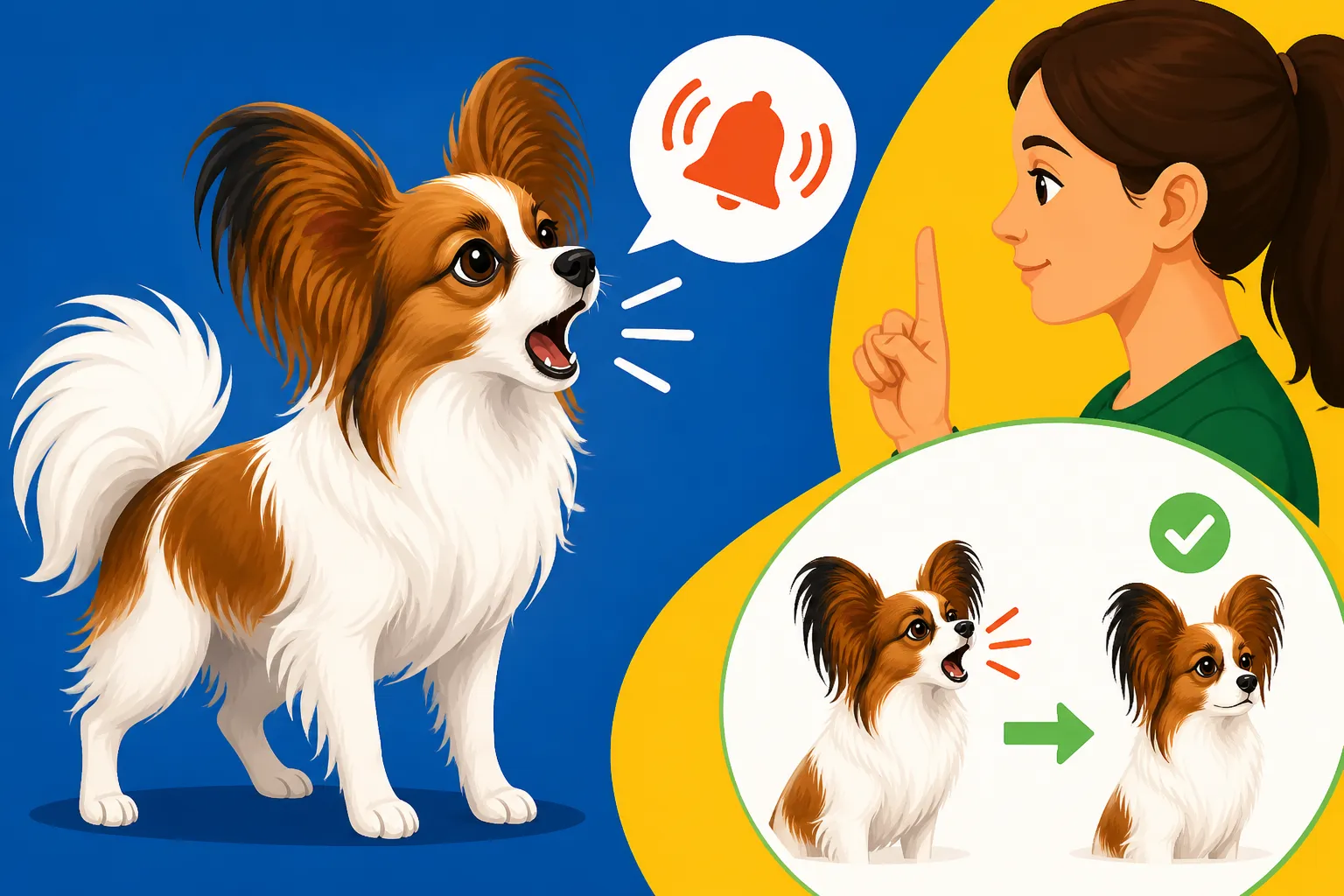
- The sequence: The moment your Papillon barks (alerting you!), let them get one or two barks out. Then, give your "Quiet" command.
- Reward the silence: The instant they fall silent, even briefly, mark and reward them heavily. You are rewarding the silence after the alert, not the barking itself.
- Increase intensity gradually: Over many sessions, gradually increase the intensity of the trigger. Have someone knock louder, ring the doorbell for longer, or eventually have them walk past the window. The goal is for your Papillon to learn: "I bark once, Mom or Dad says 'Quiet,' I stop, and I get a super delicious treat!" You want them to anticipate the "Quiet" command and the reward that follows.
- Practice diverse scenarios: Once they're good with a knock, move to the doorbell, then to a person walking by the window, then a dog barking on TV, and so on. You're building a generalized understanding that "alert once, then quiet" applies to many situations. Thinking about how your dog processes information, you might be interested in How a Clicker Lands With a Papillon to enhance your training.
Consistency and Management Are Key
This training method requires dedication, not just from you, but from everyone in your household. If one person allows the barking to continue, or accidentally reinforces it, you'll find yourself taking two steps back for every step forward.
Beyond active training, management plays a huge role.
- Prevent rehearsal: When you're not actively training, try to prevent unnecessary barking. Use baby gates to keep your Papillon away from trigger windows, use white noise machines to muffle outside sounds, or apply window film to block visual stimuli.
- Enrichment: A bored Papillon is a barking Papillon. Ensure they have plenty of mental and physical exercise. Puzzle toys, short training sessions, and interactive games can help fulfill their need for stimulation. This also ties into What Mental Work a Papillon Needs.
- Anticipate and redirect: If you know the mail truck is coming, be ready with a treat and their favorite toy. As soon as you hear it, before the barking starts, redirect their attention to something positive.
- Routine: A predictable routine can help reduce anxiety, which can be a barking trigger.
- Consider How Long a Papillon Copes Alone if you suspect separation anxiety contributes to their vocalizations.
Advanced Strategies and Common Pitfalls
Sometimes, despite your best efforts, your Papillon might still be a bit of a chatterbox. Or perhaps you're facing deeper behavioral challenges. It's important to know when to push harder and when to seek help.
Handling Stubborn Barkers and High-Value Rewards
If your Papillon seems to be ignoring your "Quiet" command during trigger training, it’s usually one of two things: either the reward isn't high enough value, or the trigger is too intense.
- Elevate the reward: Forget the regular kibble! For a Papillon, a high-value treat might be a tiny piece of cooked chicken, cheese, or a special commercial training treat they absolutely adore. The reward for being quiet after an alert must outweigh the satisfaction they get from barking. Experiment to find what truly motivates your particular Papillon.
- De-escalate the trigger: Go back a step. If they bark incessantly at the mail carrier, try having your helper walk past the house at a distance, not directly to the door. Work from a less intense version of the trigger and slowly build back up.
- Short, frequent sessions: Papillons are smart, but they have short attention spans for repetitive tasks. Keep training sessions brief – 5 to 10 minutes, several times a day – to maintain their engagement and prevent burnout.
Addressing Underlying Anxiety
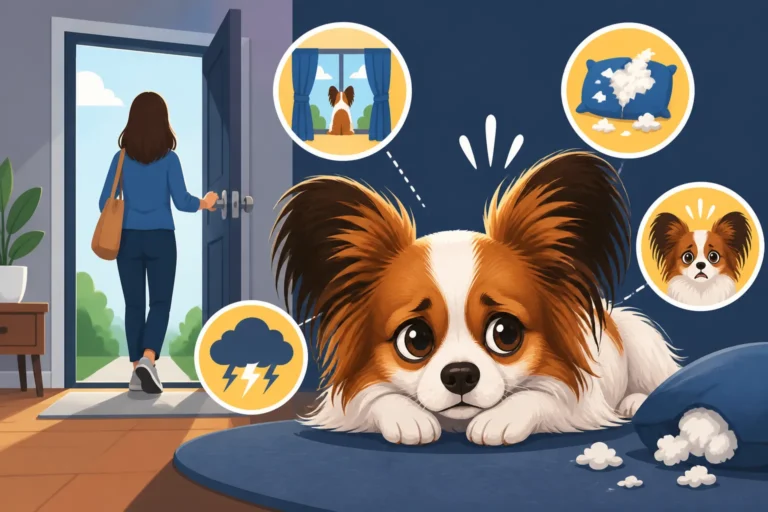
Sometimes, barking isn't just about alerting; it can stem from deeper emotional issues like fear or separation anxiety. If your Papillon barks excessively when left alone, paces, destroys things, or panics when you prepare to leave, you might be dealing with separation anxiety. This isn't something that can be fixed with just a "quiet" command.
Signs of anxiety might include:
- Constant barking and whining when you're not present.
- Destructive chewing, particularly around exit points.
- Potty accidents even when house-trained.
- Trembling, drooling, or frantic behavior when left alone.
If you suspect anxiety, it's highly recommended to consult a professional certified dog trainer or a veterinary behaviorist. They can help diagnose the issue and develop a comprehensive plan, which might include counter-conditioning, desensitization, and potentially medication in severe cases. Resources like BAXTER & Bella often have online courses and personalized coaching that can guide you through complex behavioral challenges. You might also find tools like calming diffusers or interactive feeder toys on Amazon helpful for managing mild anxiety or keeping them occupied. Understanding Signs a Papillon Has Separation Anxiety can guide your next steps.
Managing Environmental Factors
Even with the best training, sometimes your environment makes it challenging. Papillons, being alert little dogs, will always notice things.
- Visual barriers: If your Papillon barks at every passerby, consider window film, curtains, or strategically placed furniture to block their view.
- Sound masking: White noise machines, a radio, or television can help mask external sounds that trigger barking.
- Designated quiet space: Ensure your Papillon has a comfortable, safe space (like a crate or a cozy bed) where they can retreat and feel secure, away from high-traffic windows or doors. This can be especially helpful if you live in close quarters with neighbors, which can sometimes lead to Whether a Papillon Suits Close Neighbors being an issue.
Remember, the goal is not a perfectly silent dog – that’s often unrealistic and undesirable for an alert breed like the Papillon. The goal is a dog that can alert you calmly, understand your "Quiet" command, and then trust you to handle the situation. Progress, not perfection, is what we're aiming for.
Here’s a quick overview of the key differences in training approach:
| Command | Goal | Training Focus | Reward Timing |
|---|---|---|---|
| "Quiet" | Stop barking on cue, regardless of trigger. | Get dog to bark, then cue "Quiet," reward instant silence. | Immediately after silence, even a momentary pause. |
| "Alert & Quiet" | Bark once to alert, then be quiet on cue. | Introduce trigger, allow 1-2 barks, cue "Quiet," reward sustained silence. | After the "Quiet" cue and sustained silence. |
Disclaimer
This article is for general informational purposes only and does not constitute professional advice. Laws, prices and regulations vary by location and change over time. Consult a qualified professional for guidance on your specific situation.