Whether Indoor Pads Suit a Papillon
One of the most common frustrations new Papillon owners face, especially those living in apartments or dealing with unpredictable weather, is house training. These tiny dynamos have equally tiny bladders, and the idea of indoor potty pads often sounds like a brilliant, sanity-saving solution. This guide will delve deep into the pros and cons of using indoor pads for your Papillon, explaining why they might seem appealing but often create more challenges than they solve, and offering proven strategies for successful, pad-free house training.
The Allure and The Reality of Indoor Potty Pads for Papillons
It’s completely understandable why indoor potty pads can look like a perfect fit for a Papillon. They’re small, quick, and can feel like a direct answer to common house training woes. But, as with many seemingly simple solutions, there’s a deeper reality that often trips up even the most well-meaning owners.
Why Papillon Owners Consider Pads
Let's be honest, the thought of bundling up your little Papillon, especially one with delicate bone structure and a relatively thin coat, to go out into a blizzard or pouring rain at 3 AM can be daunting. Papillons, like many small breeds, aren't always keen on inclement weather. They can shiver uncontrollably in the cold, and a downpour can feel like an ocean to their tiny stature. This aversion to weather is a huge driver for owners looking into indoor alternatives.
Beyond the weather, there's the sheer practicality. A Papillon puppy has a bladder the size of a thimble, it seems. They need to go constantly. For those living on the tenth floor of an apartment building, or for owners with limited mobility, rushing outside every hour can feel like an impossible task. The convenience of a pad just a few feet away, eliminating the need for stairs, elevators, or long walks, is incredibly tempting. It promises freedom from constant vigilance and the hope of fewer accidents on your favorite rug.
Then, there's the perception of their size. Because Papillons are so small, some owners mistakenly believe they don't need the same rigorous house training as a larger dog. They might think, "Oh, it's just a tiny puddle, easy to clean up!" This mindset can inadvertently lead to a more relaxed approach to house training, making pads seem like a natural, low-effort alternative to teaching a solid outdoor routine.
The Double-Edged Sword: Convenience vs. Confusion
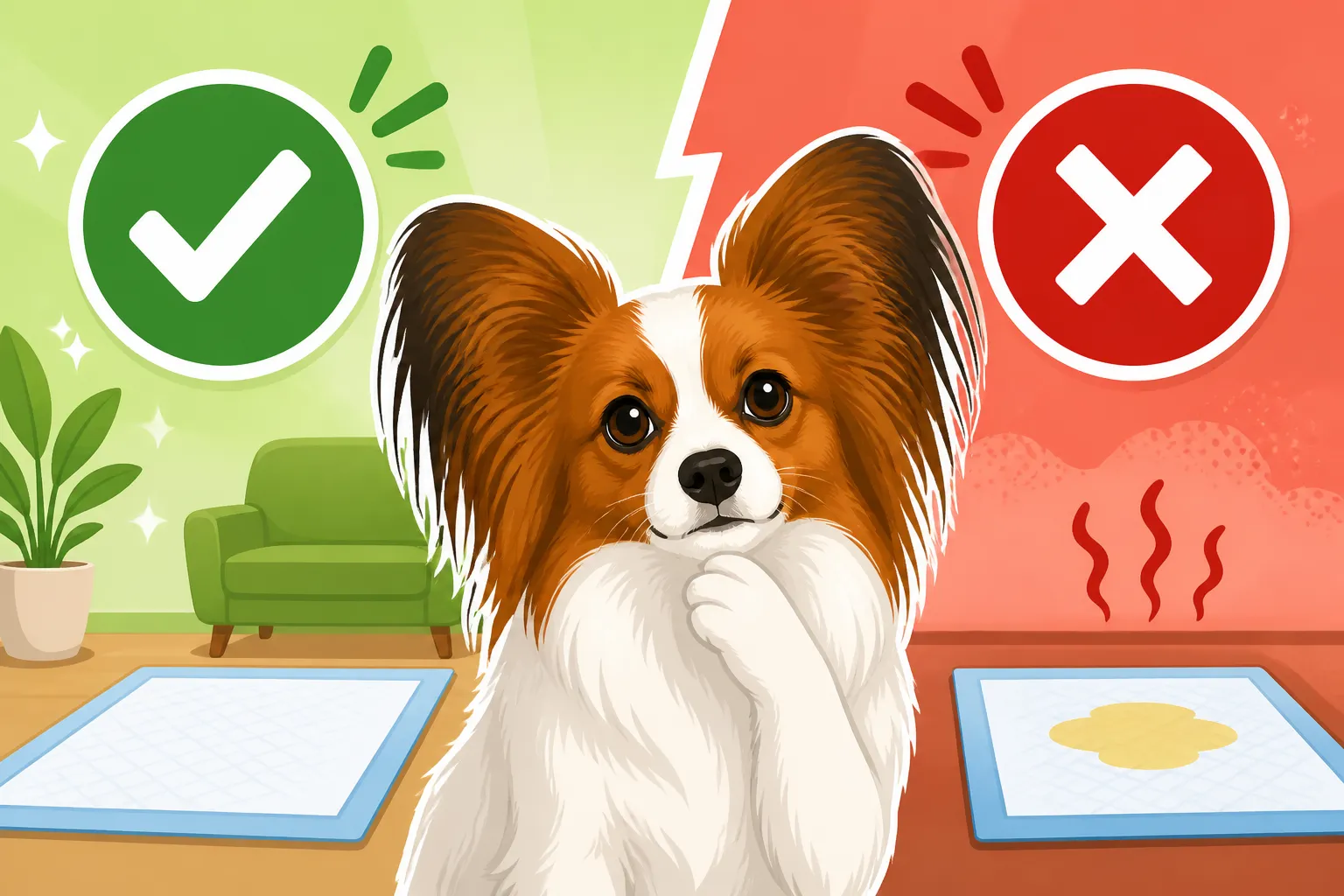
While the convenience of indoor pads is undeniable in the short term, it often becomes a double-edged sword that cuts into your long-term training goals. The primary issue is that pads teach your Papillon that it’s acceptable to relieve themselves inside the house. This is the exact opposite of what traditional house training aims to achieve, which is to establish that elimination happens only outdoors.
Imagine explaining to a toddler that it's okay to use a small portable potty in the living room, but only that specific potty, and later on, they'll need to learn to use the bathroom down the hall. It's a confusing message. For a dog, especially a smart but habit-forming Papillon, distinguishing between a designated indoor potty spot and other indoor spots can be incredibly difficult. They don't understand the nuances of "pad good, rug bad." They learn "soft, absorbent surface inside good."
This confusion can extend the house training process significantly. Instead of quickly grasping the concept of "outside = potty," your Papillon might develop a preference for indoor elimination, or worse, start having accidents on carpets, bath mats, or even piles of laundry, mistaking them for their designated pad. What started as a simple convenience can quickly morph into a persistent house-soiling problem, requiring a complete re-training effort that is often much harder than the initial training would have been.
When Pads Might Seem Like a Good Idea (and why they often aren't)
There are specific scenarios where pads might seem like a lifesaver. Apartment living is a big one. Without a yard, constant trips outside can feel like a full-time job, especially for a puppy. Elderly or disabled owners, or those with very long working hours, might also consider pads a necessity to prevent their Papillon from holding it for too long. And, of course, extreme weather conditions — think sweltering summers or icy winters — can make outdoor potty breaks genuinely uncomfortable or unsafe for a tiny dog.
However, even in these situations, pads often lead to more trouble down the road. For apartment dwellers, relying on pads can mean your Papillon never fully learns to cope with the sights, sounds, and distractions of outdoor elimination. They might become hesitant or anxious when taken outside, preferring the quiet familiarity of their indoor pad. For owners with limited mobility, while pads offer immediate relief, they don't address the underlying need for a dog to learn appropriate behavior for their environment. It essentially bypasses training rather than facilitating it.
And in cases of extreme weather, while a quick trip onto a patio or a covered porch might be a compromise, a full-time reliance on pads still sets up the "inside is okay" mentality. You'll often find that dogs trained exclusively on pads will balk at going out in even mild rain or cold, having developed a strong preference for indoor comfort. It's a short-term gain that often costs you in the long run, leading to a dog who is not reliably house trained for all situations, which can be a major source of stress for both owner and dog.
The Core Problem: Why Pads Often Hinder True House Training
The fundamental issue with indoor pads isn't their existence, but how they fundamentally alter the house training equation. Instead of teaching your Papillon to "hold it and go outside," they inadvertently teach a different, and often problematic, lesson.
Teaching the Wrong Lesson
When you train a Papillon with indoor pads, you are, by definition, teaching them to eliminate inside the house. This directly contradicts the goal of true house training, which is to teach them that the house is their den, a clean space where they should never soil. Dogs, by instinct, prefer not to soil their sleeping or living areas. Crate training effectively leverages this natural instinct, as dogs are usually reluctant to soil their crate. Crating a Papillon Overnight is a great way to start building this habit.
By introducing a pad, you're essentially creating an "approved" indoor toilet. This blurs the lines for your Papillon. They don't inherently understand the difference between a manufactured pad and a piece of carpet, especially if both are soft and absorbent. The concept of "inside bathroom" versus "outside bathroom" becomes incredibly confusing for them. This means that while they might use the pad, they might also see other areas of your home as fair game for accidents, especially if they can't get to the pad quickly enough or if the pad isn't perfectly clean. This can lead to a long and frustrating journey of cleaning up messes.
The Scent Confusion: Carpet vs. Pad
One of the biggest silent saboteurs of house training when using pads is scent. Dogs navigate their world significantly through smell. When your Papillon uses a potty pad, even if you clean it diligently, residual scent remains. This scent signals to your dog, "This is a potty spot!" The problem arises when this "potty spot" scent is associated with an indoor location and a specific texture.
Many pads have a texture similar to carpet or a bath mat. If your Papillon learns to associate the absorbent texture and the indoor scent of their pad with a place to eliminate, it's a very short leap for them to generalize that to other similar textures in your home. Your beautiful Persian rug, the soft bath mat outside the shower, or even a discarded pile of clothes can suddenly become an appealing alternative to the designated pad. This is not defiance; it's simply a dog doing what they've been taught, albeit imperfectly. The lingering smell, even after you've cleaned, encourages them to revisit and remark these "potty zones."
This scent confusion can be incredibly difficult to overcome. You might find yourself constantly cleaning "accidents" that, from your dog's perspective, aren't accidents at all, but rather appropriate eliminations in an area they perceive as a toilet. To truly house train, you need to establish a clear and absolute distinction: indoors is for living, outdoors is for eliminating.
Breaking the "Pad Habit" Can Be Tough
So, you've started with pads for convenience, or perhaps out of necessity, and now your Papillon is a pro at using them. Fantastic! But what happens when you decide you want them to be truly house trained to go outside? This is where many owners hit a wall. Breaking a deeply ingrained habit in a dog can be significantly more challenging than teaching the correct habit from the start.
Your Papillon has learned that the pad is a safe, easy, and immediate place to relieve themselves. Why would they choose to brave the elements, or wait to go on a leash, when their personal toilet is right there? The transition from pads to outdoor-only elimination requires essentially re-training your dog, undoing the previous learning. This often involves treating them like a brand-new puppy all over again, with constant supervision, frequent trips outside, and potentially more accidents during the transition period.
Owners often report that their pad-trained Papillons will hold it for extended periods outside, only to rush back in and use the pad (or a similar indoor surface) immediately. This can be incredibly frustrating and lead to owners giving up on outdoor training altogether. It also means that traveling with your Papillon, visiting friends or family, or even just leaving them with a pet sitter, becomes infinitely more complicated if they aren't reliably trained to go outside. The effort saved by using pads initially is often paid back tenfold in the struggle to break the habit later. How Long House Training a Papillon Takes can be even longer when pads are involved.
Effective Strategies for Papillon House Training Without Pads
Let’s be real: house training a small dog like a Papillon takes dedication, but it’s absolutely achievable without relying on pads. The key is consistency, positive reinforcement, and understanding your Papillon's natural instincts.
Consistency, Routine, and Rewards are Key
The bedrock of successful house training for any dog, especially a Papillon, is an ironclad routine. Your Papillon needs to learn when and where they are expected to eliminate. This means scheduled potty breaks like clockwork: first thing in the morning, after every meal, after every nap, before bedtime, and at least once or twice more throughout the day. Even if they don't seem like they need to go, take them out. Tiny bladders fill up quickly!
When you take your Papillon out, go to the same spot every single time. This helps them associate that specific area with relieving themselves. Use a consistent phrase, like "Go potty!" every time they eliminate. The moment they finish, lavish them with praise and high-value treats. I'm talking about tiny, pea-sized pieces of boiled chicken or cheese – something they absolutely adore. This immediate reward creates a powerful positive association with eliminating in the correct spot. Don't wait until you're back inside; the reward needs to happen right there, on the spot.
This routine is crucial for predicting when your Papillon will need to go. Young puppies especially need frequent trips. As they grow, their bladder control will improve, and you can gradually extend the time between breaks. Remember, a Papillon's small size doesn't mean less training; it means more frequent opportunities to get it right. This consistent effort will eventually pay off with a reliably house-trained dog. The Age a Papillon Is Reliably House Trained often depends heavily on this consistent routine.
Crate Training as a House Training Ally
Crate training is, hands down, one of the most effective tools for house training a Papillon. Dogs naturally want to keep their sleeping area clean. A properly sized crate – one where your Papillon can stand up, turn around, and lie down comfortably, but not large enough to use one end as a bathroom – taps into this instinct. If a crate is too big, they might just pee in one corner and sleep in the other, defeating the purpose.
Introduce the crate as a positive, safe den, not a punishment. Make it cozy with a soft bed and a favorite toy. Feed meals in the crate, and offer treats when they willingly go inside. The rule is simple: when your Papillon is not actively eating, playing, or being supervised, they are in their crate. This drastically reduces the opportunities for accidents in the house. The moment they come out of the crate, the very first thing you do is take them directly outside to their designated potty spot.
Using the crate also teaches bladder control. Your Papillon will learn to "hold it" because they don't want to soil their den. This is a vital step in house training. If they haven't eliminated outside after a reasonable amount of time (say, 5-10 minutes for a puppy, longer for an adult), put them back in the crate for a short period (15-20 minutes) and then try again. Repeat this cycle until success. Consistency with crate training will build a strong foundation for outdoor potty habits. Remember to check out Crating a Papillon Overnight for more specific tips on nighttime routines.
Supervised Potty Breaks and Leash Training
"Supervised" is the operative word here. Simply letting your Papillon out into the yard unsupervised is a recipe for disaster. They might get distracted by a butterfly, sniff around for a bit, come back inside, and then promptly relieve themselves on your floor because they forgot what they were out there for. Every single potty break must be supervised. Go out with them, on a leash, even if you have a fenced yard.
Being on a leash ensures they stay focused on the task at hand. It prevents them from wandering off to play and allows you to be right there to praise and reward the instant they do their business. This immediate feedback is crucial for solidifying the behavior. It also means you'll know for sure if they actually went potty, rather than just assuming they did. If they don't go, bring them back inside and put them in their crate for a short while before trying again.
For apartment dwellers, or those without yards, leash training for potty breaks is naturally integrated. Always take them to the same patch of grass or designated area. The goal is to make going outside to that specific spot synonymous with potty time. This consistent routine, combined with vigilant supervision, will dramatically accelerate your Papillon's understanding of proper house manners. This is part of What a Papillon Needs Every Day for mental and physical well-being, as well as hygiene.
Dealing with Accidents Gracefully
Accidents will happen, especially with puppies. It's a normal part of the learning process, and how you react is critical. If you catch your Papillon in the act of having an accident inside, interrupt them with a quick, startling noise (like a clap) to stop them, and immediately scoop them up and take them outside to their designated potty spot. If they finish eliminating outside, praise and reward them.
However, if you discover an accident after the fact – meaning you didn't see it happen – simply clean it up without any fuss. Do not scold, punish, or rub your Papillon's nose in it. Dogs do not associate punishment for an accident with the act itself if it happened minutes or hours ago. They will only learn to fear you or to hide their accidents, making house training even harder. You'll also miss valuable opportunities to see Signs a Papillon Puppy Is Not Thriving if they become fearful.
Cleaning up accidents effectively is also vital. Dogs are attracted to the lingering scent of urine or feces, which acts as a "here's a good place to go again!" signal. Use an enzymatic cleaner specifically designed to break down pet odors. Generic household cleaners might mask the smell for humans, but your Papillon's super-sensitive nose will still detect it. Products available on platforms like Amazon often include these specialized cleaners. Thorough cleaning removes the attractant and prevents your Papillon from repeatedly soiling the same spot.
When Indoor Solutions Are Truly Necessary (and how to approach them responsibly)
While generally not recommended for initial house training, there are rare situations where an indoor potty solution might become a genuine necessity for your Papillon. Even then, the approach needs to be thoughtful and strategic to minimize potential pitfalls.
Specific Scenarios Where Pads Could Be a Last Resort
Let's be clear: these are exceptions, not the rule. The most common scenario where an indoor solution might be considered is for a very elderly Papillon who has developed health issues impacting bladder control. Just like humans, senior dogs can experience incontinence or simply can't hold it as long as they used to. In these cases, demanding frequent outdoor trips might be unrealistic or even cruel, especially if they struggle with mobility or severe arthritis. Caring for an Aging Papillon often involves adjusting expectations and routines.
Another scenario might involve an owner with severe, debilitating mobility issues themselves, making constant trips outside impossible. This isn't about convenience, but genuine physical limitation. In such extreme cases, where a dog walker isn't a viable option, an indoor alternative becomes a compassionate compromise. However, this is distinct from mere preference or minor inconvenience.
Finally, in rare instances of truly extreme and prolonged weather conditions (think a week-long ice storm or oppressive heatwave where it's genuinely dangerous to be outside), a temporary indoor solution might be used. But this should be a very short-term measure, with the expectation of returning to outdoor elimination as soon as conditions allow. It’s important to distinguish between a temporary safety measure and a permanent training strategy. And keep in mind, Why a Papillon Refuses to Go Out in Rain is a common challenge that good training can usually overcome.
Choosing the Right Indoor Potty System
If you absolutely must use an indoor potty solution, choose wisely. The flimsy, scented paper pads often sold are typically the worst choice. Their texture and scent are too easily confused with other indoor surfaces, and they don't hold much, leading to frequent changes and increased waste.
Consider alternatives that offer a clearer distinction from your home's flooring.
- Artificial Grass Patches: These can be a better option as they mimic an outdoor surface, making the mental leap to "grass = potty" easier. Many come with trays for easy cleaning and some can even be washed. Brands found on Amazon offer various sizes and designs.
- Washable/Reusable Pads: These are more environmentally friendly and, if chosen with a distinct texture, might be less confusing than disposable pads. They still require diligent cleaning to prevent lingering odors that encourage re-soiling.
- Doggy Litter Boxes: Some small breeds can be trained to use a litter box with specialized dog litter. This offers a more contained solution and can be less messy than pads.
The goal, even with an indoor system, should be to make it as distinct from your living space as possible and to keep it impeccably clean. The more it smells and feels like an "indoor potty," the more likely your Papillon is to generalize that concept to your carpets.
| Indoor Potty System | Pros | Cons | Best Use Case |
|---|---|---|---|
| Disposable Pads | Readily available, easy disposal | Confusing for dog, wasteful, can smell quickly | Short-term emergency, very specific medical needs |
| Artificial Grass | Mimics outdoor feel, often reusable, good for patio use | Can be expensive, requires regular cleaning, some dogs chew grass | Long-term indoor solution for limited mobility, apartment living |
| Washable Pads | Eco-friendly, cost-effective long term, soft | Needs frequent washing, can still be confused with rugs if not distinct | Supplement to outdoor training, less wasteful than disposables |
| Doggy Litter Box | Contained, can use absorbent litter, clear boundaries | Not all dogs adapt, requires specific litter, may take training | Dedicated indoor space, for dogs who prefer privacy |
Integrating Indoor Options with Outdoor Expectations
If you are using an indoor potty system out of necessity, it’s still critical to try and maintain some level of outdoor expectation if possible. This means, whenever you can take your Papillon outside, do so. Make those outdoor trips just as rewarding and positive as they would be for a puppy in active house training. Praise lavishly, offer high-value treats, and ensure a positive experience.
The idea is to try and establish a hierarchy: outdoor elimination is always preferred and highly rewarded, while the indoor option is available only when absolutely necessary. This is a nuanced distinction for a dog, and not all Papillons will grasp it perfectly, but consistent effort helps. If your Papillon typically uses an indoor grass patch, for example, but you occasionally take them to a real grass patch outside, reinforce the outdoor behavior even more enthusiastically.
Even with an indoor system, continue to take your Papillon on regular walks for exercise and mental stimulation. What a Papillon Does All Day should include plenty of enrichment beyond just indoor potty breaks. These walks provide opportunities for them to eliminate outside, reinforcing the habit, even if they mostly use an indoor system. The objective is to prevent a complete reliance on indoor facilities, helping your Papillon feel comfortable and confident eliminating in various environments when the opportunity arises. Tools like the BAXTER & Bella online puppy school also offer resources on managing these hybrid training scenarios, focusing on positive reinforcement to guide your dog's choices.
While indoor potty pads might seem like the ultimate convenience for your small Papillon, they often introduce more complications than solutions in the long run. The best approach to house training your Papillon is consistent, patient, and focused on establishing outdoor elimination as the sole acceptable method. With a strict routine, effective crate training, supervised potty breaks, and graceful handling of accidents, your Papillon can become reliably house trained, enjoying a clean home and the freedom of knowing where to do their business.
Disclaimer
This article is for general informational purposes only and does not constitute professional advice. Laws, prices and regulations vary by location and change over time. Consult a qualified professional for guidance on your specific situation.