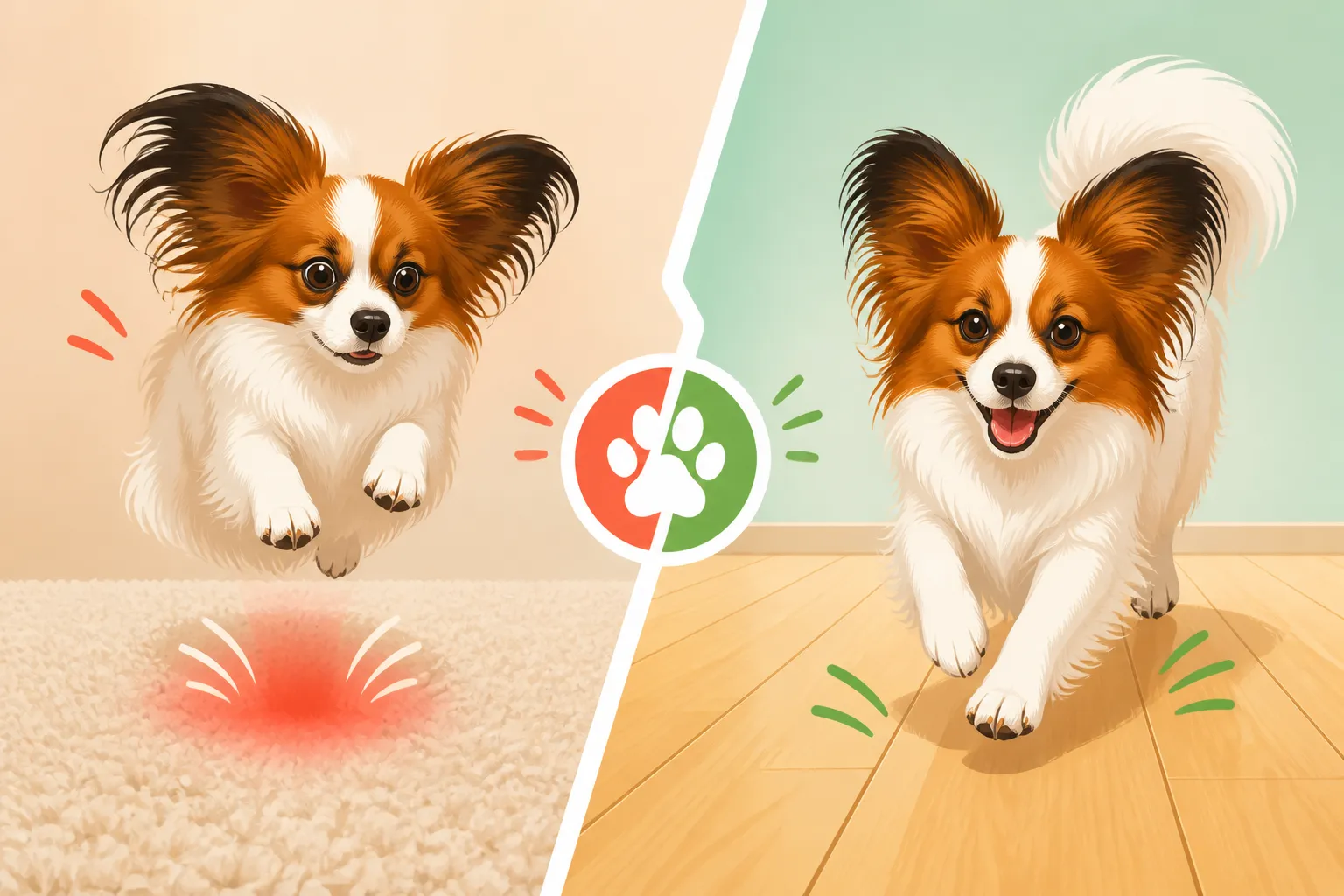
How Bare Floors Change a Papillon’s Landing
It’s a common dilemma in modern homes, isn't it? You love the look of your gleaming hardwood, laminate, or tile floors – they’re so chic, so easy to clean, and they really open up a space. But then you look down at your beloved Papillon, who seems to be doing an involuntary ice-skating routine every time they get a burst of zoomies, and a knot forms in your stomach. Bare floors, while beautiful to us, can be a real minefield for our small, agile companions, fundamentally changing how they move, play, and even land. This guide will walk you through the very real challenges bare floors present for Papillons and offer practical, empathetic solutions to help your little butterfly thrive in your home.
The Hidden Dangers of Bare Floors for Your Papillon's Movement
We adore our Papillons for their boundless energy and graceful, sprightly movements. They dart, they weave, they leap – it’s all part of their charm. But watch closely on a slick floor, and you’ll notice that grace can quickly turn into a series of awkward tumbles and hesitant shuffles. It’s not just about a funny slip here and there; these surfaces can pose significant risks to their musculoskeletal health and overall confidence over time.
The Anatomy of a Papillon's Landing
Think about how a dog’s paw is designed. Those little pads, especially on a Papillon, are meant to provide traction on varied terrain, whether it's grass, dirt, or carpet. They have a certain amount of grip, but it's nothing compared to the sticky soles of our shoes. When a Papillon jumps off the sofa or lands after a playful leap, their paws hit a hard surface with an impact. On a carpet, the fibers cushion the blow and allow their pads and nails to gain purchase, absorbing some of that kinetic energy.
On a bare floor, however, that cushioning is entirely absent. The paw slips, often splaying outwards, and the force of the landing is transferred directly up their leg and into their joints. For a breed like the Papillon, which is already prone to certain orthopedic issues, this repeated, jarring impact can be incredibly detrimental. Imagine trying to land a jump on an ice rink – that’s essentially what our dogs are doing every time they misjudge a landing on your polished floor. It puts immense, unnatural strain on their ankles, knees, and hips, areas that are already vulnerable.
How Bare Floors Affect Gait and Confidence
It's not just the big jumps that cause problems. Even everyday walking on a bare floor can change a Papillon’s gait. You might notice them walking with their legs splayed wider, almost like they’re trying to create a broader base of support. Their claws might click loudly as they try to dig in for traction, and their movements can become more stiff and deliberate instead of their usual fluid stride. They might even develop what we call a "crab walk," moving sideways in an effort to stay stable.
This unnatural way of moving isn’t just inefficient; it’s a constant stressor on their joints and muscles. Over time, it can lead to muscle imbalances as they try to compensate, further exacerbating any underlying orthopedic tendencies. More heartbreakingly, it can deeply impact their confidence. A dog that is constantly slipping and struggling to maintain its footing might become hesitant to move quickly, to play, or even to explore parts of the house where the floors are particularly slick. You might find them sticking to rugs or avoiding certain rooms entirely. It can dampen their spirits, turning a naturally joyful and active dog into one that is visibly cautious and even a little anxious about simply navigating their own home.
Patellar Luxation and the Bare Floor Connection
For many Papillon owners, the phrase "patellar luxation" is a familiar and often feared one. It's a condition where the kneecap (patella) dislocates or slips out of its normal groove in the thigh bone (femur). It's a common issue in smaller breeds, and while it often has a genetic component, environmental factors, especially slippery floors, can play a huge role in its development and progression.
Understanding Patellar Luxation in Papillons
Patellar Luxation Is the Papillon Problem You Will Actually Meet details this condition, but it's worth reiterating here: imagine your kneecap as a small bone that's supposed to glide smoothly up and down a track when you bend your knee. In patellar luxation, that kneecap pops out of the track. It can happen intermittently, or it can be a persistent issue. Vets typically grade it from 1 to 4, with 1 being a mild, occasional slip and 4 being a permanent dislocation that causes significant lameness.
Papillons are unfortunately genetically predisposed to this condition. Even if a puppy starts with healthy knees, repeated trauma and strain can contribute to the weakening of the ligaments and muscles around the knee, making it more likely for the kneecap to slip. Every time your Papillon slips or lands awkwardly on a bare floor, that little kneecap is put under abnormal stress. The sudden jarring motion can force it out of its groove, and while it might pop back in on its own, each incident contributes to wear and tear. What Patellar Luxation Does to a Papillon explains the specifics of the impact on your dog's leg.
The Cumulative Stress of Repeated Slipping
It’s not usually one big fall that causes a severe case of patellar luxation or makes an existing one dramatically worse. It’s the cumulative effect of hundreds, if not thousands, of small slips and jarring landings over weeks, months, and years. Think of it like tiny micro-traumas adding up. Each time your Papillon scrambles to regain footing on a slick surface, their muscles tense, their joints flex unnaturally, and their kneecaps are vulnerable.
This constant, low-level stress can lead to accelerated degeneration of the joint cartilage and soft tissues surrounding the knee. Even if your Papillon has only a Grade 1 luxation, continually slipping can prevent the knee from stabilizing, preventing the ligaments from strengthening, and potentially causing the condition to progress to a higher grade. This can manifest as increased lameness, more frequent "skipping" steps, or even a noticeable shift in their weight distribution as they try to avoid putting pressure on the affected leg. You might observe them trying to keep their weight centered over their back legs, or being hesitant to put full weight on a leg when landing. Whether a Papillon's Knees Get Worse With Age further explores how these issues can progress over time. The unseen pain and discomfort can be immense, even if your stoic Papillon tries to hide it. How a Papillon Hides Pain is a must-read for understanding subtle signs of discomfort.
Practical Solutions for a Safer Home Environment
The good news is that you don't have to choose between your beautiful floors and your Papillon's health. There are plenty of effective and often aesthetically pleasing ways to create a safer environment, mitigating the risks associated with bare floors. It’s all about creating islands of traction and safe pathways.
Strategic Rug Placement and Traction Aids
The simplest and most effective solution is to strategically place rugs and runners. Think about your Papillon’s usual routes through the house: from their bed to their food bowl, along hallways, in front of the sofa where they might jump off, and in any areas where they tend to play or zoom. These are your prime locations for adding traction.
- Runner Rugs: Ideal for hallways and connecting different rooms. Look for runners with built-in non-slip backing, or purchase separate rug pads to place underneath. This is crucial; a rug that slips itself is just another hazard!
- Area Rugs: Use these in living areas, bedrooms, and any open spaces where your Papillon spends a lot of time. Again, ensure they have proper non-slip padding.
- Interlocking Foam Mats: For play areas, especially if you have a very active or young Papillon, interlocking foam mats can provide excellent cushioning and grip. They might not be the most stylish option for your formal living room, but they are fantastic for a dedicated play space or even underneath a ramp to break a fall.
- Paw Grips and Balms: Some owners find success with non-slip paw pads or specialized paw balms that increase friction. These can be helpful for short periods or specific situations, but they aren't a substitute for addressing the floor itself. You can find many options on sites like Chewy or Amazon.
- Nail Care: Keep your Papillon's nails trimmed short. Overly long nails can make it even harder for their paw pads to make contact with the floor, turning their nails into mini-skates. Regular nail trims are a small but significant detail in providing traction. Why a Papillon's Nails Affect Its Knees goes into more detail on this often-overlooked aspect of care.
Furniture Accessibility and Safe Jumping
Papillons are known for their love of being near their people, which often means they're eager to join you on the sofa or bed. However, jumping up and, especially, jumping down from furniture onto bare floors is one of the riskiest activities for their delicate joints.
- Ramps and Steps: This is a game-changer. Invest in ramps or pet steps for furniture that your Papillon frequents. They come in various styles and materials, and you can usually find one that blends with your decor. Teach your Papillon to use them consistently. It takes a little patience and positive reinforcement, but it's well worth it for their long-term health. Look for options with a gentle slope and a non-slip surface, again, on sites like Chewy or Amazon. Whether Ramps Help a Papillon's Knees discusses this in more detail.
- The "No Jump" Rule: For some furniture, or for dogs who struggle to learn ramps, it might be safer to implement a strict "no jumping off" rule. This means you consistently lift them off the furniture. While it might seem like a hassle, it drastically reduces the risk of injury. It also helps reinforce the idea that they don't need to launch themselves off things like tiny missiles. Whether a Papillon Should Be Stopped From Jumping Off Furniture offers further perspective on this.
- Consider Lower Furniture: If you're furnishing a new space or replacing old pieces, consider furniture with a lower profile. Even a few inches less in height can make a significant difference in the impact of a landing.
Long-Term Management and Supportive Care
Even with the best preventative measures, a Papillon living in a home with some bare floors will likely experience some degree of impact on their joints. Therefore, a proactive approach to long-term health and supportive care is essential to keep them comfortable and active throughout their wonderfully long lives. How Long a Papillon Lives is a testament to the longevity of the breed, which means we need to think about long-term joint care.
Regular Vet Checks and Early Intervention
Your veterinarian is your best partner in managing your Papillon's joint health. Regular check-ups, ideally twice a year for adult and senior dogs, allow your vet to monitor their mobility, assess their kneecaps, and catch any issues early.
- Baseline Assessments: During routine exams, your vet can gently palpate your Papillon's knees to check for any patellar instability. Establishing a baseline when they are young and healthy helps identify changes more readily as they age.
- Joint Supplements: Many vets recommend joint supplements containing ingredients like glucosamine, chondroitin, and MSM, especially for breeds prone to joint issues or those living in environments that stress their joints. These supplements can help support cartilage health and reduce inflammation. Discuss appropriate options and dosages with your vet.
- Weight Management: Keeping your Papillon at a healthy weight is paramount for joint health. Even a few extra ounces can put significant strain on their small knees and hips. A veterinarian can help you determine your dog's ideal weight and recommend a feeding plan. High-quality dog food, like that offered by Ollie, can be tailored to your dog's specific caloric needs and life stage, helping to maintain a healthy weight.
- Addressing Pain: If your Papillon shows signs of pain, however subtle – limping, reluctance to play, changes in gait, or unusual aggression when touched – don't hesitate to seek veterinary advice. Early intervention can prevent minor issues from becoming debilitating problems. Pain management might involve anti-inflammatory medications, physical therapy, or even surgery if a severe luxation is present. How a Papillon Recovers From Knee Surgery outlines the post-operative care if it ever comes to that.
Training for Confidence and Balance
Beyond physical interventions, mental and physical conditioning through specific training can significantly improve your Papillon's body awareness, strength, and confidence, making them more resilient to the challenges of bare floors.
- Core Strength Exercises: Just like in humans, a strong core helps stabilize the entire body. Simple exercises like controlled walking over low obstacles, balancing on unstable surfaces (like a wobble board or cushion, under supervision), or even teaching them to "sit pretty" can engage their core muscles. These exercises should be low-impact and performed on a grippy surface.
- Body Awareness (Proprioception): Training exercises that encourage your Papillon to be aware of where their feet are in space can be incredibly beneficial. Teaching them to step over a pole, weave through your legs, or target specific paw placements can improve their balance and coordination. This makes them less likely to slip because they're more intentional with their footfalls.
- Controlled Activity: Don't let bare floors deter you from exercising your Papillon, but choose safe activities. Instead of letting them charge wildly across a slippery living room, take them to a park with grass, engage them in puzzle toys on a mat, or do short, controlled training sessions on a rug. They are smart, active dogs who need mental and physical stimulation. What a Papillon Does All Day shows just how much activity they thrive on.
By combining practical adjustments to your home environment with attentive veterinary care and targeted training, you can ensure your Papillon navigates your beautiful home with confidence, comfort, and the grace we all adore, no matter how many bare floors you have. It's about creating a harmonious living space where both your aesthetic preferences and your dog's well-being are prioritized.
| Floor Type | Traction for Papillon | Impact on Joints | Recommended Action |
|---|---|---|---|
| Hardwood/Laminate | Very Low | High (jarring) | Add non-slip rugs, runners, provide ramps to furniture. Keep nails trimmed. Consider paw grips. |
| Tile | Low | High (jarring) | Similar to hardwood, but often colder. Use rugs, consider warming beds. |
| Carpet | High | Low (cushioned) | Ideal for Papillons. Ensure clean, well-maintained carpet to prevent mats in long fur. |
| Vinyl/Linoleum | Moderate to Low | Moderate to High | Often less slick than polished wood/tile, but still benefits from rugs in high-traffic or jump-off areas. |
| Concrete (sealed) | Very Low | Very High | Avoid if possible indoors. If unavoidable, use thick, non-slip mats or rubberized flooring heavily. Not ideal. |
Disclaimer
This article is for general informational purposes only and does not constitute professional advice. Laws, prices and regulations vary by location and change over time. Consult a qualified professional for guidance on your specific situation.