When a Papillon’s Baby Teeth Must Be Pulled
It's incredibly frustrating and often quite worrying when you notice your little Papillon's baby teeth just aren't falling out like they should, especially when their adult teeth are already trying to make an appearance. You might wonder if it's normal, if it will resolve itself, or if you're looking at an expensive trip to the vet. This guide is here to walk you through exactly when a Papillon's baby teeth need to be pulled, helping you understand the signs, the timeline, and what to do next to protect your furry friend's dental health.
Understanding the Papillon's Unique Oral Challenges
Papillons are delightful little dogs, full of spirit and charm, but their tiny mouths come with a distinct set of challenges when it comes to dental health. Unlike larger breeds, the limited space in their jaws can lead to overcrowded teeth, and this issue often starts right from puppyhood with retained baby teeth.
The Problem of a Crowded Papillon Jaw
The average adult Papillon only weighs between 5 and 10 pounds, and their skull and jaw are proportioned to that petite size. However, the number and size of their adult teeth are often comparable to those of a much larger dog, just packed into a much smaller space. This anatomical reality means that overcrowding is almost a given, even under ideal circumstances. When a baby tooth, also known as a deciduous tooth, decides to stick around longer than it should, it exacerbates this crowding. It's like trying to fit too many books on a small shelf – something has to give, and usually, it's the proper alignment and health of the permanent teeth. You can read more about The Teeth in a Papillon's Small Jaw to get a full picture of their dental setup.
How Retained Baby Teeth Impact Adult Dentition
When a baby tooth doesn't fall out, the adult tooth often emerges right alongside it, or sometimes even underneath or in front of it. This creates a few serious problems. First, it pushes the adult tooth out of its correct position, leading to misalignment, which we veterinary professionals often call malocclusion. Imagine trying to eat and chew effectively when your teeth don't meet properly – it can be painful and inefficient for your dog.
Secondly, these extra teeth act like little food traps. Food particles and bacteria get stuck between the baby tooth and the emerging adult tooth, in an area that's incredibly difficult to clean, even with diligent brushing. This creates a perfect breeding ground for plaque and tartar, accelerating the onset of periodontal disease. This is particularly concerning because Papillons are already prone to dental disease, often showing signs of tartar buildup at a surprisingly young age. You might be interested in learning about How Early Tartar Appears on a Papillon. Leaving these retained teeth in place can lead to chronic inflammation, gum disease, and ultimately, premature tooth loss in their adult teeth, significantly shortening How Long a Papillon Lives.
Identifying When a Papillon's Baby Teeth Are Causing Trouble
It’s easy to miss subtle dental issues in a small dog, especially when they’re still full of puppy energy. However, keeping a close eye on your Papillon's mouth as they transition from puppy to adult is crucial. Generally, all baby teeth should have fallen out by around 6 months of age. If you see any baby teeth still present past this milestone, it's time to pay attention.
Visual Cues of Retained Deciduous Teeth
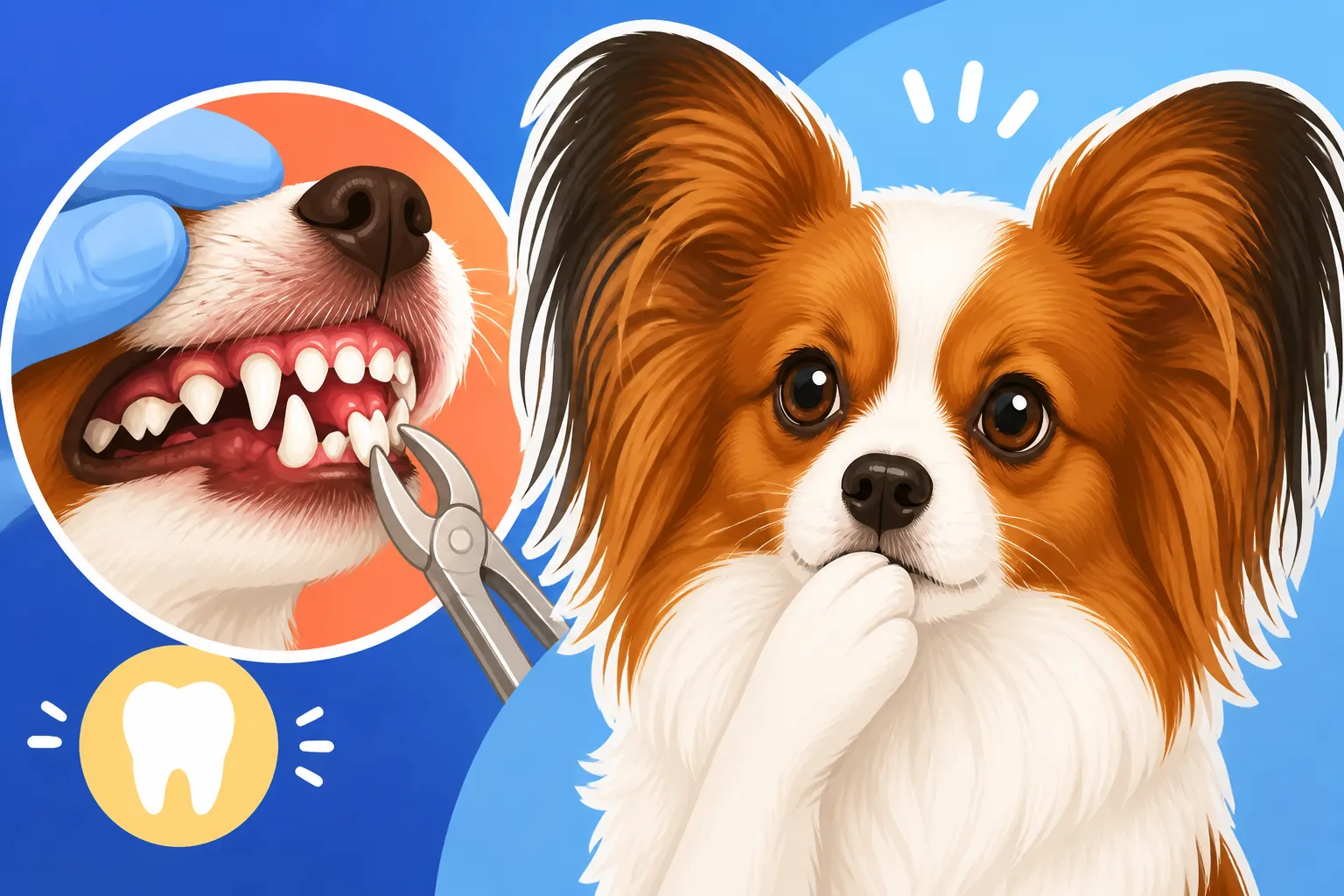
The most obvious sign is seeing two teeth occupying the space where only one should be. This is often called "double dentition." Typically, the canine teeth (the longer, pointed teeth at the front of the mouth) are the most common culprits for retention, but incisors (the small front teeth) and premolars can also persist. Look for:
- Two teeth side-by-side: This is often seen with canine teeth, where the baby canine is still firmly in place while the adult canine erupts right next to it.
- Crowded or misaligned adult teeth: If the adult tooth is being pushed significantly out of its normal position by a baby tooth, this is a clear indicator of a problem.
- Inflamed gums around the retained tooth: The constant irritation and food trapping can lead to redness, swelling, or even bleeding gums.
A good habit is to gently lift your Papillon's lips regularly, starting from a young age, to get them accustomed to mouth examinations. This makes it easier for you to spot issues and for your vet to conduct their checks.
Behavioral Signs Your Papillon Might Be in Discomfort
While some dogs are incredibly stoic, persistent dental issues can cause discomfort that manifests in their behavior. It's not always obvious, as a slight change in eating habits might be attributed to pickiness rather than pain. Keep an eye out for:
- Difficulty eating or reluctance to chew: Your Papillon might drop food, chew only on one side of their mouth, or prefer softer foods. If they usually love crunchy kibble but suddenly hesitate, that's a red flag.
- Excessive drooling or pawing at the mouth: While not always present, these can be signs of oral discomfort or pain.
- Bad breath: This isn't just unpleasant; it's a key indicator of bacterial buildup and potential infection, especially when paired with retained teeth. As we delve into How Common Dental Disease Is in Papillons, you'll see how quickly issues can escalate.
- Irritability or changes in temperament: Pain can make even the sweetest Papillon a bit grumpier or less tolerant of being touched around their face.
It's important to remember that these signs can be subtle. If you have any concerns, a vet visit is always the best course of action.
The Critical Timeline for Extraction
The general consensus among veterinarians is that if a baby tooth is still present when its adult counterpart begins to erupt, it needs to be removed. This window of opportunity is crucial to prevent long-term dental problems.
When to Consult Your Veterinarian
Ideally, your Papillon puppy should have a vet check-up around 4-6 months of age, which is when most of their adult teeth are starting to come in. During this exam, your vet will thoroughly check for retained baby teeth. If your vet identifies any retained teeth at this stage, they will usually recommend scheduling an extraction.
Delaying the extraction can cause the adult teeth to become permanently misaligned. The longer a retained baby tooth remains, the more likely the adult tooth will establish itself in an incorrect position, potentially requiring more complex orthodontic treatment later, which is often not practical for dogs. So, don't wait and hope it will fall out on its own if the adult tooth is already there. It rarely does.
Here's a quick overview of typical tooth eruption and shedding in Papillons:
| Tooth Type | Eruption (Baby Teeth) | Shedding (Baby Teeth) | Eruption (Adult Teeth) |
|---|---|---|---|
| Incisors | 3-6 weeks | 3-5 months | 3-5 months |
| Canines | 3-6 weeks | 4-6 months | 4-7 months |
| Premolars | 3-6 weeks | 4-6 months | 4-7 months |
| Molars | (No baby molars) | (No baby molars) | 4-7 months |
Note: This is a general guide. Individual timelines can vary slightly, but persistent baby teeth past 6-7 months are a concern.
The Extraction Procedure
Extracting retained baby teeth is a surgical procedure that requires general anesthesia. This can be a scary thought for any pet owner, especially with a tiny Papillon. However, the benefits of preventing future dental disease and pain far outweigh the risks associated with anesthesia, especially when handled by an experienced veterinary team. You might be concerned about Anesthesia and a Five Pound Papillon, but modern veterinary anesthesia is very safe, particularly for routine procedures.
Before any anesthesia, your vet will conduct a thorough physical exam and recommend pre-anesthetic bloodwork to ensure your Papillon is healthy enough for the procedure. This is a vital step in minimizing risks. During the procedure, the vet will carefully extract the retained tooth, ensuring the entire root is removed. Sometimes, sutures are placed to aid healing.
After the extraction, your Papillon will likely be sent home with pain medication and possibly antibiotics. You'll need to feed them soft food for a few days and monitor the extraction site. Most Papillons recover remarkably quickly from this procedure and are back to their usual playful selves very soon.
Financial Considerations and Preventative Measures
Understanding the costs associated with retained teeth and planning for ongoing dental care is part of being a responsible Papillon owner. It's not just about the immediate bill, but also the long-term health benefits for your beloved companion.
Cost of Extraction and Why It's Worth It
The cost of extracting retained baby teeth can vary depending on your location, your veterinarian's fees, and the complexity of the extraction (e.g., if the root is particularly long or fractured). It will typically include the examination, pre-anesthetic bloodwork, the anesthesia itself, the extraction procedure, pain medication, and potentially antibiotics. While it might seem like a significant expense for a "baby tooth," consider it an investment in your Papillon's future oral health. Preventing severe overcrowding and early-onset periodontal disease can save you much larger bills down the road.
If you have pet insurance, this type of procedure is often covered, as it's a necessary medical intervention rather than a cosmetic one. Providers like Healthy Paws can be incredibly helpful in mitigating these unexpected veterinary expenses. It's always worth checking your policy details or considering insurance when you first get your puppy. For more on what veterinary costs look like, including dental work, you might want to look at What a Papillon's Dental Costs and What Anesthesia Adds to a Papillon's Dental Bill.
Proactive Dental Care Beyond Extractions
Even after retained baby teeth are removed, your Papillon's small, crowded mouth means they will always be at a higher risk for dental disease throughout their life. This makes a proactive approach to dental care absolutely essential.
- Daily Brushing: This is the gold standard for preventing plaque and tartar buildup. Start early, make it a positive experience, and use a dog-specific toothbrush and toothpaste. Even a few minutes a day makes a huge difference.
- Dental Chews and Toys: Choose vet-approved dental chews that are appropriately sized for your Papillon and can help scrape away plaque. Always supervise your dog with chews.
- Regular Veterinary Check-ups: Your vet will examine your Papillon's teeth at every wellness visit and recommend professional dental cleanings under anesthesia when necessary. These cleanings allow for thorough scaling above and below the gum line, and polishing, which is crucial for preventing disease progression. You can learn about How Often a Papillon Needs a Dental Cleaning to plan ahead.
- Consider Pet Insurance: As mentioned, a good pet insurance plan from a company like Healthy Paws can provide peace of mind for both routine dental cleanings (if wellness plans are included) and any unexpected dental surgeries that may arise later in your Papillon's life. Being prepared for future dental needs is crucial for a breed like the Papillon.
By being vigilant about your Papillon's baby teeth and committing to lifelong dental care, you're ensuring they lead a comfortable, healthy life free from preventable pain. Even into their senior years, Caring for a Papillon Past Eleven involves continuous dental vigilance.
Disclaimer
The information provided in this article is for general informational purposes only and is not a substitute for professional veterinary advice. Always consult with a qualified veterinarian regarding any health concerns or before making any decisions about your pet's medical care.