Whether a Papillon Suits a Full Time Worker
It's a question many aspiring Papillon owners grapple with: "I adore these little butterfly dogs, but I work a full-time job. Can I really give a Papillon the life it deserves?" The truth is, balancing a demanding work schedule with the needs of a bright, energetic Papillon isn't always easy, and it certainly isn't a decision to take lightly. This guide will help you honestly assess the commitment and explore the practical strategies that can make it work, without sacrificing your future furry friend's well-being.
Understanding the Papillon's Needs: More Than Just a Lapdog
Before diving into logistics, it’s crucial to understand the fundamental nature of the Papillon. These aren't just pretty little dogs meant to sit on a velvet pillow all day. They come with a rich history as active companions, and their intelligence and vivacity demand engagement.
High Energy and Mental Acuity
Papillons are renowned for their intelligence. In fact, many people call them "big dogs in little bodies" because their brains are far too large for their small stature. They consistently rank very high on lists of canine intelligence, often touted as The Papillon Is the Smartest Toy Breed There Is. This isn't just a fun fact; it has real implications for daily life. A Papillon needs more than just a quick scamper in the yard; they crave mental challenges. If they don't get them, that sharp mind will find its own "work," which often translates into less-than-desirable behaviors like excessive barking, chewing, or developing obsessive habits.
Imagine a highly intelligent child left alone in a room with no books, no toys, and nothing to do for eight to ten hours a day. They wouldn't just sit quietly; they'd likely start exploring, dismantling, or causing mischief out of sheer boredom and a need for stimulation. A Papillon is much the same. They learn incredibly fast—you might find them mastering a new trick in just a handful of repetitions, proving How Fast a Papillon Learns a New Cue. This capacity for learning, while a joy, also means they require consistent mental engagement. A full-time worker must consider how they will provide this intellectual outlet before and after work, and potentially during the workday.
Social Butterflies Who Thrive on Connection
Papillons are, at their core, companion dogs. They were bred for centuries to be cherished members of the household, sitting on laps and engaging with their human families. This history means they form strong bonds and thrive on interaction. They aren't aloof or independent; they want to be where you are, participating in whatever you're doing. Leaving a Papillon alone for long stretches can be particularly hard on their sensitive, social nature. They want to be part of the action, not isolated in a quiet house.
Their need for connection isn't just about cuddles; it's about feeling secure and integrated into the family unit. When they are deprived of consistent human interaction, they can become anxious or distressed. This isn't a reflection of their training or your love; it's simply their breed predisposition. While a Papillon might learn to tolerate solitude for a few hours, consistent, extended periods of isolation can take a toll on their emotional well-being over the long How Long a Papillon Lives. This is especially true if they are a puppy who is still developing their sense of security or a senior dog whose needs might be changing. Caring for an Aging Papillon often means more comfort and companionship, not less.
Addressing the "Alone Time" Challenge
The biggest hurdle for a full-time worker considering a Papillon is, understandably, the amount of time the dog will spend alone. It's a logistical reality that needs careful, realistic planning.
The Reality of an Eight-Hour Workday (Plus Commute!)
Let’s be honest with ourselves: an eight-hour workday rarely means your dog is only alone for eight hours. Factor in your commute, any errands you run on the way home, and maybe a quick stop to grab dinner, and that "eight hours" can easily stretch to nine, ten, or even eleven hours away from home. For a small dog like a Papillon, this is a significant portion of their day. Their bladders are tiny, and even a fully house-trained adult dog will struggle to hold it for such extended periods. This can lead to accidents indoors, which is frustrating for owners and certainly not ideal for the dog.
For a Papillon puppy, this schedule is simply unworkable. Puppies need to go out every couple of hours, sometimes more frequently. Trying to house-train a Papillon puppy while you're away for ten hours a day is a recipe for disaster and will only prolong How Long House Training a Papillon Takes. Even for an adult dog, consistently being forced to hold their bladder or soil inside can lead to urinary tract issues over time and certainly doesn't foster good habits or comfort. Think about how you would feel if you couldn't use the restroom for ten hours!
The Risk of Separation Anxiety and Destructive Behaviors
When a highly intelligent and social dog like a Papillon is left alone for too long, without adequate mental and physical stimulation, boredom quickly turns into anxiety or destructive behavior. You might return home to discover chewed furniture, scratched doors, or "accidents" that aren't really accidents but manifestations of stress. These aren't acts of spite; they are often clear Signs a Papillon Has Separation Anxiety or simply a dog trying to cope with under-stimulation. A Papillon's small size might make you think the damage would be minimal, but a determined, anxious Papillon can certainly make a mess, whether it's by pulling apart cushions or systematically destroying the leg of a chair. What a Papillon Chews can quickly escalate from toys to your cherished belongings if their needs aren't met.
The quiet, gentle demeanor you might see in a Papillon in your presence can completely change when they are left alone and feeling vulnerable or bored. Excessive barking is another common complaint from full-time workers. This can be problematic if you live in an apartment or have close neighbors, leading to stress for both you and your dog, and potentially strained relationships with those around you. It's a cycle of frustration that can become very difficult to break without significant intervention.
Strategies for Successful Papillon Ownership as a Full-Time Worker
So, does this mean a full-time worker can never own a Papillon? Not necessarily, but it means you must be proactive, dedicated, and willing to invest time, energy, and potentially money into creating a supportive environment for your dog.
Building a Strong Support Network
One of the most effective ways to mitigate the challenges of full-time work is to outsource some of your dog's daily care.
- Professional Dog Walkers: For many full-time Papillon owners, a mid-day dog walker is a non-negotiable expense. A reliable dog walker can break up your dog's alone time, provide a potty break, and offer some much-needed exercise and social interaction. This isn't just about physical relief; it's also mental stimulation from seeing new sights and smells. Finding a trustworthy, insured, and bonded walker who understands the specific needs of small, energetic breeds like Papillons is key.
- Doggy Daycare: Depending on your Papillon's personality, doggy daycare could be an excellent option a few days a week. It offers supervised play, socialization with other dogs (often in small-dog-specific groups), and constant human interaction. However, it's not for every Papillon. Some may find the environment overwhelming, especially if they are more reserved or prefer human company over canine. Always do a trial day and ensure the facility is clean, safe, and attentive to smaller breeds.
- Family and Friend Support: If you're fortunate enough to have family or trusted friends who live nearby and are willing to help, this can be invaluable. Perhaps a grandparent loves to visit and spend time with your dog, or a friend who works from home could offer mid-day visits. This option often provides a more familiar, comforting presence for your Papillon.
Optimizing Your Time at Home
Even with external help, your time at home with your Papillon needs to be intentional and enriching. It's about quality and quantity when you're present.
- Maximal Engagement Mornings and Evenings: Don't just let your Papillon out for a quick potty break before heading off to work. Dedicate time to engaging them. A brisk walk, a vigorous play session, or a short training session before you leave can help tire them out physically and mentally, making them more likely to rest while you're gone. Similarly, when you return home, your Papillon needs your full attention. This isn't just about physical exercise but also about mental stimulation. Work on new tricks, practice obedience cues, or engage in interactive games. These dogs thrive on feeling like they have a job, even if that job is "learning to fetch the squeaky ball." Make sure you're consistently providing What a Papillon Needs Every Day.
- Mental Enrichment Toys: Invest in a variety of puzzle toys and interactive feeders. These can keep your Papillon engaged for periods during the day, making them work for their food or treats. Brands like Chewy offer a wide selection of these types of toys, from snuffle mats to complex treat dispensers. Rotating these toys keeps them fresh and interesting, preventing boredom and providing a positive outlet for their intelligence.
- Consider Food Options for Convenience: For busy owners, streamlining tasks like meal prep can be a lifesaver. Services like Ollie, which deliver fresh, pre-portioned dog food, can reduce the time spent measuring kibble and ensure your Papillon is getting nutritious meals without added hassle. This small time saving can be redirected to more quality interaction with your dog.
Leveraging Technology and Modern Conveniences
Modern advancements offer several tools that can make full-time work more manageable for Papillon owners.
- Pet Cameras: A pet camera with two-way audio can provide immense peace of mind. You can check in on your Papillon during the day, observe their behavior, and even talk to them if they seem distressed. Seeing your dog calmly napping can alleviate guilt, while spotting signs of anxiety can prompt you to call your dog walker or adjust your routine.
- Automatic Feeders: While not a substitute for human interaction, an automatic feeder can ensure your Papillon gets a mid-day meal or snack if needed, helping to break up their day and prevent hunger.
- Subscription Services: Beyond food, consider auto-ship options for treats, toys, and other supplies through retailers like Chewy. This saves you trips to the store and ensures you always have what you need on hand, freeing up precious time for your Papillon.
- Pet Insurance: Unexpected vet bills can add significant stress to any owner's life, and for a full-time worker, the logistics of dealing with a sick pet on top of work can be overwhelming. Pet insurance from providers like Healthy Paws can help cover the costs of accidents, illnesses, and emergencies, allowing you to focus on your Papillon's recovery rather than financial strain. What Insurance Covers on a Papillon can give you peace of mind that you can afford necessary care, regardless of your busy schedule.
Weighing the Pros and Cons: Is It Truly Feasible?
Ultimately, the question of whether a Papillon suits a full-time worker doesn't have a simple yes or no answer. It depends heavily on the individual dog, the owner's commitment, and the resources available.
The Argument For: Adaptability and Dedicated Owners
It's absolutely true that many Papillons thrive in homes where their owners work full-time. These success stories often share common threads:
- Intense Pre-Work and Post-Work Engagement: The owners make sure to pack a lot of quality interaction and exercise into the hours they are home. Their mornings might start earlier, and their evenings are dedicated to their dog's needs.
- Consistent Mid-Day Support: A reliable dog walker, doggy daycare, or a visiting family member is consistently present to break up the day. This isn't an occasional luxury; it's part of the dog's daily routine.
- Careful Selection of the Dog: Sometimes, choosing an older, calmer Papillon from a rescue organization can be a better fit than a high-energy puppy. Adopting a Papillon From Rescue can lead you to a dog whose temperament is already established and whose needs might align better with your lifestyle. Some adult Papillons are perfectly content to nap for several hours once they've had their morning walk and mid-day break.
- Flexibility and Backup Plans: Owners with some flexibility in their work schedule, or who have a strong network of backup support, are better equipped to handle unexpected situations, such as a sick dog or a last-minute late meeting.
These owners understand that while they may not be physically present all day, they are still responsible for ensuring their Papillon's needs are met. They prioritize their dog's well-being and are willing to make the necessary sacrifices and arrangements.
The Argument Against: Compromising a Papillon's Well-being
However, for every success story, there are cautionary tales. Without the right strategies and unwavering commitment, leaving a Papillon alone for extended periods can lead to genuine problems.
- Loneliness and Behavioral Issues: As discussed, prolonged isolation can foster anxiety, destructive habits, and excessive barking. This isn't fair to the dog, nor is it sustainable for the owner. A dog that is constantly stressed or bored will not be a happy companion, and the joy of ownership can quickly be overshadowed by frustration.
- Impact on Potty Training and Health: Expecting a small dog to hold it for ten hours is unreasonable and can lead to recurring accidents, making true house-training nearly impossible. Furthermore, holding urine for too long can predispose dogs to urinary tract infections. This constant pressure can affect the dog's physical health and mental comfort. How Many Hours a Papillon Can Be Left really depends on the individual dog and its age, but few can comfortably handle a typical full-time workday without intervention.
- Owner Burnout: The constant pressure of needing to rush home, manage a dog walker, ensure mental stimulation, and deal with potential behavioral fallout can lead to significant stress and burnout for the owner. What initially felt like a dream companion can become a source of guilt and exhaustion. It’s important to honestly assess your own energy levels and willingness to commit to this demanding schedule for the lifespan of your dog.
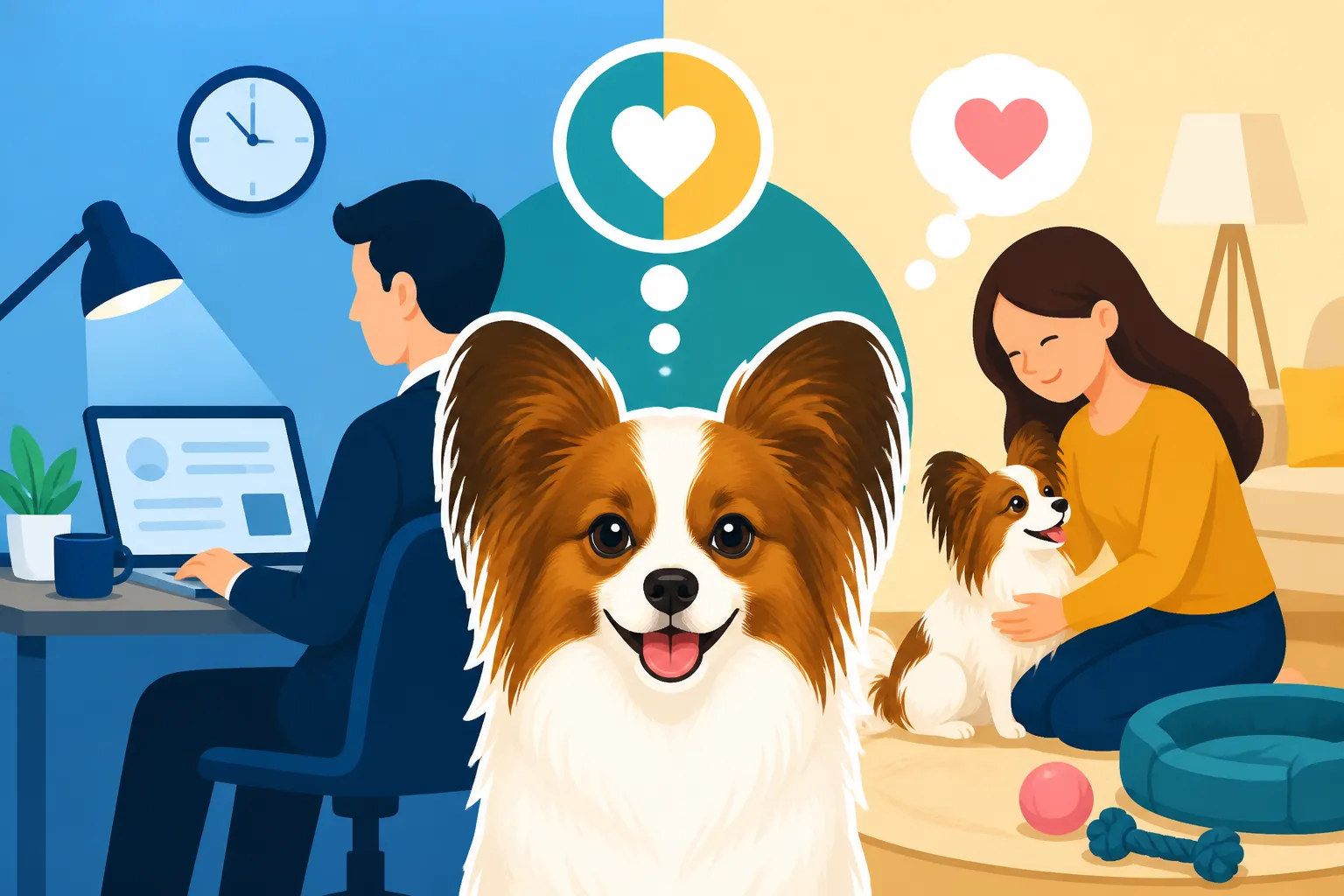
Ultimately, bringing a Papillon into a full-time working household requires a clear understanding of the breed's needs, a robust support system, and a deep commitment to meeting those needs daily. It’s not just about wanting a dog; it’s about providing a fulfilling life for a living, breathing, incredibly intelligent companion. While it's certainly possible, it requires significant planning, dedication, and often, an additional financial investment to ensure your Papillon thrives, rather than simply survives, your busy work week.
Disclaimer
This article is for general informational purposes only and does not constitute professional advice. Laws, prices and regulations vary by location and change over time. Consult a qualified professional for guidance on your specific situation.