What a Papillon’s Head Should Look Like
A Papillon’s head can look delicate without being narrow, frail, or toy-like. New owners often wonder whether a puppy’s rounded skull, short muzzle, large eyes, or half-raised ears are normal. This guide explains the breed’s characteristic head shape, how its features fit together, and what appearance alone can—and cannot—tell you about health or breed quality.
The Papillon’s overall head shape
Skull shape and proportions
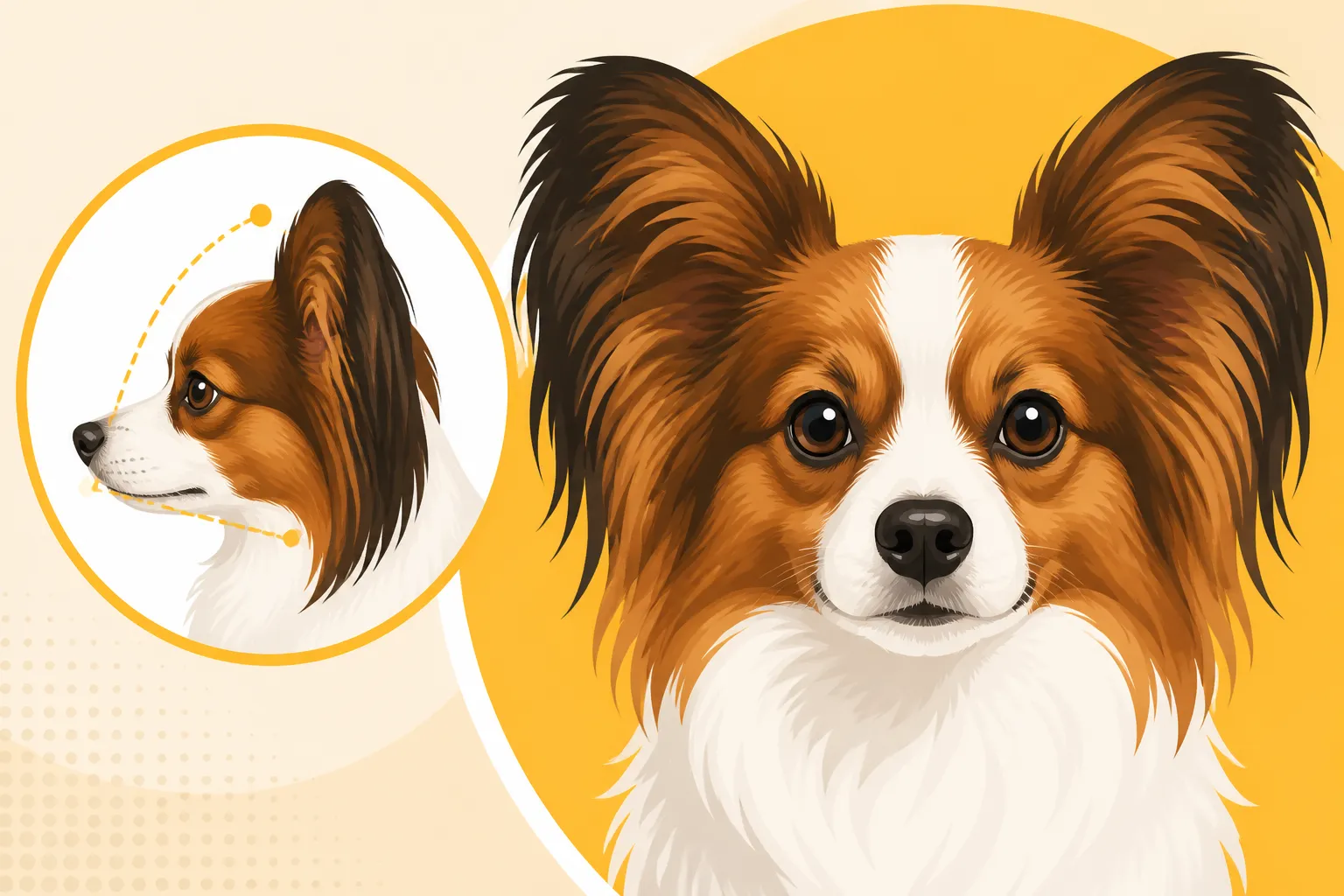
A Papillon’s head should look small and refined in proportion to its body, but not pinched or weak. The skull is slightly rounded rather than completely flat, with a shape that supports the breed’s bright, alert expression. Viewed from the side, the head should have a distinct transition from skull to muzzle; viewed from above, it should still look balanced rather than excessively narrow.
The word refined is easy to misread. It does not mean that the dog should have an extremely tiny head or a delicate-looking jaw that seems out of proportion. A well-balanced Papillon has fine features, yet the head should still look like it belongs to an active little spaniel. When a head looks overly domed, unusually narrow, or too heavy for the body, it may differ from the typical breed silhouette. One feature by itself, however, does not tell you whether a dog is healthy or well bred.
Proportions matter more than any single measurement. A Papillon’s head should flow naturally into its neck and body, with the ears framing the face rather than overwhelming it. If you are comparing a dog’s whole outline as well as its head, What a Correct Papillon's Outline Looks Like offers a useful broader reference.
The stop and the muzzle
The stop is the visible change in angle between the forehead and the muzzle. In a Papillon, it should be clearly defined. The muzzle is fine and tapers toward the nose, and it is shorter than the skull, but it should not look squashed flat against the face. That distinction helps give the Papillon its alert, slightly watchful expression instead of the very short-faced look associated with some other small breeds.
People often judge a Papillon’s muzzle from a close-up photo and miss how it relates to the skull. A camera held close can make the nose look larger and the muzzle shorter; an angle from above can make the forehead seem more rounded than it is. When assessing the profile, look for a distinct but smooth transition, a tapered muzzle, and an overall impression of balance. For a closer discussion of this feature, see How Long a Papillon's Muzzle Should Be.
The muzzle should not be so fine that the dog appears weak or so blunt that the head loses its characteristic shape. Puppies can also look different from adults as their faces mature, so a young dog’s proportions may not yet have the finished look you see in adult breed photographs. A head that seems unusual in a snapshot may look quite different in person, especially when the dog is relaxed and standing naturally.
The Papillon’s facial features
Eyes and expression
Papillon eyes are dark, round, and expressive, and they contribute a great deal to the breed’s alert appearance. They should not be bulging or so large that they dominate the entire face. The eyes are set well into the head and help create an expression that is intelligent and attentive rather than startled.
The coat’s color and facial markings can affect how the eyes appear in photographs. Dark markings around one eye, bright indoor lighting, or a low-quality image can make the eyes seem uneven or unusually prominent. It is better to consider the eyes in ordinary daylight and in relation to the full face. Eye color and appearance have their own breed-specific details, covered in What Color a Papillon's Eyes Should Be.
A photo can’t establish whether an eye is healthy. Redness, persistent tearing, squinting, cloudiness, or a sudden change in appearance deserves attention from a veterinarian rather than a guess based on breed standards. If you are shopping for basic grooming supplies, a retailer such as Chewy may offer soft cloths or suitable brushes, but avoid putting products near the eye unless they are intended for that use and your veterinarian approves them.
Nose, lips, and bite
The nose is typically black, and the lips are dark and close-fitting. The muzzle should taper toward the nose without looking pinched. These details may be easier to notice when the dog is standing still, since a Papillon’s lively expression and moving fringe can make close inspection surprisingly difficult.
The bite is also part of the head’s structure. Papillons are generally expected to have a scissor bite, in which the upper incisors meet closely in front of the lower incisors. A puppy’s mouth changes as adult teeth come in, and small dogs can retain baby teeth. So, if you are concerned about crowded teeth or a tooth that has not fallen out, ask a veterinarian to examine the mouth rather than trying to assess the bite from a quick glance.
The nose and muzzle are useful visual features, but they should be considered alongside function and comfort. A dog that eats, breathes, and behaves normally may still have a feature that differs from the ideal show-ring description; conversely, an attractive head does not rule out dental or other health concerns. For more on nose color, What a Papillon's Nose Should Be looks specifically at that feature, while The Teeth in a Papillon's Small Jaw explains why the mouth deserves regular attention.
| Feature | Typical Papillon appearance | What to keep in mind |
|---|---|---|
| Skull | Slightly rounded and refined | Should remain balanced with the muzzle and body |
| Stop | Clearly defined | Look for a visible transition, not a flat profile |
| Muzzle | Fine, tapered, and shorter than the skull | Close-up photos can distort its apparent length |
| Eyes | Dark, round, and expressive | They should not appear excessively prominent |
| Nose | Typically black | Consider the whole muzzle rather than color alone |
| Ears | Large and well fringed; upright or dropped | Upright Papillon and Phalene ears are both recognized forms |
Ears and the butterfly expression
How the ears frame the head
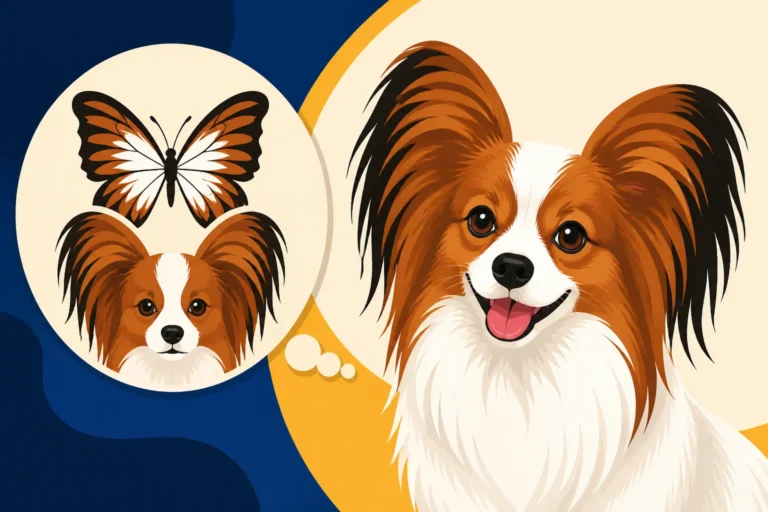
The Papillon’s name means “butterfly,” a reference to its upright ears and flowing fringe. The ears are large in proportion to the head, set toward the sides, and fringed with fine hair. They should frame the face and contribute to its lively, open expression without making the head look unbalanced.
The ear fringe can change how the head appears. A full fringe may make the face seem wider or softer, while sparse or still-developing hair can leave a puppy looking less finished. Coat development varies, and an individual dog’s fringe may not match the fullness seen in a mature show dog. Grooming should keep hair from tangling, but trimming the fringe to alter the head’s outline is not a substitute for natural ear shape.
When looking at a dog, check that the ears are attached naturally and that the skin looks comfortable. Head shaking, persistent scratching, odor, or discharge are reasons to ask a veterinarian about the ears. If you are choosing a comb for light maintenance, Chewy carries a range of pet grooming tools; select one suited to fine feathering and use it gently, especially around the ear leather.
Papillon and Phalene ear types
Papillons have erect ears, while the Phalene variety has dropped ears. These are two forms of the Continental Toy Spaniel, not separate breeds in many breed registries. The difference is striking, but the rest of the head should still have the same general qualities: a refined skull, defined stop, tapered muzzle, and alert expression. You can read more in Whether a Phalene Is a Separate Breed.
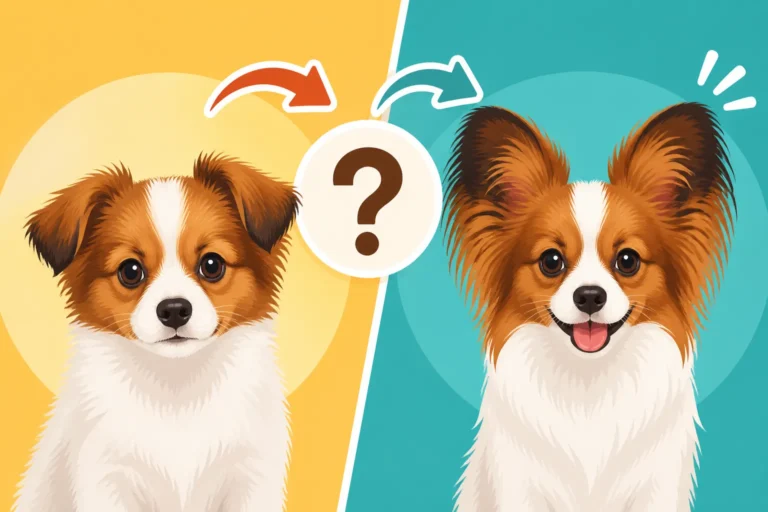
A puppy’s ears may not be fully settled early on. Some owners worry when an ear is only partly raised or changes position during development. Ear carriage can vary while a puppy grows, and a photograph may capture a temporary position. For questions about development, When a Papillon Puppy's Ears Go Up and Whether Half Up Ears Are Faulted on a Papillon discuss the issue in more detail.
Do not try to reshape a puppy’s ears with taping or other home methods without guidance from a knowledgeable breeder or veterinarian. The ear’s appearance is one piece of the dog’s overall development, not a reason to handle the ears roughly or apply products without advice. A comfortable, healthy puppy matters more than achieving a particular look in a single snapshot.
Reading appearance without overinterpreting it
Breed standard versus everyday dog
A breed standard describes an ideal for judging and breeding; it is not a checklist that determines whether a companion Papillon is lovable, healthy, or suitable for a home. Individual dogs can have small differences in head shape, ear fringe, markings, and expression. Those variations do not automatically indicate a problem, and a show-style description should not be used as a medical diagnosis.
Standards can also vary slightly by kennel organization and country. If you are evaluating a dog for conformation, consult the relevant organization’s current standard and, where appropriate, a knowledgeable Papillon breeder or judge. If you are choosing a pet, temperament, sound movement, responsible breeding, and veterinary care deserve more attention than whether every facial detail matches an ideal photograph.
Markings can influence the way the face reads. A broad blaze, uneven patches, or dark color around one eye may make a Papillon’s expression appear asymmetrical in a picture even when the underlying head is balanced. The accepted colors and patterns are a separate topic, explored in Which Colors the Papillon Standard Accepts and Whether a Papillon's Face Markings Should Be Symmetrical.
When to ask a professional
Seek veterinary advice if you notice a sudden change in the face, eyes, nose, or mouth; difficulty eating; unusual drooling; persistent eye discharge; painful reactions to touch; or trouble breathing. These are not simply breed-type questions. A veterinarian can examine the dog directly and distinguish normal variation from a health concern.
If you are speaking with a breeder, ask how the puppy’s parents and relatives are screened and what health records are available. A clear answer should focus on documented health practices, not just claims that the dogs have “perfect heads” or look beautiful. What a Papillon Breeder Should Have Tested can help you prepare broader health questions, and What Health Results a Papillon Breeder Should Show offers a related guide to reviewing breeder information.
For routine care, keep the face clean and check the skin around the eyes, ears, and muzzle without tugging on the fringe. A soft cloth can help remove ordinary dirt, while a fine comb can separate tangles when used carefully. Chewy can be one place to browse basic grooming supplies, but ask your veterinarian or groomer if you are unsure what is safe for a particular dog. The goal is comfortable, healthy care—not a sculpted head.
Disclaimer
This article is for general informational purposes only and does not constitute professional advice. Laws, prices and regulations vary by location and change over time. Consult a qualified professional for guidance on your specific situation.