Which Papillon Color Is Most Common
A sable-and-white coat is commonly seen on Papillons, but there is no dependable registry-wide count proving it is the single most common color. Papillon color can be confusing because breeders and owners use terms such as sable, red, and tricolor in different ways. This guide explains which shades you’re most likely to encounter, how markings affect the description, and what color does—and does not—tell you about a dog.
The most common Papillon colors
Sable and white is a familiar sight
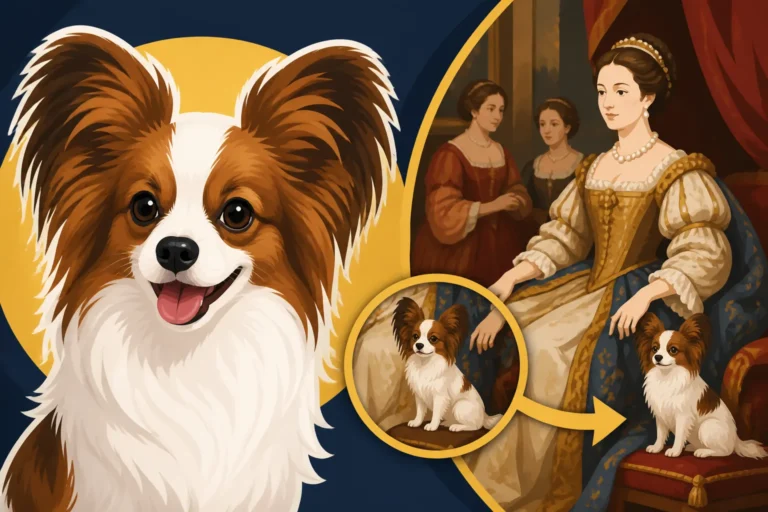
Sable and white is often the color people picture when they think of a Papillon. The coat has a white background with patches of warm color—often red, tan, or gold—with darker-tipped hairs that can create a shaded appearance. Depending on the dog, that shading may be concentrated on the ears and back or appear more subtly across the colored patches.
The word sable can be used a little loosely in everyday conversation. One person may use it for a distinctly shaded coat, while another may describe a similar-looking dog as red and white or simply white with red patches. Puppies can also look different as they mature: their shading may become more or less noticeable, and the adult coat can have a different overall impression from the puppy coat.
That variation is one reason it is difficult to name a definitive winner. Sable-and-white Papillons are common in breeder photos and family homes, but appearances alone don’t provide a reliable count of the breed’s color distribution.
Red and white, black and white, and tricolor are also common
Papillons come in several combinations of white and colored patches. Red-and-white dogs may have areas ranging from pale gold to a deeper reddish tone. Black-and-white Papillons have dark patches against white, while tricolors combine black, white, and tan markings. The tan often appears around the cheeks, above the eyes, or on the legs.
A quick way to understand the terms is to separate the base pattern from the colors within it. Most descriptions refer to a white base with colored patches; terms such as sable, red, or tricolor describe the colors or shading within those patches. Two dogs can look quite different while being described with similar terms, and two owners may describe similar dogs differently.
| Common description | What you may see | Why the name can vary |
|---|---|---|
| Sable and white | White with warm-colored patches and darker-tipped hairs | The amount and depth of shading differ |
| Red and white | White with patches in shades from gold to red | “Red” may describe a range of warm tones |
| Black and white | White with black patches | The size and placement of patches vary |
| Tricolor | White, black, and tan markings | Tan can be more or less prominent |
These are everyday coat descriptions, not a ranking system. For a broader look at accepted appearance, see Which Colors a Papillon Comes In and Which Colors the Papillon Standard Accepts.
There is no official color popularity leaderboard
It is reasonable to ask which Papillon color is most common, especially if you’re looking at breeder listings or trying to identify a dog you’ve met. But registries and breed standards generally describe which colors are acceptable; they do not necessarily publish a complete, reliable tally of how many dogs are born in each color.
That means statements such as “sable is the most common” are best treated as observations about what people often encounter, not as a precise statistical fact. Local breeding populations can differ, too. A breeder may produce several litters with similar colors, while another region or kennel may show a different mix.
If you’re comparing puppies, focus on the individual dog’s health, temperament, and fit with your home rather than treating one coat color as more desirable by default. The same practical approach applies when you’re reviewing What a Papillon Weighs and How Tall It Stands: appearance is only one small part of choosing a dog.
How Papillon markings affect color names
The white background and colored patches
Papillons are generally recognized by a parti-color pattern: a white background with patches of another color. The white can appear across the body and legs, while the colored areas may occur on the head, ears, and body. The amount of white and the placement of the patches vary from dog to dog.
A white blaze—the stripe of white between the eyes and over the forehead—is a familiar feature, but markings are not perfectly identical from one Papillon to the next. One dog might have a broad blaze and evenly placed facial patches; another may have a narrower stripe or asymmetrical markings. Those differences are part of individual appearance, not a sign that a dog’s personality or care needs are different.
If a puppy’s markings are changing in appearance as the coat grows, take photos in consistent natural light rather than relying on indoor lighting. Warm bulbs can make pale patches look more golden, while shadows can make dark shading seem heavier. Comparing pictures over time can help you describe the coat more consistently.
Tricolor does not mean every marking is equally bold
The word tricolor can sound as though the three colors must be sharply separated and equally visible. In practice, black, white, and tan may appear in different proportions. The tan can be distinct on the face and legs, or subtle enough that someone unfamiliar with the pattern barely notices it.
That variation can cause understandable confusion when people compare photos. A dog with mostly black-and-white markings and a small amount of tan may still be described as tricolor. A dog with warm shading in the coat might be called sable by one person and red-and-white by another, depending on how visible the dark-tipped hairs are.
For a prospective owner, the label matters less than what you can see and how the breeder describes the puppy’s parents and coat. Ask for clear photos in daylight and, if available, pictures of adult relatives. You can also read Whether a Papillon Puppy's Markings Change for more on how a young dog’s appearance may develop.
The Phalene has the same range of coat colors
A Phalene is the drop-eared variety of the same breed, not a separate color variety. Papillons and Phalenes can share the same broad range of coat colors and patterns; the main distinction is ear carriage. So, if a dog has a sable-and-white coat, that color description does not by itself tell you whether the dog is a Papillon or a Phalene.
This distinction is useful when looking at breeder pages or old photos, where ear shape may be difficult to see. Don’t assume that a particular coat color belongs only to one ear type. For more on the relationship between the two, see Whether a Phalene Is a Separate Breed and Why a Papillon and a Phalene Are Born in the Same Litter.
What coat color does and does not tell you
Color is not a reliable guide to temperament
A coat-color label won’t tell you whether a Papillon will be bold, quiet, cuddly, or especially quick to learn. Individual temperament is shaped by many factors, including genetics, early experiences, socialization, training, and the dog’s own personality.
This is worth remembering when a certain color catches your eye. It’s easy to scroll through puppy photos and feel drawn to one pattern, but the puppy who fits your household may not have the exact markings you imagined. If you’re choosing a puppy, ask about how the breeder evaluates temperament and matches puppies to homes, not just which colors are available.
For a fuller picture of the breed’s day-to-day personality and needs, explore What Papillon Owners Wish They Had Known and Who the Papillon Actually Suits. Those questions are more useful for deciding whether life with a Papillon is a good fit than coat color alone.
Color is not a health test
A Papillon’s coat color does not replace health screening. A puppy’s appearance cannot show whether its parents have had appropriate health checks, and a striking or unusual pattern should never distract from questions about health history, veterinary care, and the breeder’s practices.
Ask what tests have been completed, what the results mean, and whether you can review the records. A responsible conversation should leave room for questions about both parents and the puppies, rather than making color the main selling point. If you want to understand the health questions to raise, see What a Papillon Breeder Should Have Tested.
If you are caring for a Papillon you already own, color also does not determine whether the coat needs special care. Regular brushing, gentle handling, and checking the feathering for tangles matter more than whether the dog is sable, red, black and white, or tricolor. The coat is long and fine, and areas behind the ears and around the tail can be easy to overlook.
Keep color descriptions separate from coat care
Many owners notice that a white section shows dirt more readily than a dark patch. That can be frustrating after a rainy walk, especially around the feet, chest, or feathering. A quick check after outings and a regular brushing routine can help keep debris from settling into the coat. Avoid overbathing just to keep white fur bright; use grooming products according to their labels and ask your veterinarian or groomer if your dog has irritated or sensitive skin.
When shopping for basic supplies, compare ingredient labels and choose products intended for dogs. Chewy can be one place to browse dog shampoos, combs, and grooming tools, but the right choice depends on your dog’s coat and skin—not its color name. A product marketed for whitening is not automatically a good fit for every Papillon.
For everyday upkeep, a comb that reaches through the feathering can help you find small tangles before they tighten. If you’re building a simple grooming routine, Chewy’s product listings may also make it easier to compare brush and comb types, but ask a groomer to show you how to work through delicate areas without pulling. More detail is available in How Often a Papillon Needs Brushing.
Choosing a Papillon without getting stuck on color
Ask useful questions when viewing a puppy
If you’re speaking with a breeder, it is fine to ask how the puppy’s color is described and whether the coat may change as it matures. You can also ask to see photos of the parents and adult relatives, which may help you understand how the family’s colors and markings look after the puppy coat has grown in.
Then shift the conversation to the questions that will matter throughout the dog’s life: how the puppies are raised, what health testing has been done, how the breeder assesses temperament, and what support is offered after the puppy goes home. A careful breeder should be comfortable discussing those topics rather than relying on a rare-color claim to make a puppy seem more valuable.
If you’re sorting through listings, be cautious about claims that a particular color guarantees a special temperament, superior health, or a better-quality dog. Color can be part of what you love about a Papillon, but it is not a substitute for thoughtful breeding or a good match.
Describe the dog you actually have
For owners, a simple, consistent description is usually enough. You might say “sable and white,” “red and white,” “black and white,” or “tricolor,” then add a plain-language detail if it helps: “with a broad white blaze” or “with tan markings above the eyes.” You do not need to settle every debate over whether a warm patch counts as red or sable.
If you’re filling out veterinary or registration paperwork, use the options provided and ask the relevant organization or clinic how it wants the coat recorded. A clear photo in natural light can help if the color is hard to describe. For everyday conversations, the exact label is rarely as important as recognizing your dog.
Sable and white is a commonly seen Papillon color, but no dependable breed-wide tally makes it possible to declare it the undisputed most common. Red-and-white, black-and-white, and tricolor Papillons are also familiar. The color names describe appearance; they do not determine a dog’s character, health, or suitability for your home.
Disclaimer
This article is for general informational purposes only and does not constitute professional advice. Laws, prices and regulations vary by location and change over time. Consult a qualified professional for guidance on your specific situation.