Signs a Papillon Has a Collapsing Trachea
It’s truly alarming when your tiny Papillon, usually so full of life and bounce, suddenly starts coughing or struggling to breathe. That distinct, honking sound can send a wave of panic through any devoted owner, and it's natural to immediately fear the worst. This guide is here to shed light on a common, yet often misunderstood, condition in small breeds: tracheal collapse, and more importantly, what signs to look for so you can act quickly and get your beloved butterfly dog the help they need.
Understanding Collapsing Trachea in Small Breeds
When you picture your Papillon’s delicate frame, it's easy to understand why certain conditions might affect them differently than a larger, sturdier dog. Collapsing trachea is one such issue, and it's a frustration many small dog owners face because it’s often an inherent vulnerability in these adorable breeds. It's not something you did wrong; it's often a hand they were dealt.
Why Small Dogs Like Papillons Are Prone
Papillons, like many other toy breeds such as Chihuahuas, Pomeranians, and Yorkshire Terriers, are simply built differently. Their tracheas, or windpipes, are naturally more delicate and less rigid than those of larger dogs. Think of their trachea as a series of C-shaped cartilage rings that should form a strong, open tube. In smaller dogs, these rings can be weaker or genetically predisposed to losing their firmness. This means they don't maintain that nice, round, open shape as well as they should.
This predisposition often stems from genetics, making it a condition that responsible breeders try to avoid through careful screening, though it can still appear. The lightweight structure that makes Papillons so agile and graceful also comes with this particular vulnerability. It's a cruel irony that these delightful, spirited little dogs can struggle with something so fundamental as breathing, through no fault of their own or yours. When looking at the overall health profile, Whether the Papillon Is a Healthy Breed touches on some of these breed-specific concerns.
The Mechanics of a Collapsed Trachea
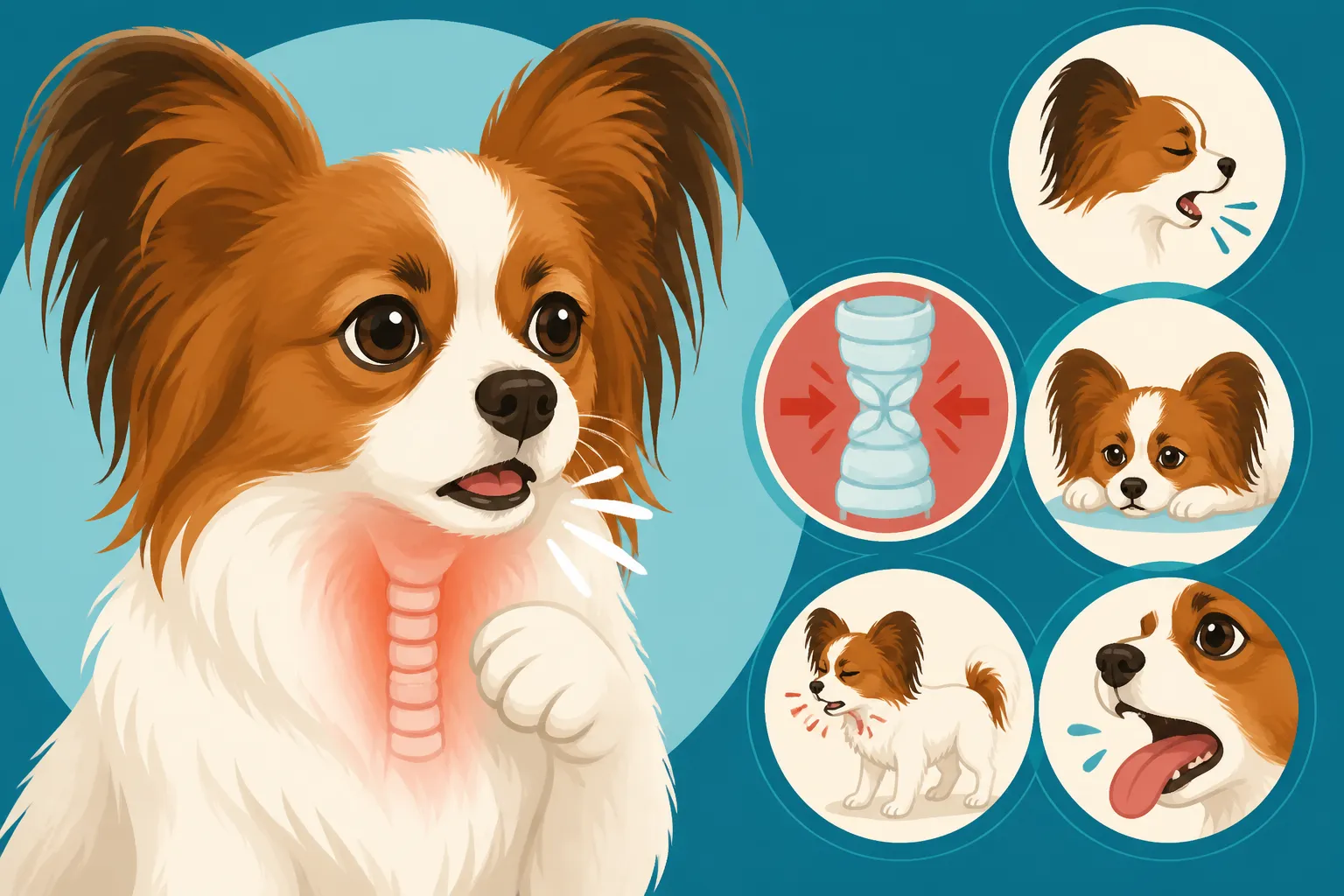
So, what exactly happens inside your Papillon’s throat? When the cartilage rings of the trachea weaken, they begin to flatten. Instead of a strong C-shape, they might look more like a flattened oval or even collapse entirely. This can happen in different parts of the windpipe – sometimes in the cervical trachea (the part in the neck) or in the intrathoracic trachea (the part inside the chest).
When the rings flatten, they obstruct the flow of air, much like trying to drink through a bent straw. This obstruction usually gets worse during inhalation when the dog breathes in, especially in the neck region, or during exhalation when they breathe out, particularly in the chest area. This narrowing causes air to struggle to pass through, leading to the characteristic coughing and breathing difficulties. Stress, excitement, or even just pulling on a collar can exacerbate this, as the increased air pressure puts more strain on the already compromised windpipe. It’s a progressive condition, meaning it often gets worse over time, which is why early recognition is so important.
Recognizing the Classic Signs of a Collapsing Trachea
The signs of tracheal collapse can range from subtle to utterly terrifying. Many owners initially dismiss a cough as a minor irritant, or perhaps a temporary irritation, but with a Papillon, it’s always worth paying close attention to specific details. Getting ahead of these symptoms is crucial for your dog's comfort and long-term health.
The Distinct 'Goose Honk' Cough
This is, without a doubt, the most classic and often the first symptom owners notice. It’s a dry, harsh, sudden cough that sounds exactly like a goose honking. It's not a soft, hacking cough you might hear with a common cold. This is an unmistakable, loud, and sometimes startling sound. The cough is a desperate attempt by your Papillon to clear the airway and relieve the irritation caused by the collapsing walls of the trachea rubbing against each other. It’s the sound of air being forced through a constricted tube.
You'll often notice this cough triggered by specific situations. Excitement, like when you come home from work or get the leash out for a walk, can bring it on. Drinking water too quickly, eating, or even just a sudden change in temperature can also set off a coughing fit. Pulling on a collar, even gently, can apply pressure to the already weakened trachea, so it's often recommended to switch to a harness. Whether a Papillon Should Wear a Harness Instead of a Collar covers this in more detail. If you hear this distinctive honk, especially repeatedly, it's a strong indicator that you need to investigate further. It's a sign that your Papillon’s body is struggling, and while you might wonder, "Whether a Papillon's Cough Means Its Trachea", this particular cough is a strong indicator of this condition.
Labored Breathing and Respiratory Distress
Beyond the cough, you might start noticing changes in your Papillon’s general breathing patterns. Normal breathing should be effortless and quiet. With tracheal collapse, breathing can become visibly difficult and noisy. You might see your dog taking rapid, shallow breaths, or even gasping for air. Their chest and belly might visibly heave with each breath, indicating they’re putting a lot of effort into simply moving air in and out.
Sometimes, you’ll hear a distinct wheezing sound, especially during exhalation, as the air struggles to exit the lungs through the narrowed windpipe. In more severe cases, your Papillon might stand with their neck extended, head held low, in an attempt to straighten out their airway and make breathing easier. They might become restless, unable to settle, pacing, or seemingly panicking as they struggle for oxygen. This isn't just heavy panting after a romp; this is genuine respiratory distress, and it requires immediate attention. It’s a scary sight for any pet owner, and it's essential to recognize the gravity of these symptoms.
Less Common but Important Indicators of Tracheal Collapse
While the "goose honk" cough is the hallmark, tracheal collapse can manifest in other ways that are easily mistaken for other issues or just signs of aging. It's important to be aware of these more subtle clues, especially if your Papillon is already prone to respiratory issues.
Exercise Intolerance and Fatigue
Your Papillon is typically a spirited, energetic little dog, always ready for an adventure, whether it's a quick dash around the house or a longer walk. If you start noticing that your dog is suddenly much less enthusiastic about their usual activities, or tires out remarkably quickly, it could be a sign of tracheal collapse. They might lag behind on walks, refuse to play fetch for as long, or simply seem generally lethargic. You might find them preferring to rest rather than engage in playtime, even when you try to entice them.
This happens because their compromised airway isn't allowing enough oxygen to reach their muscles and organs efficiently. Without adequate oxygen, their body simply can’t sustain physical exertion, leading to premature fatigue. Owners often chalk this up to their Papillon just getting older or being "lazy" that day. However, a noticeable and consistent decrease in exercise tolerance, especially when paired with a cough, should raise a red flag. A typical Papillon's daily routine, as described in What a Papillon Does All Day, often involves bursts of energy, so a significant drop in this is telling. It’s important to distinguish this from the normal slowing down that might occur in older dogs, such as when The Age a Papillon Is Considered Senior.
Blue Gums or Tongue (Cyanosis)
This is a critical, emergency sign that indicates severe oxygen deprivation and requires immediate veterinary intervention. Normally, your Papillon’s gums and tongue should be a healthy bubblegum pink. If they turn bluish or purplish, it means their body isn’t getting enough oxygen. This condition is called cyanosis, and it signals that the tracheal collapse is so severe that it’s significantly impeding airflow, putting your dog’s life at risk.
If you ever observe your Papillon's gums or tongue turning blue, do not wait. This is a medical emergency. Get your dog to the nearest emergency veterinary clinic as quickly as possible. This sign often accompanies profound respiratory distress, and your dog will likely be struggling to breathe visibly. While terrifying to witness, recognizing this symptom and acting without delay can make a life-saving difference.
When to Seek Veterinary Care and What to Expect
If you suspect your Papillon might have a collapsing trachea, the sooner you get a professional opinion, the better. Early diagnosis and management can significantly improve their quality of life and potentially slow the progression of the condition. Don't hesitate to reach out to your vet; they're there to help you navigate these worrying times.
Initial Veterinary Examination and Diagnosis
When you bring your Papillon to the vet with concerns about a cough or breathing issues, your veterinarian will start with a thorough physical examination. They’ll listen to your dog’s heart and lungs, palpate their trachea (gently feel along the windpipe in the neck), which can often trigger the characteristic goose-honk cough, providing a strong clue. They’ll also discuss your Papillon’s medical history, current symptoms, and any potential triggers you've observed.
To confirm a diagnosis and assess the severity, your vet might recommend several diagnostic tests. X-rays are a common first step, often taken during both inhalation and exhalation, to try and visualize the tracheal collapse. Sometimes, specialized imaging like fluoroscopy (a moving X-ray) or bronchoscopy (inserting a tiny camera into the airway) might be recommended for a definitive diagnosis and to check for other issues. Blood tests might also be run to rule out other conditions or to assess overall health, especially if anesthesia is considered for diagnostics like bronchoscopy. Knowing that Anesthesia and a Five Pound Papillon can be a concern for toy breeds is important, so discussing sedation options with your vet is key. They might also consider Whether a Papillon Gets Heart Disease as a differential diagnosis, as heart conditions can also cause coughing.
Management and Treatment Options
Treating a collapsing trachea usually involves a multi-pronged approach tailored to your Papillon’s specific needs and the severity of their condition. For most dogs, conservative management is the first line of defense. This often includes medications such as cough suppressants to ease irritation, bronchodilators to open airways, and sometimes anti-inflammatory drugs to reduce swelling. Weight management is absolutely critical, as excess weight puts additional strain on the respiratory system. If you're wondering How Many Cups a Day an Adult Papillon Eats, discussing portion control with your vet is a good start. Keeping an eye on your Papillon's weight to prevent issues like Why an Overweight Papillon Strains Its Knees can also help their breathing.
Environmental changes are also key: eliminating smoke or other irritants from the home, using a humidifier, and always using a harness instead of a collar to avoid pressure on the trachea. For dogs with severe collapse that doesn't respond to conservative measures, surgical intervention might be considered. This can involve placing stents to hold the trachea open or external rings to support the weakened cartilage. Surgical options are more invasive and carry risks, so they are typically reserved for cases where the quality of life is severely impacted. Regardless of the chosen path, managing tracheal collapse is often a lifelong commitment, and having a good pet insurance plan, like those offered by Healthy Paws, can be incredibly helpful in covering the costs of ongoing medications, specialist consultations, and potential emergency care. Caring for an Aging Papillon often involves managing chronic conditions like this, making proactive care and financial planning essential for your Papillon's comfort and your peace of mind.
| Symptom Category | Signs of Normal Breathing/Coughing | Signs Suggesting Tracheal Collapse |
|---|---|---|
| Cough Sound | Soft, occasional, wet (if clearing throat), non-urgent | Dry, harsh, distinctive 'goose honk' sound, repetitive |
| Triggers | Rarely triggered by excitement, drinking, or collar pulling | Frequently triggered by excitement, drinking, eating, pressure on neck |
| Breathing Effort | Effortless, quiet, relaxed | Labored, rapid, shallow, visible chest/belly heaving, noisy (wheezing/gasping) |
| Activity Level | Normal energy, eager for play/walks | Decreased exercise tolerance, quick to fatigue, reluctant to play |
| Mucous Membranes | Pink gums and tongue | Pale or bluish/purplish gums and tongue (cyanosis) |
| Body Posture | Relaxed, normal stance | Neck extended, head low, restless during breathing difficulty |
Disclaimer
The information provided in this article is for general informational purposes only and is not a substitute for professional veterinary advice. Always consult with a qualified veterinarian for any health concerns or before making any decisions related to your Papillon's care and treatment.