How Many Tricks a Papillon Can Learn
One of the most common questions Papillon owners and aspiring owners have is just how much these tiny dynamos can actually learn. If you've ever felt limited by a small dog's supposed intelligence or focus, prepare to be amazed, because Papillons defy expectations and can master an astonishing number of tricks, making them true stars in the canine world. This guide will explore their incredible learning capacity and how you can unleash your Papillon's full trick-learning potential.
Understanding the Papillon's Brilliant Mind for Learning
It's no secret that Papillons are often celebrated for their intelligence, but understanding why they excel at learning tricks really sets the stage for what you can achieve together. They aren't just cute faces; they possess a mental prowess that rivals many much larger breeds.
The Papillon's Reputation for Intelligence and Trainability
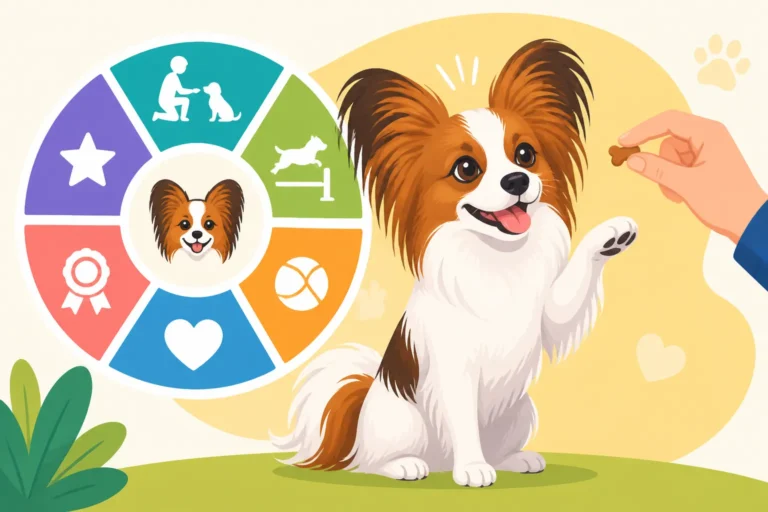
Papillons consistently rank among the most intelligent dog breeds, often appearing in the top ten for obedience intelligence. This isn't just a marketing ploy; it's a deeply ingrained trait. Their keen minds mean they are not only capable of understanding complex commands but also eager to engage in mental challenges. They thrive on problem-solving and love the interaction that comes with training. Many Papillon owners will tell you that their dogs seem to anticipate what they're going to ask next, or even offer behaviors proactively, just for the sheer joy of participation and earning a reward. This high level of intelligence is a huge asset when it comes to teaching a vast repertoire of tricks. For more on this, you might enjoy reading The Papillon Is the Smartest Toy Breed There Is.
How Their Learning Style Fuels Trick Acquisition
Papillons typically have a quick learning curve. They tend to pick up new cues rapidly, often needing surprisingly few repetitions to grasp a new concept. This isn't to say they don't benefit from consistency and practice, but they often "get it" faster than you might expect. Their learning style is often characterized by a strong desire to please their human, coupled with an inherent curiosity and energetic spirit. They enjoy the process itself, seeing training as a fun game rather than a chore. This enthusiasm means they're usually ready for the next challenge, making it easy to build upon existing tricks and chain them together into more complex routines. They’re also highly observant, often learning by watching other dogs or even mimicking human actions, which can be a fun shortcut for certain behaviors.
The Vast Repertoire of Tricks a Papillon Can Master
From simple polite behaviors to dazzling performance routines, there's very little a Papillon can't be taught. Their small size often belies their immense capabilities, allowing them to perform feats that might be difficult for larger, less agile breeds.
Foundation Tricks and Basic Obedience
Before diving into elaborate tricks, a Papillon, like any dog, benefits from a solid foundation in basic obedience. These aren't just "tricks" in the flashy sense, but essential life skills that also serve as building blocks for more advanced maneuvers. Think of "sit," "stay," "come," "down," and "heel" as the ABCs of dog training. A well-trained Papillon will execute these reliably, which is crucial for safety and for showing off their attentiveness. Teaching them to "target" your hand with their nose, for example, is a simple trick that can be built into many other behaviors, like closing a door or ringing a bell. Even something as basic as "leave it" can be turned into a fun game of self-control.
Intermediate Challenges and Fun Behaviors
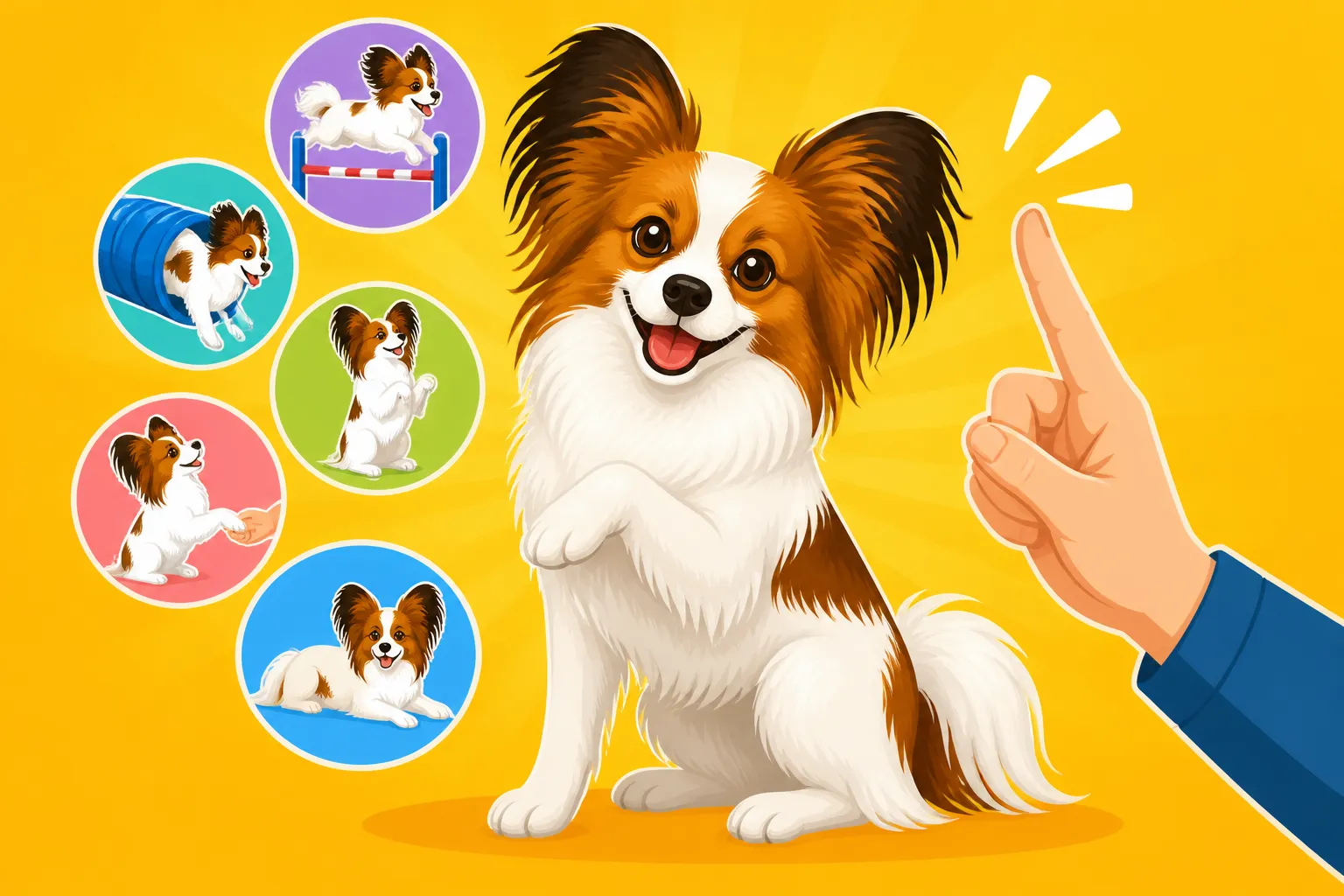
Once the basics are solid, the world of intermediate tricks opens up. This is where you really start to see the Papillon's cleverness shine. Imagine your Papillon learning to "shake a paw" or "high five," "roll over," "play dead," or "spin" in a circle. These tricks require a bit more coordination and sequential understanding, but Papillons typically pick them up with ease. You can also teach them to "bow," "weave" through your legs, or "fetch" specific toys by name. Many owners find that these types of tricks deepen their bond with their dog, turning everyday interactions into opportunities for fun and mental engagement.
Advanced and Novelty Tricks: Pushing the Limits
For those who love a challenge, Papillons are absolutely capable of mastering advanced and novelty tricks. This is where their reputation as agility and performance stars really comes to life. Picture a Papillon jumping through a hoop, retrieving specific items from a basket (and differentiating them by name!), opening and closing drawers, or even performing complex sequences of behaviors. You can teach them to "find the remote," "put toys away in a box," or perform multi-step routines. Some Papillons even learn to differentiate between people or objects when given a name. With dedicated training and consistent positive reinforcement, the sky truly is the limit. For inspiration on how quickly they can learn new things, check out How Fast a Papillon Learns a New Cue.
Factors Influencing a Papillon's Trick Learning Capacity
While Papillons are inherently smart, several factors can influence how many tricks they learn and how quickly they pick them up. It's not just about the dog; the handler plays a significant role too!
Individual Papillon Personality and Drive
Just like people, every Papillon has its own unique personality. While the breed as a whole is intelligent and eager, some individuals might be more food-motivated, others more toy-motivated, and some simply live for praise and attention. A shy or less confident Papillon might take a little longer to come out of its shell and embrace new challenges, while a bold, outgoing one might dive right in. Understanding your individual dog's drive and what truly motivates them is key to unlocking their learning potential. Some might be natural problem-solvers, while others prefer to follow clear instructions. Tailoring your approach to their specific personality will make a world of difference. What Motivates a Papillon delves deeper into understanding their drives.
The Impact of Training Methods and Consistency
The methods you use to teach tricks are paramount. Positive reinforcement training, using rewards like treats, toys, or verbal praise, is highly effective with Papillons. They are sensitive dogs, and harsh corrections can easily shut them down, making them reluctant to try new things. A clicker can be an incredibly useful tool, marking the exact moment your Papillon performs the desired behavior, which helps them understand what they're being rewarded for. Consistency is also critical. Short, frequent training sessions (5-10 minutes a few times a day) are far more effective than long, infrequent ones. Regular practice helps solidify learned behaviors and makes it easier for them to connect new cues with actions. For more on effective techniques, read How a Clicker Lands With a Papillon and Why Harsh Correction Fails on a Papillon.
Handler Engagement and Environmental Factors
Your enthusiasm and engagement during training are contagious. If you're having fun, your Papillon is more likely to enjoy the process and remain motivated. A strong bond between you and your dog creates a positive learning environment. Environmental factors also play a role; minimizing distractions, especially when introducing new tricks, helps your Papillon focus. As they become more proficient, you can gradually introduce distractions to "proof" their understanding of the trick in various settings. A calm, safe, and stimulating home environment encourages a Papillon to be confident and curious, which are excellent traits for trick training. Make sure you provide What Mental Work a Papillon Needs to keep them sharp.
Tips for Teaching a Multitude of Tricks to Your Papillon
Ready to turn your Papillon into a trick-training superstar? Here are some actionable tips to help you expand their repertoire far beyond the basics.
Breaking Down Complex Tricks into Manageable Steps
Even the most impressive tricks are just a series of smaller, simpler actions linked together. Don't try to teach "put away toys" all at once. Instead, break it down:
- Teach "take it" (pick up a toy).
- Teach "drop it" (release the toy).
- Teach them to approach the toy box.
- Then, combine "take it," "carry," and "drop it" over the toy box.
This method, known as shaping, is incredibly effective for intelligent breeds like Papillons. Reward each successful step, no matter how small, and gradually raise your criteria until they perform the full trick. This also builds their confidence, as they're always succeeding at something.
The Power of Short, Fun Training Sessions
Papillons, despite their intelligence, have relatively short attention spans, especially when they're young or just starting out. Aim for training sessions that are 3-5 minutes long, perhaps 2-3 times a day. Keeping it brief and upbeat prevents them from getting bored or frustrated. Always end on a high note, even if it's just repeating a trick they already know perfectly. This leaves them wanting more, making them excited for the next session. Remember, consistency over duration is key. You might find more advice on this in How Short a Papillon's Training Session Should Be.
Harnessing Positive Reinforcement and High-Value Rewards
Papillons respond incredibly well to positive reinforcement. Find what your Papillon loves most – small, soft, high-value treats (like tiny pieces of cheese or cooked chicken), their favorite squeaky toy, or enthusiastic praise and a vigorous ear rub. Vary your rewards to keep things interesting. If they love chasing a ball, use a quick game of fetch as a reward for a particularly good effort. The more rewarding the experience, the more eager they'll be to learn. Make sure to deliver the reward immediately after the correct behavior so they clearly associate the action with the treat.
| Trick Type | Examples | Key Training Concept | Typical Learning Time (approx.) |
|---|---|---|---|
| Basic Obedience | Sit, Stay, Come, Down, Leash Walking | Luring, Repetition, Consistency | Days to a few weeks |
| Intermediate | Paw, Spin, Roll Over, Play Dead, Fetch | Shaping, Chaining, Hand Signals | Weeks to a month |
| Advanced/Novelty | Retrieve by Name, Close Door, Ring Bell, Bow | Advanced Shaping, Generalization | Months to ongoing |
| Chained Routines | Multi-step sequences like "fetch & drop" | Combining known behaviors | Varies greatly |
Proofing Tricks in Different Environments
Once your Papillon has mastered a trick in a quiet, familiar environment, it's time to "proof" it. This means practicing the trick in various locations, with different levels of distraction, and even with different people giving the cue. Start small – move from the living room to the kitchen, then to the backyard. Gradually introduce minor distractions, like a family member walking by, then more significant ones, like another dog in the distance. This teaches your Papillon that the trick means the same thing no matter where they are or what's going on around them, ensuring reliability and confidence in their skills.
Beyond Basic Tricks: Advanced Papillon Capabilities
The inherent intelligence and agility of the Papillon mean they're perfectly suited for activities that go far beyond your typical household tricks. These advanced endeavors showcase their remarkable abilities.
Building Agility and Canine Sport Foundations
Many Papillons absolutely excel in dog sports, particularly agility. Their speed, agility, and keen minds make them formidable competitors. Teaching foundational behaviors for agility, even if you never plan to compete, can be a fantastic way to engage your Papillon mentally and physically. This might include teaching them to follow hand signals, run through a tunnel, jump over low obstacles (once their growth plates are closed and veterinary clearance is given, typically around 12 months), or weave through poles. These aren't just tricks; they build confidence, coordination, and a strong working relationship with you. A great way to get started with foundational training is through online programs like BAXTER & Bella, which offer structured curricula for all levels. Learning these skills can also be a gateway to other fun sports like Rally Obedience or scent work, both of which Papillons often love.
Training for Service or Therapy Work Potential
While Papillons are small, their intelligence, sensitive nature, and eagerness to please make them excellent candidates for certain types of service or therapy work. They might not be guide dogs, but they can be trained to alert to sounds, retrieve dropped items, provide deep pressure therapy (for very mild needs), or even offer comfort as certified therapy dogs in hospitals or nursing homes. The ability to learn many tricks means they can be taught a wide range of specific tasks tailored to an individual's needs. The commitment to training for such roles is significant, requiring consistent, high-level trick acquisition and reliable performance under pressure, but it's well within the Papillon's capability.
Chaining Tricks and Creating Complex Routines
One of the most impressive displays of a Papillon's learning capacity is their ability to perform chained tricks – a sequence of multiple behaviors performed one after another. This requires not just knowing each individual trick but understanding the order and flow of the routine. For example, your Papillon could "spin," then "bow," then "play dead" all on a single cue or hand signal. Creating these routines is like choreographing a dance, and Papillons often pick up on the patterns quickly. You can use a clicker to mark the completion of each step in the chain, gradually fading out the individual cues until the entire sequence flows smoothly. The joy of watching your tiny companion execute a complex routine flawlessly is incredibly rewarding.
Encouraging a Lifetime of Learning for Your Papillon
Learning shouldn't stop once your Papillon has mastered a few tricks. Keeping their brilliant minds active throughout their lives is crucial for their well-being and happiness.
The Importance of Ongoing Mental Stimulation
A Papillon with a sharp mind needs constant mental stimulation to prevent boredom and potential behavioral issues. Learning new tricks is one of the best ways to provide this. Think of it as intellectual exercise for your dog. Beyond formal tricks, engage their brains with puzzle toys (many great options are available on Amazon), scent games, or even just teaching them the names of their toys or family members. Continuing to teach them new things keeps their minds flexible and engaged, preventing mental stagnation as they age. Even just reviewing old tricks keeps them sharp.
Adapting Training for Senior Papillons
As Papillons age, their physical abilities might change, but their desire to learn often remains strong. You may need to adapt your training methods to accommodate any physical limitations. For example, if jumping becomes difficult, focus on ground-based tricks. Keep sessions shorter and more frequent, and be mindful of their energy levels. Learning new things can actually help keep a senior Papillon's mind sharp, much like brain games help humans stay mentally agile. Many older dogs enjoy the gentle mental exercise and the positive interaction with their owners, even if they're not performing at the same speed or intensity as their younger selves. Caring for a Papillon Past Eleven has more insights into their later years.
Continual Challenge and Exploration of New Skills
Never underestimate your Papillon's capacity for learning. Once they've mastered a set of tricks, keep challenging them. Look for online tutorials, join a local dog club, or explore different canine sports. You might be surprised at how much they enjoy learning something entirely new, like nose work or canine freestyle (dog dancing). The journey of discovery and shared accomplishment with your Papillon is a huge part of the joy of owning one. The more you explore together, the deeper your bond will become, and the more you'll realize just how many tricks your amazing Papillon can truly learn.
Disclaimer
This article is for general informational purposes only and does not constitute professional advice. Laws, prices and regulations vary by location and change over time. Consult a qualified professional for guidance on your specific situation.