Whether a Papillon Chases Cats
It's a common concern for many of us who share our lives with these delightful, intelligent little dogs: what happens when you introduce a spirited Papillon to a resident feline, or vice-versa? The image of a tiny Papillon with its magnificent ears might suggest a delicate, dainty creature, but anyone who truly knows the breed understands they are often much bigger in personality than their actual size. This guide will delve into whether a Papillon typically chases cats, exploring their natural instincts, the crucial role of socialization, and practical strategies to foster a peaceful, multi-species household.
Understanding the Papillon's Natural Instincts
Papillons, with their delicate looks, can sometimes surprise new owners with their boundless energy and surprising confidence. While they are firmly in the "toy group," their history as companion dogs hasn't entirely bred out some inherent canine traits, including a degree of prey drive.
The Papillon's Prey Drive: Is It High?
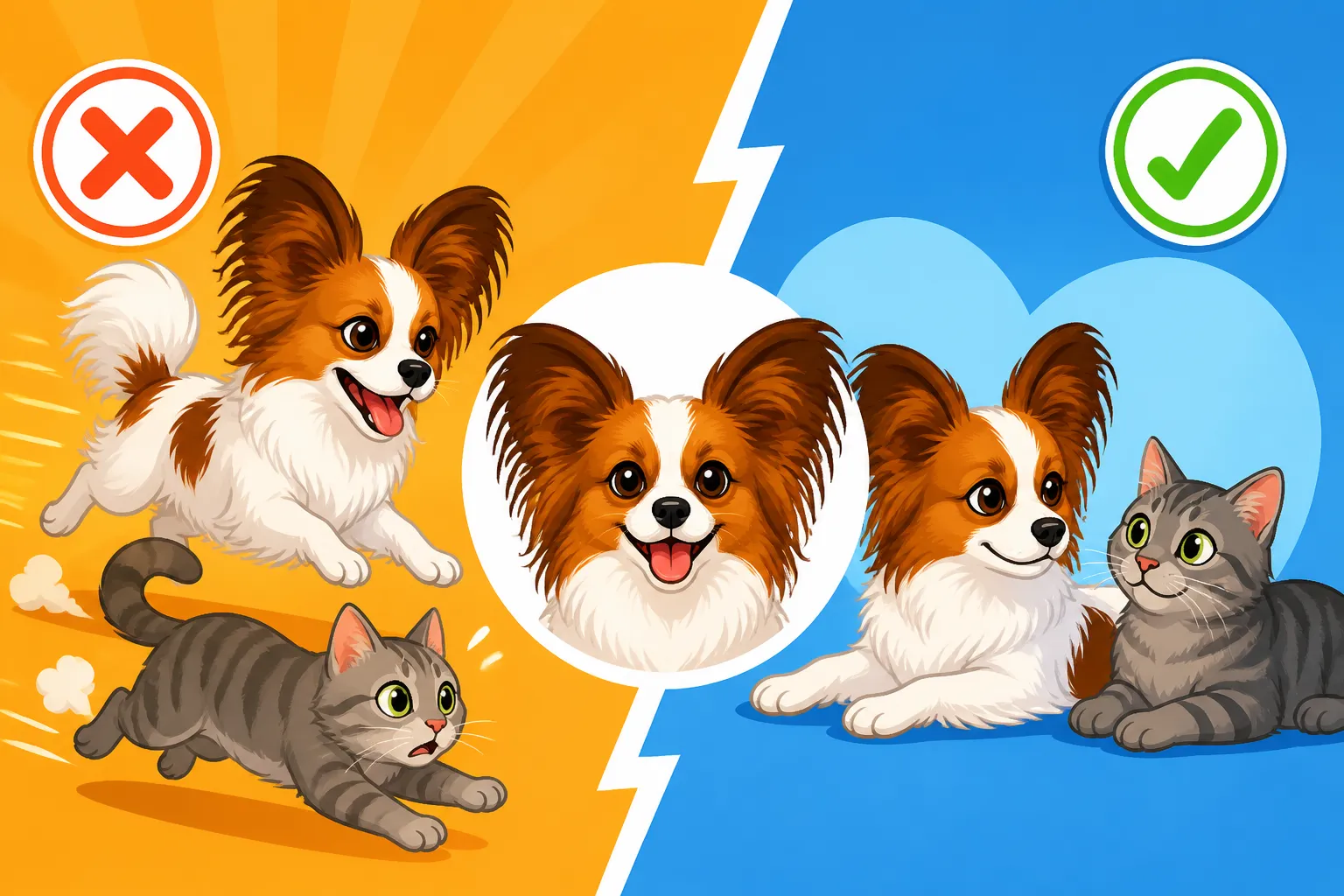
Unlike some terrier breeds specifically bred to hunt small game, Papillons generally don't possess an overwhelming, hard-wired prey drive that makes them relentless pursuers. Their ancestors were primarily lap warmers and companions to European nobility, not working dogs in the traditional sense. However, they are still dogs, and dogs naturally respond to movement. A quick darting movement, especially from a small creature like a cat, can trigger an instinct to chase. It's often more about playful pursuit than a true predatory intent, though the line can blur, especially with an unsocialized or overly excited Papillon.
Think of it this way: your Papillon might happily coexist with a squirrel in the backyard if it sits still, but the moment that squirrel bolts up a tree, the chase is on! The same can apply to a cat. Their small size doesn't negate their dog nature; it simply means their prey drive manifests differently than, say, a Jack Russell Terrier. If you're curious about this aspect of their temperament, you might want to read more about How Much Prey Drive a Papillon Has. While it's generally moderate, it's definitely present enough to warrant consideration when integrating them with other household pets.
Personality Traits That Influence Cat Interactions
Papillons are renowned for their intelligence, often ranking among the smartest of all dog breeds. This high intelligence is a double-edged sword when it comes to cat interactions. On one hand, it means they are highly trainable and capable of learning boundaries and appropriate behaviors. On the other hand, a bored or under-stimulated Papillon might use that intelligence to instigate games with the cat, which can quickly devolve into chasing. They are incredibly observant and will quickly learn what gets a reaction.
Their confidence is another key factor. Papillons are not typically timid dogs; many carry themselves with the bravado of a much larger canine. This fearlessness can lead them to approach cats, even large or grumpy ones, without hesitation. They don't always seem to recognize their own small stature, which can be charming in other contexts but potentially problematic if a cat feels threatened. Their high energy levels also play a role. A Papillon that hasn't had enough exercise or mental stimulation might have an excess of energy to burn, and a scurrying cat can become an irresistible outlet for that pent-up exuberance. This is why understanding What a Papillon Needs Every Day is so important for overall behavioral management.
Factors That Determine Papillon-Cat Dynamics
The relationship between a Papillon and a cat isn't solely dependent on the dog's breed. It's a complex interplay of individual personalities, early experiences, and ongoing management by the owner.
Early Socialization: The Key to Harmony
Perhaps the most critical factor in determining whether a Papillon will chase cats is early socialization. A Papillon puppy introduced to cats in a positive, controlled manner during its crucial developmental period (typically 3-16 weeks) is far more likely to view felines as part of its family rather than as prey or playthings to be chased. This means supervised, gentle exposure where the cat feels safe and the puppy learns to respect the cat's space.
If a Papillon puppy grows up alongside a cat, learning to interact politely, those early lessons often stick for life. Conversely, a Papillon that has had negative experiences with cats (e.g., being scratched while trying to herd one) or no exposure at all, might develop an instinct to chase or be fearful. An adult Papillon with no prior cat experience might require more gradual introductions and consistent training to form a harmonious relationship. This early period is vital for all training, and knowing When to Start Training a Papillon Puppy can make a huge difference in their overall adjustability.
The Cat's Personality Matters Too
It's easy to focus on the dog's behavior, but the cat's personality is equally important. A confident, "dog-savvy" cat that has lived with dogs before or isn't easily intimidated is often better equipped to establish boundaries with a curious Papillon. Such a cat might calmly swat at an overly enthusiastic puppy, hissing a warning, and then retreat to a higher perch, effectively communicating "leave me alone" without escalating the situation.
On the other hand, a timid or fearful cat might see a playful Papillon's approach as a threat, immediately bolting and triggering the Papillon's chase instinct. The more a cat runs, the more a dog's natural inclination to pursue can be reinforced. Older, less agile cats might also be more vulnerable and less able to escape, leading to higher stress levels. Kittens, while small, can sometimes hold their own with playful nips and scratches, but supervision is always key, as a young cat's developing bones are fragile. Understanding How a Papillon Shares a House With a Cat truly requires considering both sides of the equation.
Owner Consistency and Training
Ultimately, the owner plays the most significant role in shaping the relationship. Consistent training and vigilant supervision are non-negotiable, especially during initial introductions and the first few months. This means setting clear boundaries, using positive reinforcement for desired behaviors, and proactively managing any chase-triggering situations.
A Papillon, being highly intelligent, will quickly learn what is acceptable and what is not if the rules are consistently applied. Teaching cues like "leave it," "settle," or a reliable recall are incredibly valuable. Without consistent effort from the owner, even a well-meaning Papillon can inadvertently stress a cat through constant playful harassment, or worse, cause an injury. Remember, The Papillon Is the Smartest Toy Breed There Is, so they can learn the rules if you teach them clearly.
Training Strategies for Peaceful Coexistence
Achieving harmony between your Papillon and your cat often comes down to proactive training and careful management. It's about teaching both animals how to interact appropriately and respecting each other's boundaries.
Controlled Introductions and Supervision
When bringing a Papillon into a cat's home, or vice-versa, controlled introductions are paramount. Avoid just letting them loose together and hoping for the best; that's a recipe for disaster. Start by creating separate spaces for each pet, allowing them to acclimate to each other's scent without direct contact. You can do this by swapping bedding or towels. After a few days, allow supervised visual contact through a baby gate or a crate. Feed them on opposite sides of the barrier to create positive associations.
During initial face-to-face meetings, keep your Papillon on a leash, even if they're small, to prevent chasing. Reward calm behavior from both animals with treats and praise. Keep these sessions short and positive, gradually increasing their duration as they become more comfortable. Never, ever leave them unsupervised until you are absolutely certain they are coexisting peacefully. This process can take weeks or even months, depending on the individual animals. Managing access to resources like food, water, and litter boxes (which should always be inaccessible to the dog) is also key to preventing conflict.
Teaching "Leave It" and Redirection
A strong "leave it" cue is perhaps the single most important command for a dog living with a cat. This command allows you to interrupt your Papillon if it starts to focus too intensely on the cat or initiates a chase. Start training "leave it" in a low-distraction environment with a toy or treat, then gradually introduce the cat into the equation. Reward your Papillon heavily for ignoring the cat on command.
You can also use redirection. If your Papillon shows signs of interest in chasing the cat, immediately redirect its attention to a favorite toy or a quick training session. High-value treats, like small pieces of cooked chicken or cheese, can be incredibly effective here. This teaches your Papillon that ignoring the cat or focusing on you leads to good things. Remember, How a Clicker Lands With a Papillon can be very effective for marking desired behaviors precisely, which is extremely helpful in nuanced situations like cat-dog interactions. It's much more effective than punishment, which can actually make a Papillon more anxious or sneaky in its pursuit.
Creating Safe Spaces for Both Pets
Even with the best training, both your Papillon and your cat need their own safe havens. For cats, this means vertical spaces like tall cat trees, shelves, or even just leaving doors ajar to rooms the dog isn't allowed in. These spaces allow the cat to escape to safety and observe the dog from a comfortable distance, which reduces stress. Ensure their food, water, and litter boxes are in areas where the Papillon cannot access them.
For your Papillon, a crate or a designated bed in a quiet corner can be its safe space where it can retreat without being bothered. This is especially important for them to relax and decompress. Using baby gates can help create zones in your home, allowing the cat to free-roam in some areas while the dog is confined to others, or vice versa, giving everyone a break. These management tools are not failures; they are smart strategies to reduce stress and prevent problems before they start.
When Chasing Becomes a Problem: Warning Signs and Solutions
Sometimes, despite our best efforts, the dynamic between a Papillon and a cat can become problematic. Recognizing the signs of trouble and knowing when to intervene is crucial for the safety and well-being of both pets.
Identifying Problematic Behavior
Not all chasing is created equal. A brief, playful dash that ends quickly without contact, where both animals seem engaged and happy, might be tolerable for some cat-dog pairs. However, it's crucial to differentiate between playful chasing and something more concerning. Signs of problematic chasing include:
- Persistent harassment: The Papillon relentlessly pursues the cat, preventing it from resting, eating, or using the litter box in peace.
- Targeted aggression: Growling, snarling, nipping, or attempts to bite the cat.
- The cat is genuinely distressed: Hiding constantly, refusing to come out, spraying outside the litter box, overgrooming, changes in appetite, or exhibiting fear whenever the Papillon is near.
- The Papillon ignores cues: Your "leave it" or "come" commands are completely disregarded when the cat is involved.
- Injury to either animal: Scratches on the dog, or more serious injuries to the cat, are clear red flags.
If the chasing causes chronic stress for the cat, or if there's any risk of injury, it's moved beyond a tolerable level of interaction. A Papillon that shows excessive interest, fixates, or stalks the cat could be exhibiting a more pronounced prey drive that needs serious management.
Seeking Professional Help
If you've tried consistent training and management strategies, and your Papillon continues to chase your cat in a problematic way, it's time to seek professional help. A certified professional dog trainer or a veterinary behaviorist can assess the specific dynamics in your household and develop a tailored plan. They can help you identify triggers, fine-tune your training techniques, and implement more advanced management strategies.
It's vital to choose a professional who uses positive reinforcement methods. Harsh corrections or punishment-based training can backfire, potentially making your Papillon more fearful or resentful of the cat, or simply teaching them to chase when you're not around. As discussed in Why Harsh Correction Fails on a Papillon, their sensitive nature responds much better to reward-based methods. In some severe cases, where the risk to the cat is too high or the stress on both animals is unbearable, the recommendation might be to maintain separate living arrangements permanently or, in extreme situations, to consider rehoming one of the pets. While this is a difficult decision, the well-being and safety of both animals must be the top priority.
It’s important to give your Papillon plenty of appropriate mental and physical exercise outside of cat interactions. Engaging them in activities like What Mental Work a Papillon Needs through puzzle toys or advanced training can help burn off energy and satisfy their intelligent minds, making them less likely to invent their own "games" with the cat.
Here’s a quick overview of behaviors and their implications:
| Papillon Behavior | Cat's Reaction | Interpretation | Recommended Action |
|---|---|---|---|
| Brief, bouncy chase; no contact; loose body language | Mildly annoyed, may bat playfully or ignore | Playful, but needs supervision to ensure cat isn't stressed | Continue supervised interactions, reward calm behavior, ensure cat has escape routes. |
| Persistent chasing; attempts to herd; focused gaze | Running away, hissing, hiding, stressed body language | Problematic; cat feels threatened or harassed | Immediately interrupt with "leave it," redirect, separate, seek professional advice. |
| Growling, snapping, stalking, ignoring commands | Panicked flight, defensive aggression, injury | Dangerous; high predatory drive or aggression | Immediate separation, professional veterinary behaviorist consult, management strategies (gates, separate living). |
| Calmly observing cat; choosing to lie down nearby | Ignoring dog, sleeping, relaxed body language | Peaceful coexistence | Reward calm behavior, continue positive reinforcement, maintain safe spaces. |
Conclusion
So, will a Papillon chase cats? The answer, like with many things involving individual animals, is "it depends." While Papillons aren't typically predisposed to aggressive cat chasing like some other breeds, their intelligence, energy, and inherent dog instincts mean that chasing can happen. However, with thoughtful planning, early and positive socialization, consistent training, and vigilant supervision, it is absolutely possible for a Papillon and a cat to live together in peace, and even become the best of friends. The key is to be proactive, understand both your Papillon's and your cat's personalities, and be prepared to manage their interactions to ensure a safe and happy home for everyone.
Disclaimer
This article is for general informational purposes only and does not constitute professional advice. Laws, prices and regulations vary by location and change over time. Consult a qualified professional for guidance on your specific situation.