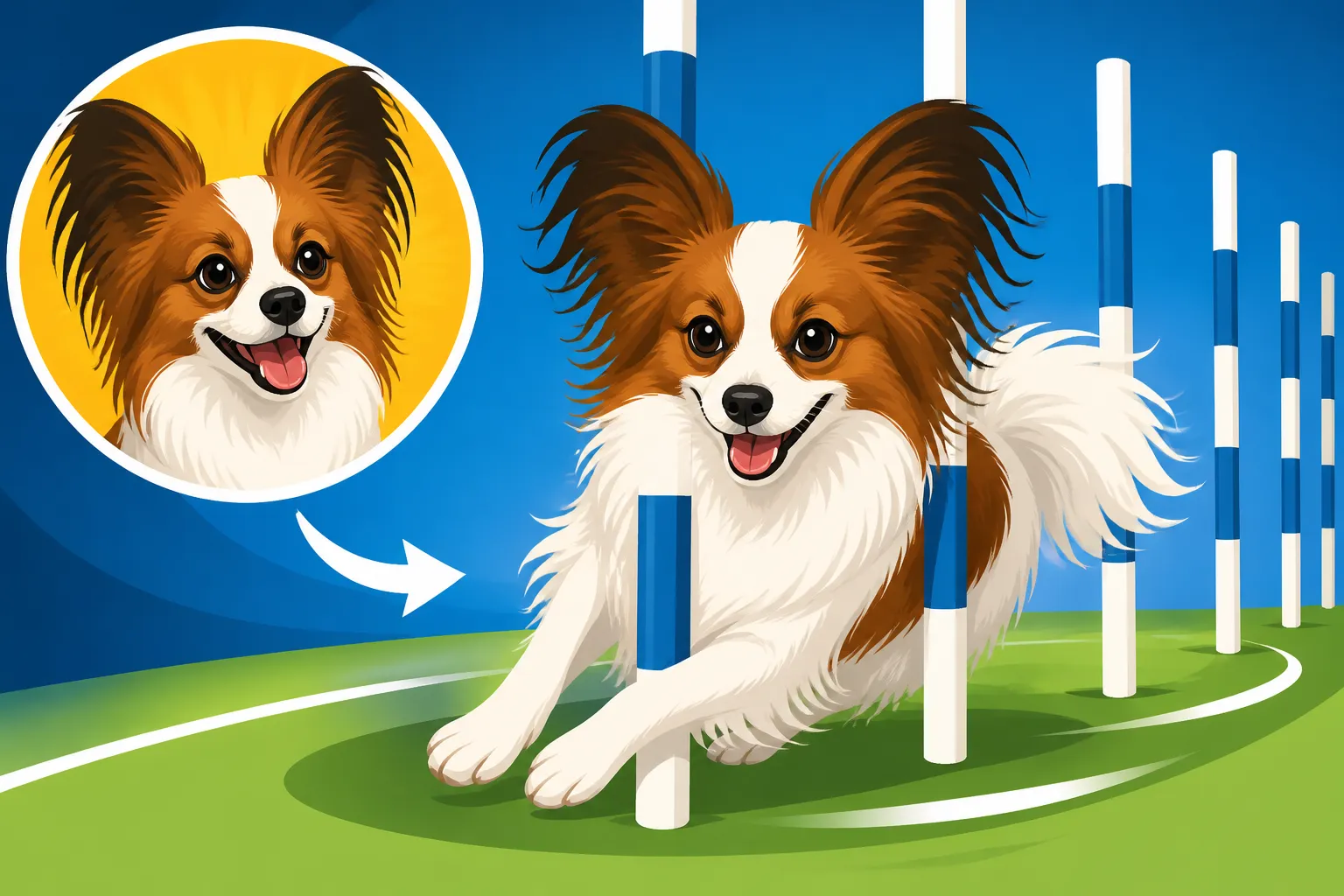
How a Papillon Manages Weave Poles
Getting your spirited Papillon to master the weave poles in agility can feel like trying to thread a needle with a butterfly. It's a challenging obstacle for many dogs, and our little dynamos, despite their incredible intelligence and athleticism, face their own unique hurdles. This guide will walk you through effective training strategies and practical tips to help your Papillon not just navigate, but truly dance through the weave poles with confidence and speed.
Understanding the Weave Pole Challenge for Papillons
When you watch a Papillon fly across an agility course, it's easy to assume they'll just naturally 'get' everything. They're quick, they're smart, and they absolutely love to run. But the weave poles are a different beast entirely, demanding a very specific, sustained motion that can be counter-intuitive at first.
Why Weave Poles Can Be Tricky for Small Dogs
Imagine trying to weave quickly through a row of closely spaced lampposts if you were only knee-high to them. That's a bit like what it's like for a Papillon. The spacing of weave poles is standardized, typically around 20-24 inches center-to-center, which is designed for a wide range of dog sizes. For a larger breed, this might feel like a natural stride, but for a tiny Papillon, it often means taking multiple short, quick steps between each pole. This can be physically demanding and requires precise footwork and body control.
Additionally, the low vantage point means they don't have the same visual overview of the entire sequence that a taller dog might. They're focused on the immediate next one or two poles, which can make it harder to maintain a consistent rhythm and anticipate the turns. It’s not just about speed; it’s about navigating a series of tight turns and maintaining momentum without hitting the poles. Many small dogs, including Papillons, initially find this motion awkward, and it can take considerable practice to build the muscle memory and coordination needed.
The Papillon's Natural Agility and How It Helps (and Hinders)
Papillons are often called "agility machines," and for good reason! Their boundless energy, quick reflexes, and eagerness to please make them fantastic candidates for dog sports. When it comes to weave poles, their natural athleticism is a huge asset. They're light-footed, capable of sharp turns, and possess incredible bursts of speed. This inherent "zip" is what allows them to eventually string together those rapid steps required between poles. Their intelligence also plays a massive role; they often pick up new concepts quickly once they understand what's being asked of them. If you've ever seen a Papillon perform a complex trick after just a few repetitions, you know they're rapid learners. You can read more about their smarts in The Papillon Is the Smartest Toy Breed There Is.
However, these very strengths can sometimes present challenges. Their enthusiasm can sometimes lead to rushing or "bouncing" through the poles without proper form, especially in the early stages of training. Because they're so eager to please and to go fast, they might try to cut corners or skip poles, especially if the handler isn't precise with their cues and body language. Their small size also means they rely heavily on their handler's movement and commitment to guide them through the weaves, as they can't simply power through a missed entry or an awkward angle. It's a delicate balance of harnessing their natural drive while instilling the precise technique the weave poles demand.
Step-by-Step Training Methods for Papillon Weaves
Successfully teaching weave poles requires patience, consistency, and breaking the exercise down into tiny, manageable steps. There are several popular methods, but for a Papillon, finding one that builds confidence and clarity is key.
Starting with Channel Weaves or 2×2 Method
These two methods are widely favored for a reason: they reduce the complexity initially, making it easier for your Papillon to grasp the concept of weaving.
Channel Weaves:
Imagine two rows of weave poles, parallel to each other, creating a "channel" wide enough for your Papillon to run through. This is an excellent starting point because it encourages forward motion and the correct snaking body shape without the pressure of single poles.
- Set up: Arrange 6-12 weave poles in two parallel lines, starting with a wide enough gap that your Papillon can easily run down the middle without touching them.
- Lure through: With your Papillon on a leash (or off-leash if they're very motivated), use a highly valued toy or treat to lure them straight through the channel. Keep your movements fluid and encouraging. Reward heavily for simply going through the channel. This builds the idea of forward motion through the obstacle.
- Gradually narrow: Over several sessions, slowly bring the two lines of poles closer together. The goal is for your Papillon to start naturally performing the weave motion as the space narrows, eventually transitioning to single poles. This progressive narrowing helps them build the muscle memory for the turns.
- Add a verbal cue: Once your Papillon is confidently running through the narrowing channel, start adding a verbal cue like "Weave!" or "Poles!" as they enter the channel. This associates the command with the action.
2×2 Weave Poles:
This method breaks the weave sequence into small, achievable two-pole segments, which is particularly effective for small dogs like Papillons who thrive on clear, repetitive patterns.
- Two poles: Start with just two weave poles. Place them side-by-side initially, then move them to the standard spacing.
- "Send" practice: Stand on one side of the two poles. Hold a toy or treat to encourage your Papillon to go around the outside of the first pole, and then between the first and second pole. This teaches the entry and the first "V" shape. Repeat this from both sides until it's smooth and quick. Reward for correct execution.
- Adding segments: Once your Papillon is proficient with two poles, add another two poles. Now you have four poles in two 2×2 segments. You'll work on sending them through the first two, then immediately guiding them to the second two. The idea is to chain these segments together.
- Building the chain: Continue adding 2×2 segments until you have a full set of 6 or 12 poles. The beauty of this method is that it builds a solid foundation for the entry and the rhythmic motion one small segment at a time. Many handlers find great success with this method, even using products like BAXTER & Bella's online training resources to refine their technique.
Building Speed and Consistency
Once your Papillon understands the basic weaving motion, the next step is to inject speed and ensure consistency, even under pressure. This is where their natural drive truly shines!
- Motivation is key: Papillons are highly food and toy motivated. Use their absolute favorite, highest-value treats or a beloved squeaky toy to keep their drive high. Throw the toy ahead of them through the weaves to encourage them to drive through quickly, or reward with a jackpot of treats at the end. What Motivates a Papillon is a great resource here.
- Clear body language: Because Papillons are so small, your body language is paramount. Your position, arm signals, and even your gaze will tell them where to go. Stay ahead of them, moving with the rhythm of the weaves, and keep your hands low to guide them. Avoid abrupt movements that might confuse or intimidate them.
- Practice in segments: Don't always run the full 12 poles. Practice entering at different points, running 4 poles, then 6, then 8, and so on. This keeps it fresh and helps them understand that the weave motion can start and stop anywhere.
- Vary entry points: Practice entering the weaves from different angles and speeds. Sometimes have them enter from a full run, other times from a standing start. This builds versatility and ensures they can perform the weaves no matter how they approach them on a course.
- Build stamina: Weave poles are physically demanding. Gradually increase the number of weaves and repetitions in a session. Always end on a high note, even if it means doing just a couple of perfect poles and then celebrating. Remember, training sessions for a Papillon should be kept short and fun to maintain their focus and enthusiasm. How Short a Papillon's Training Session Should Be for more tips.
Troubleshooting Common Papillon Weave Pole Issues
Even with the best training, Papillons can encounter specific issues with weave poles. It’s totally normal, so don't get discouraged!
- Skipping poles: This often happens when a Papillon tries to go too fast or anticipates the end. Go back to basics with fewer poles, ensure your body language is very clear, and reward for each correct pole, not just the completion. Slow down the exercise to emphasize accuracy. Using a food lure held very close to their nose, guiding them around each pole, can help re-establish the correct pattern.
- Pop-outs: If your Papillon consistently pops out of the weaves halfway through, they might be lacking confidence, speed, or understanding. Revisit the channel or 2×2 method to rebuild their foundation. Ensure you are driving them through with your energy and rewarding their commitment to the obstacle. Sometimes, a lack of forward drive is the culprit; encourage them to burst out the end with a big reward.
- Lack of drive/hesitation: This could be due to pain (always rule out physical issues with a vet check, especially with their delicate knees – see Patellar Luxation Is the Papillon Problem You Will Actually Meet), boredom, or confusion. Make the reward even higher value. Try different types of treats or toys. Ensure your energy is infectious and exciting. Shorten sessions and make them incredibly fun. Sometimes, practicing in a new, stimulating environment can re-ignite their interest. If they associate the weaves with frustration, take a break and come back to it with a fresh, positive attitude.
- Hitting poles: This usually indicates a need for better body awareness or slower, more controlled practice. Ensure their nails are trimmed short (which also protects their delicate little feet), as long nails can interfere with quick foot placement. Practice slowing the weave motion right down so they can feel each step and avoid contact. Gradually build speed back up. You can also use temporary markers, like pool noodles or soft barriers, slightly wider than the poles themselves, to give them a physical cue not to swing too wide.
Essential Equipment and Training Aids
You don't need a full-blown agility course in your backyard to train weave poles effectively. Smart use of basic equipment can make a huge difference.
Choosing the Right Weave Poles for Home Practice
Investing in good quality, adjustable weave poles is paramount. Full-size, competition-standard poles are ideal, but for starting out, flexibility is key.
- Adjustable spacing: Look for weave poles that allow you to adjust the spacing. This is incredibly useful for the channel weave method, letting you start wide and gradually narrow the gap. Many models found on Amazon offer this versatility.
- Sturdy base: Papillons are small, but they can still knock over flimsy poles, which can be frustrating and even unsafe. Choose poles with a stable base, whether it's heavy-duty plastic, metal stakes for outdoor use, or a robust mat-style base.
- Number of poles: Start with at least 6 poles, but ideally, work towards a full 12-pole set. The full sequence helps build stamina and consistency.
- Portability: If you plan to take your weaves to different locations or need to pack them away, consider portability. Many excellent sets break down easily.
Remember, the goal is to make home practice as close to trial conditions as possible, while also providing options for easier learning.
Using Lures and Rewards Effectively
Papillons are incredibly intelligent and eager to please, making them highly responsive to positive reinforcement.
- High-value treats: For training, especially with something as challenging as weaves, you need something your Papillon really wants. Think small pieces of cooked chicken, cheese, or specialized training treats. Experiment to find what makes their eyes light up!
- Favorite toys: Some Papillons are highly toy-motivated. A small tug toy or a squeaky ball can be an incredible reward, especially for building drive through the weaves. Use it as a target, throwing it to the end of the weaves after a successful run. Whether a Papillon Works for Toys delves into this more.
- Verbal praise and affection: Don't underestimate the power of your enthusiastic voice and gentle strokes. Papillons thrive on attention and praise from their owners. Make a big deal out of every correct step, even if it's just two poles.
- Clicker training: A clicker can be a powerful tool for precision training. It marks the exact moment your Papillon performs the desired action, making it incredibly clear what they're being rewarded for. Many online programs, like those offered by BAXTER & Bella, integrate clicker training into their curriculum.
Effective luring isn't about constantly holding a treat in front of their nose forever. It's about using the lure to guide the initial movement, then quickly fading it out as your Papillon understands the pattern. The reward then becomes the paycheck for a job well done.
Maintaining Weave Pole Skills and Avoiding Burnout
Once your Papillon is weaving like a pro, the work isn't over! Maintaining those skills and keeping the training fun is crucial for a long and happy agility career.
Incorporating Weaves into a Broader Training Routine
Don't let weave poles become a standalone, tedious exercise. Integrate them into a diverse training schedule to keep your Papillon engaged and prevent them from getting bored.
- Full courses: Once your Papillon is solid on weaves, incorporate them into full agility courses. This helps them learn to transition smoothly from other obstacles (like tunnels or jumps) into the weaves and out again. This is where the real fun begins, seeing all the pieces come together! Starting a Papillon in Agility offers a great overview.
- Vary obstacle order: Never run the same course sequence repeatedly. Mix up the order of obstacles so your Papillon doesn't simply memorize a pattern. This encourages them to read your cues and truly understand the individual obstacles.
- Proofing: Practice in different environments, with distractions, and with different handlers if possible. This "proofs" the behavior, making it reliable in competition settings. A noisy park or a busy training hall can really test their focus.
- Mental stimulation: Remember that agility is as much a mental game as a physical one for your Papillon. Incorporate other forms of mental enrichment, like puzzle toys or scent work, to keep their sharp minds active. What Mental Work a Papillon Needs has some great ideas.
Recognizing When Your Papillon Needs a Break
Even the most enthusiastic Papillons can get tired, physically and mentally. Pushing them too hard can lead to frustration, sloppiness, or even injury.
- Watch for signs of fatigue: Look for subtle cues like lagging behind, losing interest in rewards, making mistakes they usually don't, or a decrease in their usual joyful bounce. Papillons are generally very stoic and might hide discomfort, so pay close attention.
- Keep sessions short and positive: For Papillons, quality trumps quantity. Short, frequent training sessions (5-10 minutes) are much more effective than one long, draining session. Always aim to end on a successful note, even if it's just a single perfect weave entry.
- Vary the challenge: If weaves are causing frustration, switch to a different, easier obstacle like tunnels or jumps for a bit. Or simply play a game of fetch. Give their brains and bodies a different task to enjoy.
- Listen to your dog: If your Papillon seems genuinely unhappy or stressed by weave poles, re-evaluate your approach. Perhaps go back to easier methods, shorten the sequence, or take a complete break from them for a week or two. Agility should always be a fun, bonding experience, not a chore. Their small stature means they can be more susceptible to orthopedic issues if overworked, so be mindful of Whether Agility Wears Out a Papillon's Knees.
Mastering weave poles with your Papillon is a journey, not a sprint. It takes dedication, patience, and a deep understanding of your little dog's unique needs and motivations. But the reward—watching your Papillon elegantly and quickly navigate those poles with joy—is absolutely priceless.
Disclaimer
This article is for general informational purposes only and does not constitute professional advice. Laws, prices and regulations vary by location and change over time. Consult a qualified professional for guidance on your specific situation.