Whether a Papillon’s Cough Means Its Trachea
Papillon coughing causes and tracheal collapse symptoms explained for owners of small dogs experiencing breathing issues.
Know what to watch for.
Breed-specific conditions, screening and DNA tests, what surgery actually costs, and the daily habits that stretch a healthy lifespan.

Papillon coughing causes and tracheal collapse symptoms explained for owners of small dogs experiencing breathing issues.

Papillon neck anatomy and the risk of tracheal collapse explain why a harness protects the windpipe better than a collar.
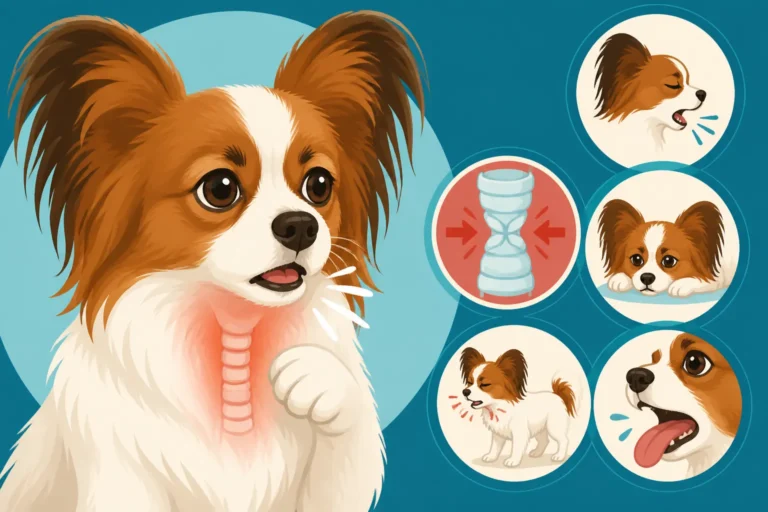
Papillon tracheal collapse signs include a distinct goose honk cough, breathing difficulties, and weakened cartilage rings.

Papillon tooth loss and periodontal disease, explaining initial eating challenges, gum pain signals, and how small dogs cope without teeth.

Papillon early tooth loss stems from forty-two adult teeth packed into tiny jaws, causing plaque, tartar, and periodontal disease.

Professional dental cleanings for Papillons are generally recommended every one to two years to prevent severe periodontal disease.
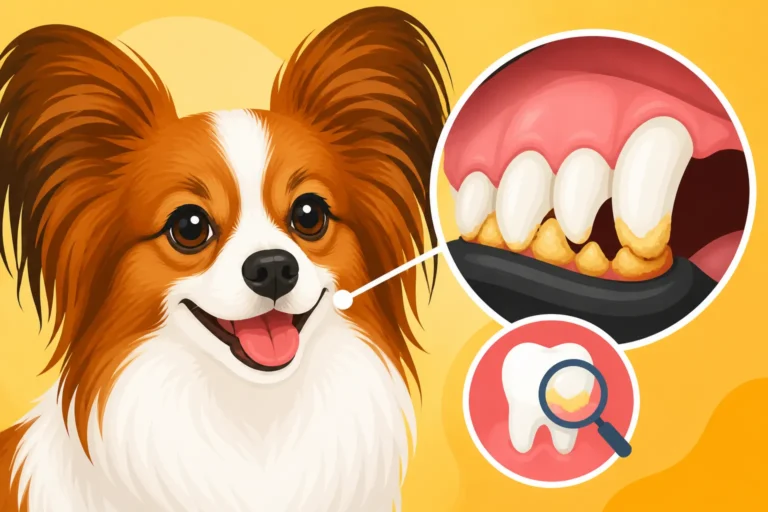
Early tartar on young Papillons forms quickly due to crowded mouths, alkaline saliva, and trapped bacteria on tooth enamel.

Retained baby teeth in a Papillon cause overcrowding and dental disease. This text explains when these puppy teeth must be pulled.

Papillon dental crowding happens because toy breed jaws struggle to fit forty two permanent teeth, causing health problems.

Pre-surgical clotting panels for small Papillon dogs assess blood clotting ability to prevent excessive bleeding complications during surgery.