Whether a Papillon Puppy Should Be Fed Four Times a Day
It's a common worry for anyone bringing home a tiny Papillon puppy: that delicate little creature seems so fragile, and you're constantly thinking about how to keep them healthy and robust. One of the biggest concerns, and rightly so, is ensuring they eat enough and often enough to avoid those terrifying blood sugar crashes. This guide is all about tackling that specific anxiety, diving deep into why a regular feeding schedule, often four times a day, is absolutely crucial for your little butterfly puppy, and how to implement it successfully.
Understanding Puppy Metabolism and Hypoglycemia in Papillons
When you look at a Papillon puppy, especially one still barely bigger than your hand, it's easy to see why they need special care. Their small size isn't just adorable; it comes with unique metabolic challenges that make them particularly susceptible to certain issues, like low blood sugar.
Why Small Breeds Are Prone to Low Blood Sugar
Think about it: a human baby needs to eat frequently, and a tiny Papillon puppy is no different in that regard. Their bodies are working incredibly hard, growing at an astonishing rate, and their little engines are running on high octane. Unlike larger breed puppies who have more muscle mass and larger internal organ systems to store glucose, tiny dogs like Papillons have very limited reserves. Their livers, which play a crucial role in regulating blood sugar, are still immature, and their fat stores are minimal. This means they burn through energy incredibly quickly, and if they go too long without a meal, their blood sugar can drop rapidly and dangerously. This isn't just about feeling a bit hungry; it can be a serious medical emergency. This is a topic we delve into more in Whether a Papillon Gets Hypoglycemia as a Puppy.
The specific vulnerability of Papillons comes from their classification as a toy breed. They are among the smallest of dogs, typically maturing at weights under 10 pounds, and often closer to 5 or 6 pounds. An eight-week-old Papillon puppy might weigh only a pound or two! This tiny stature means their systems are much less forgiving when it comes to caloric intake and consistent energy supply. Their metabolic rate is also incredibly high, meaning they burn calories at a faster pace than a larger dog, demanding a more frequent replenishment of nutrients.
Recognizing the Signs of Hypoglycemia in a Papillon Puppy
This is where being a vigilant puppy parent truly comes into play. Hypoglycemia, or low blood sugar, can sneak up on you, and for a small puppy, it can escalate quickly. The initial signs might be subtle: your normally playful, bouncy Papillon might seem a little quieter than usual, or perhaps a bit less enthusiastic about their toys. They might seem disoriented or confused, almost like they're a bit drunk. As it progresses, you might notice wobbliness, an unsteady gait, or even a complete lack of coordination. Their gums might appear pale, and they could shiver uncontrollably.
It’s truly terrifying to see your tiny puppy acting this way, and every Papillon owner I know has, at some point, had that moment of panic, wondering if their little one is crashing. The key is to act quickly. If you suspect hypoglycemia, rubbing a little Karo syrup or honey on their gums can provide a rapid sugar boost while you contact your vet. Don't wait to see if it gets better, because it usually won't without intervention. We explore this further in Signs a Papillon Puppy Has Low Blood Sugar and What to Do When a Papillon Puppy Crashes. Early recognition and immediate action can make all the difference, preventing a much more severe situation.
The Rationale Behind Four Meals a Day for Papillon Puppies
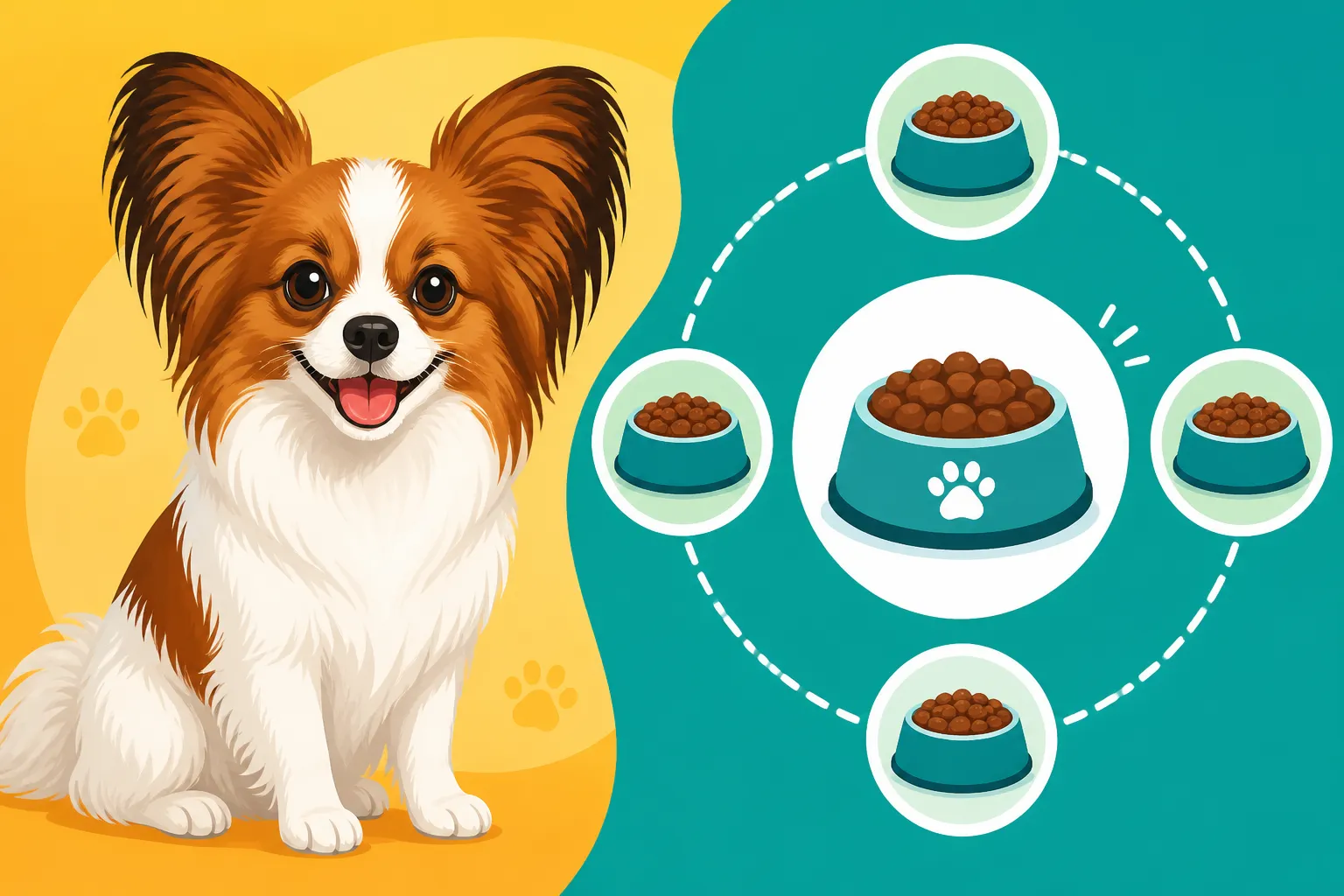
So, why four meals? Why not two like an adult dog, or three like many other puppies? For a Papillon puppy, the "little and often" approach is paramount. It’s all about providing a steady, consistent supply of nutrients to fuel their growth and prevent dangerous blood sugar dips.
Maintaining Stable Blood Sugar Levels
Imagine a car with a tiny fuel tank but a powerful engine. You wouldn't fill it up once and expect it to run for hours without a top-up, especially if it's constantly accelerating. That's essentially what your Papillon puppy is doing. Giving them four smaller meals throughout the day, spread out evenly, ensures a continuous supply of glucose to their bloodstream. This prevents those sharp peaks and valleys in blood sugar that can lead to hypoglycemia. Each meal acts like a mini-refuel, keeping their energy levels stable and their vital organs functioning optimally.
This consistent caloric intake helps prevent their body from having to dip into emergency reserves, which, as we've discussed, are pretty much non-existent in such small dogs. It's a preventative measure, a way to proactively support their delicate metabolism. While a larger puppy might be fine on three meals, the sheer scale of a Papillon puppy, particularly at How Small a Papillon Puppy Is at Eight Weeks, means their needs are just different. It’s not about overfeeding; it’s about strategic, regular nourishment to sustain them through their demanding growth phase.
Supporting Rapid Growth and Development
Beyond just energy, these frequent meals are critical for overall development. Papillon puppies aren't just getting bigger; their bones are lengthening, their muscles are strengthening, their brains are developing complex neurological pathways, and their immune systems are maturing. All of these processes require a constant influx of high-quality proteins, fats, vitamins, and minerals. Skipping meals or having too much time between them means those crucial developmental processes might not get the consistent building blocks they need.
Think of it like building a house. You wouldn't deliver all the materials once a week; you'd want them supplied steadily as the construction progresses. A Papillon's puppyhood is a period of intense construction. Consistent nutrient delivery ensures they build a strong foundation, literally from their tiny paws to their delicate ear fringes. It also helps them to grow into their full potential, developing the robust health that Papillons are known for in adulthood. Why a Papillon Puppy Must Not Go Long Without Food really underscores this critical point.
Practical Tips for Implementing a Four-Meal Schedule
Setting up a consistent feeding routine might sound daunting, especially if you're used to bigger dogs, but it's very achievable with a little planning. The benefits for your Papillon puppy are absolutely immense.
Choosing the Right Food and Portions
First things first: the food itself. Your Papillon puppy needs a high-quality puppy formula specifically designed for small breeds, or at least one with small kibble size. A good puppy food will have higher protein and fat content to meet their intense energy requirements. Brands like Ollie offer fresh, human-grade food that can be excellent, while reputable kibble brands found on sites like Chewy or Amazon also provide fantastic options. The key is to read the bag's feeding guidelines for puppies by weight and then divide that daily amount into four equal portions.
Don't just eyeball it; invest in a small digital kitchen scale or precise measuring cups. An extra few kibbles for a large breed is negligible, but for a Papillon, it can be the difference between appropriate nutrition and unhealthy weight gain. It's so easy to accidentally overfeed or underfeed such a tiny creature. Which Kibble a Papillon Can Actually Pick Up is a good read, because if they can't physically get the food in their mouth, it doesn't matter how often you put it down! Always ensure fresh water is available too.
Establishing a Routine and Monitoring Intake
Consistency is king. Try to feed your Papillon puppy at roughly the same times each day. For example, 7 AM, 12 PM, 5 PM, and 9 PM. This helps regulate their digestion and sets their internal clock. Puppies thrive on routine, and it makes house training easier too, as you can predict when they'll need to go out after eating.
It's also vital to monitor how much your puppy actually eats at each meal. Are they cleaning their bowl? Are they leaving food behind consistently? Sometimes a picky eater or a distracted puppy might not finish their portion. If they don't eat it within 15-20 minutes, pick up the bowl and offer it again at the next scheduled mealtime. This teaches them to eat when food is offered. Also, keep an eye on their energy levels and stool quality. Any significant changes warrant a call to your vet. Regularly Weighing a Papillon Puppy Every Week can also give you crucial insights into whether they're thriving. A slight dip or plateau in weight can be an early warning sign that something is off with their intake or health.
| Meal Time | Approximate Interval | Notes |
|---|---|---|
| Morning | 4-5 hours | Start the day strong! |
| Mid-day | 4-5 hours | Important for sustained energy |
| Afternoon | 4-5 hours | Prepares them for evening play |
| Evening | 4-5 hours | Last meal before extended sleep |
Overnight Feeding Concerns and Solutions
Ah, the dreaded overnight feed! This is a question many new Papillon puppy owners grapple with. Should a Papillon puppy be fed overnight? In the very early weeks, especially for a tiny, underweight, or struggling puppy, a late-night or early-morning feed might be absolutely necessary to prevent a blood sugar crash. However, most healthy Papillon puppies, once past around 10-12 weeks of age, can typically go through the night without food, especially if they've had a solid last meal.
The goal is to gradually extend the time between the evening meal and the morning meal as they get a little older and their systems mature. You don't want to encourage middle-of-the-night snacking if it's not truly needed, as it can disrupt sleep patterns for both of you and prolong house-training efforts. The key is monitoring their individual needs and progress. If your puppy seems lethargic or unwell in the morning, or if your vet advises it, an overnight feed might be prudent. Otherwise, focus on those four daytime meals to set them up for a good night's rest. You might find our article Whether a Papillon Puppy Should Be Fed Overnight offers even more specific guidance on this.
Transitioning from Four Meals to Fewer as Your Papillon Grows
The four-meal-a-day schedule isn't forever! As your Papillon puppy matures, their metabolic needs will change, and you'll eventually transition them to fewer meals. This transition should always be gradual and based on your puppy's individual development.
Signs Your Papillon Puppy is Ready for Fewer Meals
Generally, by the time your Papillon puppy is around four to six months old, their risk of hypoglycemia significantly decreases. Their liver is more developed, they have more muscle and fat reserves, and their growth rate, while still substantial, isn't quite as explosive as in the earlier weeks. You might notice they're more capable of going longer between meals without showing any signs of hunger or low energy. They'll also be more consistently cleaning their bowl at each feeding, and showing robust, sustained energy throughout the day.
Look for these key indicators: consistent weight gain (not too fast, not too slow), excellent energy levels between meals, no signs of lethargy or weakness, and a general maturity in their behavior. This developmental stage is when The Age a Papillon Outgrows Hypoglycemia often comes into play. Always consult with your veterinarian before making significant changes to their feeding schedule to ensure it's appropriate for your specific puppy. They can assess your puppy's overall health and growth trajectory.
Gradually Adjusting the Feeding Schedule
When you and your vet agree it's time, the transition should be slow and steady. You don't want to abruptly cut a meal. A common approach is to gradually merge two of the smaller meals together, typically the mid-day and afternoon meals, or shifting the timing of one to incorporate it into another. For example, you might shift from four distinct meals to three slightly larger meals, spread out over the day.
Here’s a common transition path:
- From four to three meals: Start by slightly increasing the portion size of the remaining three meals (morning, mid-day, evening) and slowly reducing the amount from the fourth, until it's eliminated entirely. This often happens around 4-6 months of age.
- From three to two meals: This usually occurs once they are closer to their full adult size, typically between 8-12 months. Again, gradually increase the portion size of the two remaining meals (morning and evening) while slowly phasing out the mid-day meal.
Throughout this process, observe your Papillon closely for any changes in energy, appetite, or digestive upset. If they seem too hungry, lethargic, or have an upset stomach, slow down the transition or revert to the previous schedule for a bit longer. Remember, the goal is smooth sailing! For reference, knowing How Much an Adult Papillon Eats will help you gauge their eventual intake. Your little one will be an adult before you know it, thriving on fewer, larger meals, but those early months of frequent feeding are absolutely vital for their well-being.
Disclaimer
This article is for general informational purposes only and does not constitute professional advice. Laws, prices and regulations vary by location and change over time. Consult a qualified professional for guidance on your specific situation.