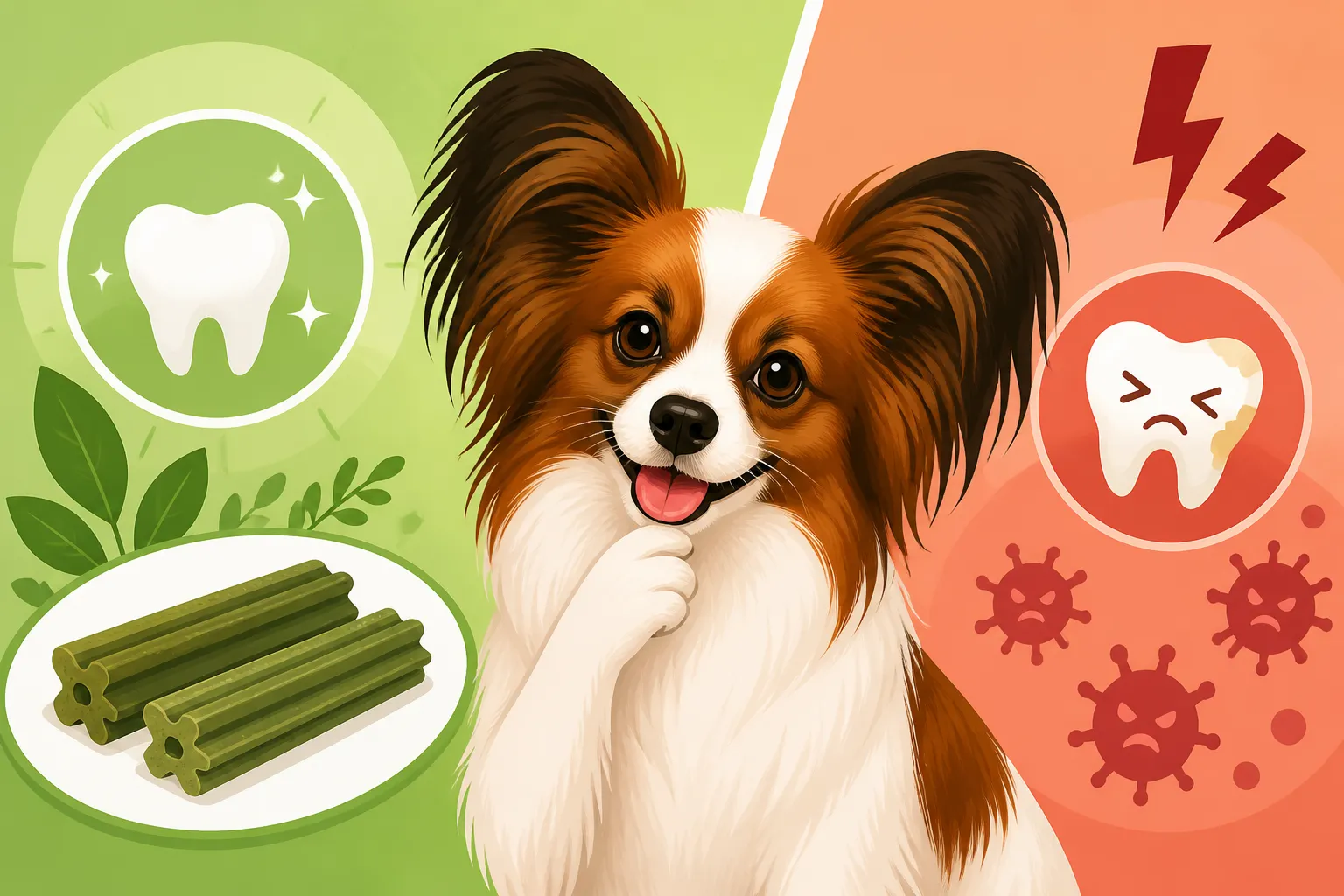
Whether Dental Chews Help a Papillon
Ah, the daily dance of trying to keep those tiny Papillon teeth sparkling clean! It's a frustration many of us face, worrying about our delicate little butterflies and the notorious dental problems that can plague toy breeds. This guide is going to walk you through whether those popular dental chews really live up to their promises for our beloved Papillons, and how they fit into the bigger picture of keeping their mouths healthy.
The Reality of Papillon Dental Health: A Constant Battle
Let's be honest, if you own a Papillon, you've probably spent more time looking at tiny teeth than you ever imagined. It's not just you; Papillons, like many small breeds, are notoriously prone to dental issues. Their elegant, fine-boned structure extends to their jaws, which often means their teeth are crowded. This crowding creates little nooks and crannies where food particles and bacteria love to hide, rapidly forming plaque and then hardening into tartar. Before you know it, your sweet little dog is facing gingivitis, gum disease, and eventually, tooth loss. It's a common and heartbreaking reality for many of us.
It feels like a losing battle sometimes, doesn't it? You try your best, but those tiny mouths just seem destined for trouble. The sheer volume of tooth surface packed into such a small jaw, coupled with genetics, means that preventative care isn't just a suggestion; it's absolutely crucial. Neglecting dental health can lead to far more than just bad breath. It can cause significant pain, difficulty eating, and even systemic health issues as bacteria from the mouth enter the bloodstream. Conditions like heart disease and kidney problems have been linked to poor dental hygiene in dogs, making this a serious concern. Many owners don't realize that The Teeth in a Papillon's Small Jaw are specifically predisposed to crowding.
The issue often starts subtly. You might notice a bit of yellowing on the canines or molars, or perhaps a slight odor from their breath. Then it progresses. That yellowing turns brown, the breath becomes truly foul, and you might even see red, inflamed gums. It can be easy to miss these early signs in such a small dog, especially if they are good at hiding discomfort – and Papillons, despite their delicate appearance, are often surprisingly stoic. By the time symptoms are obvious, the problem is usually quite advanced, requiring professional intervention. This is why understanding How Early Tartar Appears on a Papillon is so important.
Why Papillons Are Particularly Susceptible to Dental Disease
It's not just a random occurrence; there are several reasons why our beautiful butterflies often end up with dental woes. First, as mentioned, their small jaws are a primary culprit. Think about it: a standard set of 42 dog teeth crammed into a much smaller space than, say, a Labrador's mouth. This crowding isn't just about aesthetics; it means that teeth rub against each other, trapping food, and making it nearly impossible for a dog's natural chewing action (or even your brushing attempts) to reach all surfaces.
Secondly, genetics play a significant role. Some Papillon lines are simply more prone to developing tartar quickly. It's just the luck of the draw sometimes, and it means we have to be extra vigilant. We also see issues with retained deciduous (baby) teeth. Sometimes, those little puppy teeth just don't want to fall out, even after the adult teeth have erupted. This double-row of teeth creates an even worse environment for plaque accumulation and often requires a trip to the vet for extractions.
Finally, diet can contribute. While it's not the sole cause, feeding a soft, wet diet exclusively can mean less mechanical abrasion on the teeth, which hard kibble or dental chews can provide. However, even with the best diet, the anatomical challenges remain. The stark reality is that How Common Dental Disease Is in Papillons is very high, and it's a topic every Papillon owner needs to be deeply familiar with. It's not a matter of if dental problems will arise, but when and how severely, making proactive care absolutely paramount.
How Dental Chews Claim to Work (and Where They Fall Short for a Papillon)
Now, let's get to the star of our show: dental chews. These ubiquitous products promise a lot – fresher breath, cleaner teeth, and a happy dog. But do they really deliver for a tiny Papillon? The basic premise behind most dental chews is mechanical abrasion. As your dog chews, the texture of the chew physically scrapes away plaque from the tooth surface. Many also contain ingredients designed to inhibit bacterial growth, reduce bad breath, or even break down existing tartar.
You'll find a huge variety of dental chews on the market, from soft, pliable strips to harder, more abrasive sticks. Some are shaped specifically to get into those hard-to-reach areas, while others are designed for longer chewing times. Brands like Greenies, DentaStix, and other popular options available from retailers like Chewy or Amazon often feature prominently in pet store aisles. They're definitely appealing – an "easy" solution that our dogs usually love. Who wouldn't want to give their dog a tasty treat that also helps their teeth? It seems too good to be true, and sometimes, for a Papillon, it can be.
The challenge with Papillons and dental chews lies largely in their size and chewing habits. A large dog might vigorously chew a dental stick, getting a good scrape on multiple teeth. A tiny Papillon, however, might just nibble, or even swallow larger pieces whole if the chew isn't appropriately sized. If they're not actually chewing it against their teeth for an extended period, the mechanical benefit is minimal. Moreover, the shape and texture that might work for a large dog's molars might not effectively reach the crowded, tiny teeth in a Papillon's mouth, especially those tricky back molars. This is where the "too good to be true" feeling often comes from.
The Science Behind the Scrape: What Chews Are Supposed to Do
Most dental chews aim to tackle plaque and tartar in one of two main ways: mechanical action and chemical action.
Mechanical Action: This is the most straightforward. As your Papillon chews, the abrasive texture of the treat physically rubs against the tooth surface, helping to remove the sticky film of plaque before it hardens into tartar. Think of it like a very mild, edible toothbrush. The design of the chew, with its ridges, nubs, or unique shapes, is often engineered to maximize this contact. Some chews are even designed to promote longer chewing times, which increases the duration of this mechanical scrubbing. For a Papillon, a chew that is too hard or too large might not be chewed effectively, or worse, could pose a choking hazard or risk tooth fracture. Conversely, one that's too soft might offer no abrasive benefit at all.
Chemical Action: Many dental chews also incorporate active ingredients that work chemically to improve oral health. These can include:
- Enzymes: Such as glucose oxidase and lactoperoxidase, which mimic natural enzymes in saliva to break down bacteria or inhibit their growth.
- Antiseptics: Like chlorhexidine or zinc citrate, which reduce bacterial counts in the mouth, leading to fresher breath and less plaque formation.
- Hexametaphosphate (HMP): This ingredient binds to calcium in the saliva, preventing it from forming the hard calculus (tartar) on the teeth. It essentially helps to keep plaque from mineralizing.
These chemical agents are great in theory, but their effectiveness depends on consistent contact with the tooth surfaces and gums. If your Papillon gobbles the chew down quickly, the contact time might not be sufficient for these ingredients to do their work. It's crucial to look for chews that carry the Veterinary Oral Health Council (VOHC) seal of acceptance. This seal indicates that a product has met predetermined standards for reducing plaque and/or tartar formation in studies. For example, many popular dental chews found on Chewy or Amazon will display this seal on their packaging.
Common Pitfalls: Why Dental Chews Might Not Be Enough
While dental chews can be a helpful part of a dental care routine, they are rarely a complete solution, especially for a breed as prone to dental issues as the Papillon. Here's why they might fall short:
- Limited Coverage: Dental chews, no matter how ingeniously designed, typically only clean the surfaces of the teeth they come into contact with. They are notoriously poor at reaching the gumline, the tiny spaces between teeth where plaque loves to hide, or the very back molars, which are often the worst affected in small breeds due to crowding. These are the critical areas where periodontal disease often begins.
- Calorie Content: Many dental chews are quite high in calories. For a tiny Papillon who only weighs a few pounds, even one chew a day can contribute significantly to their daily caloric intake. This can quickly lead to weight gain, which brings its own set of health problems, including added strain on their joints. You really need to factor this into their overall diet. Feeding a Papillon That Weighs Seven Pounds requires careful calorie management.
- Choking Hazards & Tooth Fractures: If a chew is too large, too small, or too hard, it can pose a risk. Too large, and your Papillon might struggle to chew it properly. Too small, and it could be swallowed whole, offering no dental benefit and potentially becoming a choking hazard. Too hard, and it could lead to painful tooth fractures, especially in an older dog with weakened teeth. Always supervise your Papillon when they are enjoying a dental chew.
- Not a Substitute for Brushing or Professional Cleanings: This is perhaps the most important point. Dental chews are a supplement, not a replacement. They cannot remove existing tartar that has already hardened, nor can they effectively address advanced gum disease. For that, you need manual brushing and regular professional dental cleanings under anesthesia. Relying solely on chews is like only using mouthwash and skipping brushing and flossing yourself. It just won't cut it in the long run.
Integrating Dental Chews into a Comprehensive Papillon Dental Routine
The secret to good dental health for your Papillon isn't one magic bullet; it's a multi-faceted approach. Think of dental chews as one tool in your extensive dental toolkit, but certainly not the only one. For our tiny dogs, a comprehensive routine is non-negotiable if we want to avoid costly and uncomfortable dental procedures down the line. It's about being proactive and consistent, tackling plaque before it hardens into tartar.
Many Papillon owners find themselves on a first-name basis with their vet's dental team because of how frequently these issues arise. It can be incredibly disheartening, watching your cherished companion go through anesthesia and recovery. The goal of a holistic dental care plan is to minimize the need for these extensive procedures, or at least to extend the time between them. Dental chews can play a role, but they need to be chosen wisely and used in conjunction with other, more effective methods.
This integrated approach not only helps maintain good oral hygiene but also allows you to keep a close eye on your Papillon's mouth. Regular interaction with their teeth and gums means you're more likely to spot early signs of trouble, like redness, swelling, or changes in breath, before they escalate into serious problems. This vigilance is key to managing a Papillon's often challenging dental landscape.
The Cornerstone: Daily Brushing
If there's one thing you absolutely must prioritize for your Papillon's dental health, it's daily tooth brushing. Yes, daily! This is the gold standard, the most effective way to remove plaque before it mineralizes into tartar. It might sound daunting, especially with a wiggly little dog, but with patience and positive reinforcement, most Papillons can be trained to tolerate it, and some even come to enjoy it.
You'll need a toothbrush specifically designed for small dogs – or even a finger brush – and dog-specific toothpaste (never human toothpaste, as it contains ingredients toxic to dogs). Focus on the outer surfaces of the teeth, especially the molars and canines, gently brushing along the gumline. Even if you only manage a minute or two, consistency is key. Every little bit helps. It's not about scrubbing hard, but about gentle, consistent mechanical removal of plaque.
I know, it sounds like a chore. And it can be, especially at first. But trust me, it's worth it. Think of the alternative: potentially painful infections, expensive dental procedures, and the stress of anesthesia for your little one. Brushing daily dramatically reduces the build-up and is far more effective than any chew on its own. For practical tips, check out How Often a Papillon's Teeth Need Brushing and How to Reach a Papillon's Back Teeth.
The Essential Safeguard: Professional Dental Cleanings
Even with diligent home care, professional dental cleanings at the veterinary office are usually necessary for Papillons throughout their lives. This is because home brushing, while fantastic, can't reach every single surface, and once tartar has formed, it can only be removed effectively by scaling tools under anesthesia.
During a professional cleaning, your vet will:
- Perform a thorough oral exam, often including dental X-rays to check for problems below the gumline (where 80% of dental disease hides).
- Scale away plaque and tartar from all tooth surfaces, both above and below the gumline, using ultrasonic and hand instruments.
- Polish the teeth to smooth out any microscopic scratches, making it harder for plaque to adhere.
- Extract any diseased, broken, or abscessed teeth, which is often the source of significant pain and infection.
The thought of anesthesia for a tiny dog like a Papillon can be scary, and it's a valid concern. However, modern veterinary anesthesia is very safe, especially when proper pre-anesthetic bloodwork is done to assess organ function. The risks of not addressing severe dental disease often far outweigh the risks of anesthesia. Your vet can advise you on How Often a Papillon Needs a Dental Cleaning based on your individual dog's needs and how well you manage home care. Be prepared for What a Papillon's Dental Costs and understand that this is a regular part of ownership.
Support Systems: Water Additives and Dental Diets
Beyond brushing and professional cleanings, dental chews can fit in as a supplemental measure, alongside other supportive products.
Dental Water Additives: These are liquids you add to your Papillon's drinking water. They contain ingredients designed to reduce bacteria in the mouth and help prevent plaque formation. They're incredibly easy to use – just measure and add. However, their effectiveness is generally considered lower than brushing or professional cleanings, as the contact time and concentration of active ingredients are diluted. They are best used as an extra layer of protection, not a primary solution.
Dental Diets: Certain prescription dental diets are formulated with special kibble shapes and textures that are designed to clean the teeth as the dog crunches them. The kibble is usually larger and has a unique fiber matrix that scrubs the tooth surface rather than shattering immediately. These diets can be quite effective, especially for dogs who won't tolerate brushing or chews. However, they need to be fed exclusively to work, and they might not be suitable for all Papillons, especially picky eaters or those with other dietary needs.
Here's a quick comparison of various dental care methods:
| Method | Primary Benefit | Effectiveness for Papillons | Pros | Cons |
|---|---|---|---|---|
| Daily Brushing | Direct plaque removal | High | Most effective, cost-effective long-term | Requires daily effort, training, dog cooperation |
| Dental Chews | Mechanical abrasion, special ingredients | Moderate (supplemental) | Dogs often enjoy, easier than brushing | Can be high in calories, not a full solution, choking hazard if wrong size, limited reach |
| Water Additives | Reduces bacteria in water | Low to Moderate | Easy to use | Limited impact, not for existing plaque, not for all dogs |
| Professional Cleanings | Thorough plaque & tartar removal | High (essential) | Essential for established issues | Requires anesthesia, costly |
| Dental Diets | Special kibble texture | Moderate | Easy integration into routine | Limited impact for existing problems, can be costly, dog must eat it exclusively |
Remember, Whether Home Brushing Cuts a Papillon's Dental Bill depends entirely on its consistency and effectiveness. The more you can do at home, the less severe the professional cleanings might need to be, potentially reducing costs and anesthesia time.
Choosing the Right Dental Chew for Your Papillon (and What to Avoid)
So, you've decided to incorporate dental chews into your Papillon's routine. Great! But not all chews are created equal, especially for a small, delicate breed. Making the right choice is crucial for both effectiveness and safety. It's not just about grabbing the first thing you see on the shelf at your local pet store or clicking the top result on Amazon. You need to be a discerning shopper and consider your Papillon's specific needs.
Many of us, when we first get a Papillon, are overwhelmed by the sheer number of products out there. It's easy to fall for clever marketing. But when it comes to dental health, an informed decision makes all the difference. You want a chew that offers real benefit without posing unnecessary risks. This means paying attention to size, ingredients, and endorsements.
It's also important to remember that every dog is an individual. What works perfectly for one Papillon might not be suitable for another. Some Papillons are enthusiastic chewers, while others are more delicate. Observe your dog's chewing style and preferences to help guide your choices.
Key Considerations When Selecting a Chew
When you're sifting through the options, keep these points in mind for your tiny companion:
- VOHC Seal of Acceptance: This is your best friend when it comes to dental chews. The Veterinary Oral Health Council (VOHC) is an independent organization that reviews scientific studies on pet dental products. If a product carries their seal, it means it has been proven to help control plaque and/or tartar. This takes a lot of the guesswork out of choosing. Always prioritize products with this seal.
- Appropriate Size: This cannot be stressed enough for a Papillon. A chew designed for a large dog will be too big and could be a choking hazard or cause digestive upset. A chew that's too small might be swallowed whole without any cleaning action. Look for chews specifically marketed for "toy breeds" or dogs under 10 pounds.
- Texture and Hardness: The chew needs to be firm enough to provide mechanical abrasion but not so hard that it risks breaking your Papillon's teeth. Avoid extremely hard items like antlers, bones (cooked or raw), or very dense nylon chews. These can cause painful fractures, especially to molars. Look for chews that are pliable enough to flex slightly when you press on them, but still offer resistance.
- Ingredients and Calories: Always read the ingredient list. Look for natural ingredients and avoid artificial colors, flavors, and excessive fillers. Pay close attention to the calorie count. For a small Papillon, a high-calorie chew can quickly lead to unwanted weight gain. You might need to adjust their daily food intake on days they get a dental chew. Many brands, like those found on Chewy, list nutritional information clearly.
- Digestibility: Ensure the chew is fully digestible to avoid gastrointestinal upset or blockages. Some rawhide products can be problematic in this regard, especially if large pieces are swallowed.
What to Absolutely Avoid
Just as important as knowing what to look for, is knowing what to steer clear of. For a Papillon, certain chews can be downright dangerous:
- Natural Bones (Cooked or Raw): This includes chicken bones, pork bones, beef bones, etc. Cooked bones splinter easily and can cause internal damage, while even raw bones can break teeth. Small dogs are particularly vulnerable to these dangers.
- Antlers and Hooves: While popular for their longevity, these items are often far too hard for a Papillon's teeth and are a common cause of slab fractures, where a portion of the tooth breaks off.
- Ice Cubes: Seemingly innocent, ice is another common culprit for broken teeth.
- Very Hard Nylon Chews: Unless they are specifically designed to be flexible and non-abrasive to teeth, many hard nylon chews are too rigid.
- Chews with Poor Quality Ingredients: Avoid anything with questionable ingredients, excessive sugar, or a long list of artificial additives. Your Papillon's overall health starts with what they ingest.
In summary, dental chews can be a helpful addition to your Papillon's dental care routine, but they are not a standalone solution. They work best when paired with daily brushing and regular professional veterinary cleanings. Choose VOHC-approved chews that are appropriately sized and of suitable texture, and always supervise your Papillon while they enjoy their chew. Prioritizing their oral health now will save them discomfort, and you, significant stress and expense in the long run. What an Aging Papillon's Coat Looks Like might be a sign of poor health if their teeth are hurting and they aren't grooming themselves properly!
Disclaimer
This article is for general informational purposes only and does not constitute professional advice. Laws, prices and regulations vary by location and change over time. Consult a qualified professional for guidance on your specific situation.