Where a Papillon Gets Hurt Playing With Large Dogs
It’s a heart-stopping moment for any Papillon owner: watching your tiny, spirited butterfly-eared friend interact with a much larger dog. While your Papillon often has the confidence of a lion, utterly oblivious to their own diminutive stature, the reality is that playing with bigger breeds comes with significant risks. This guide will meticulously explore the precise ways a Papillon can get hurt, validate the very real fears owners have, and offer practical advice on how to keep your little one safe and sound.
The Physical Dangers: Where Accidents Happen
The unfortunate truth is that a Papillon's small size, delicate bone structure, and enthusiastic personality make them vulnerable to injury when playing with larger dogs. It’s rarely malicious, almost always accidental, but the consequences can be severe. Understanding the most common injury points is the first step in prevention.
Fragile Bones and Joints: A Tiny Target
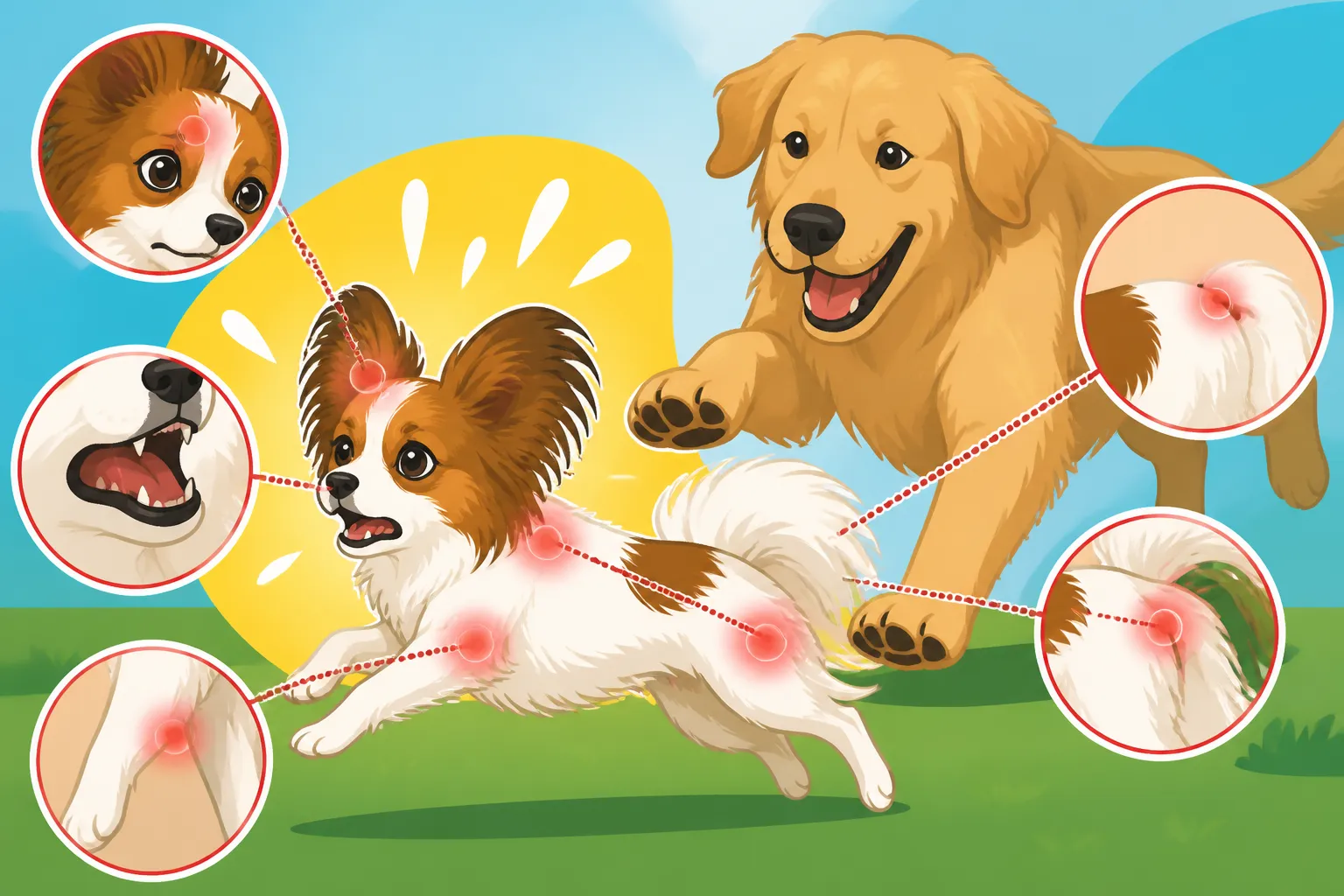
Papillons are fine-boned creatures, built for elegance and agility, not for withstanding the weight or impact of a much larger dog. Their legs, ribs, and skulls are particularly susceptible. Imagine a playful golden retriever, weighing 70 pounds, barreling into a 7-pound Papillon. Even a gentle nudge can translate into a significant force for such a small dog.
A common scenario involves a large dog enthusiastically pouncing or trying to "pin" the smaller dog in play. This can lead to fractures in the Papillon's delicate leg bones, particularly the tibias and fibulas, or even broken ribs. The force of a large dog simply stepping on a Papillon, even accidentally, can cause devastating internal injuries or crush fragile bones. Owners often worry about their Papillon's knees, and for good reason. Conditions like Patellar Luxation Is the Papillon Problem You Will Actually Meet are already a concern for the breed, and a hard knock or twisting motion during play can exacerbate an existing condition or even cause a new one, potentially leading to surgery. The joints, especially the tiny knee caps, are just not designed to withstand the kind of torque or impact that larger dogs might exert during rough-and-tumble play.
Head and Neck Trauma: The Most Frightening Injuries
Perhaps the most terrifying injuries a Papillon can sustain involve the head and neck. Because of their relatively large head for their body size, and the fact that they often look up at bigger dogs, their heads are often right in the firing line during play. A larger dog, even just shaking its head, can accidentally hit a Papillon's skull. More seriously, a larger dog might nip or even grab the Papillon’s head or neck during what it perceives as playful wrestling.
These kinds of incidents can result in concussions, internal brain swelling, or even spinal cord damage if the neck is twisted or compressed. The Papillon's skull, while protecting the brain, is still delicate compared to a mastiff's. Even a seemingly minor head bump can lead to symptoms like disorientation, lethargy, or seizures, demanding immediate veterinary attention. Sadly, sometimes the worst happens, and these injuries can be fatal. It's a fear that keeps many Papillon owners vigilant, and it's a fear worth having.
Internal Organ Damage: Hidden Dangers
While external injuries like fractures are visibly alarming, internal organ damage is often harder to detect and can be just as, if not more, dangerous. The soft tissue of a Papillon's abdomen is vulnerable to impact. A larger dog jumping on or running over a Papillon can cause bruising, tearing, or rupture of internal organs like the spleen, liver, or bladder.
These injuries might not show immediate external signs beyond general pain or lethargy, making them incredibly insidious. A Papillon might seem shaken but otherwise fine, only to become gravely ill hours later as internal bleeding or organ failure progresses. This is why any significant impact should be treated as an emergency, warranting a trip to the vet, even if your Papillon appears to bounce back initially. The hidden dangers are often the most lethal, and it's a constant worry for those of us who adore these little dogs.
The Behavioral Mismatch: Why Play Styles Clash
It’s not just about size; it’s also about how different breeds are wired to play. A Papillon’s bold personality, coupled with a larger dog’s natural exuberance, often creates a recipe for accidental injury.
The Papillon's Unaware Confidence: "I Am a Big Dog!"
One of the most endearing, yet sometimes dangerous, traits of a Papillon is their absolute lack of awareness regarding their own size. A Papillon Has No Idea It Is Small. They will often confidently approach, and even instigate play with, dogs many times their size. They might bark, nip at heels, or dart around a giant breed with the fearless bravado of a much larger dog. This isn't a flaw; it's part of their charming intelligence and zest for life. Why a Papillon Squares Up to a Big Dog even when it’s clearly outmatched.
However, this confidence can be a huge liability. A large dog might interpret a Papillon's zipping around as an invitation to engage in rougher play, not realizing the vast size difference. What feels like a playful bump from a Lab might be a serious blow to a Papillon. It’s an owner’s constant challenge to balance allowing their Papillon to express its natural boldness with ensuring its physical safety.
Larger Dogs' Play Style: Unintentional Roughness
Larger dogs, especially those from working or sporting backgrounds, often have a more physical, body-checking, and wrestling-based play style. They use their weight and strength to engage, which is perfectly natural for them and their larger counterparts. A playful tackle or a "friendly" body slam between two Golden Retrievers is just part of their fun.
But when this same play style is directed at a Papillon, it becomes incredibly dangerous. The larger dog isn't trying to hurt the Papillon; it's simply playing in the way it knows how, without fully grasping the fragility of its smaller companion. A large dog might bat at a Papillon with its paw, which could easily dislocate a shoulder or fracture a leg. They might try to "mouth" the Papillon, and while their intent might be soft, an accidental tightening of the jaw can cause a puncture wound or even crushing injuries. This unintentional roughness is the core of the problem, and it's why supervision and careful management are paramount.
The Instinct to Chase: A Prey Drive Trigger
Many large breeds, particularly sight hounds, terriers, or herding dogs, possess a strong prey drive. While they might be perfectly socialized and gentle with other large dogs, the sight of a small, fast-moving creature like a Papillon can, for some, trigger an instinct to chase or "herd." This isn't aggression; it's a deeply ingrained behavioral pattern.
A playful chase can quickly turn dangerous if the larger dog's prey drive takes over, or if the Papillon, trying to escape, gets trampled or caught. The sheer speed and force of a large dog pursuing a small one can lead to collisions, falls, and impact injuries. This is especially true in open spaces like dog parks where dogs are off-leash and can reach high speeds. It’s a terrifying thought, and it’s why understanding How a Papillon Behaves With Large Dogs is crucial, and knowing when to intervene.
Mitigating Risks: Creating a Safe Play Environment
Protecting your Papillon from accidental injury during interactions with larger dogs requires proactive management, diligent supervision, and sometimes, making tough choices about play environments.
Supervised Play and Controlled Introductions
The golden rule for Papillons and large dogs is always, always, always supervise their interactions. Never leave them unattended, even for a moment. This means active supervision, not just being in the same room. You need to be ready to intervene at the slightest sign of inappropriate play or discomfort.
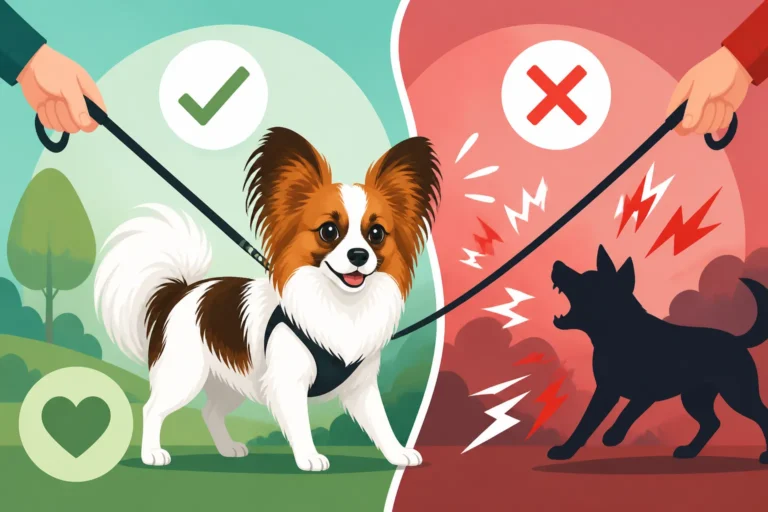
Controlled introductions are key. When introducing your Papillon to a new large dog, do so on neutral ground, ideally with both dogs on leash initially. Keep the first few interactions short and positive. Look for signs of comfortable, reciprocal play, or signs of stress from either dog. If the larger dog is too boisterous or the Papillon seems overwhelmed, it's best to separate them. Consider using a long line on the larger dog to allow for more freedom while still maintaining control. For initial meetings, having a barrier like a baby gate or a sturdy playpen can allow them to get used to each other's presence without direct physical interaction. Many owners find value in online training programs, such as those from BAXTER & Bella, which emphasize controlled socialization and positive reinforcement, helping to build confidence in both dogs.
Choosing Appropriate Play Partners and Environments
Not all large dogs are suitable playmates for a Papillon. Look for larger dogs known to be gentle, calm, and experienced with small dogs. Avoid dogs with overly boisterous play styles, high prey drives, or those who haven't been well-socialized. Puppy classes or structured doggy daycare with separate play areas for small and large breeds can be great options for socialization.
Dog parks, while tempting, come with inherent risks. The uncontrolled nature of a dog park means you have no say over the temperament or play style of other dogs. Whether a Dog Park Suits a Papillon is a question many owners grapple with, and for safety, many conclude that dedicated small-dog sections or carefully curated playdates are a safer bet. If you do go to a dog park, seek out times when fewer dogs are present, and always have an exit strategy. Be prepared to scoop up your Papillon at a moment's notice – though be mindful that Why Picking a Papillon Up Makes It Worse in some situations, as it can escalate the larger dog's focus or be seen as a challenge. Using dog-safe areas at home, like a fenced yard, or a playpen purchased from retailers like Amazon, can provide a secure space for controlled play with known, gentle companions.
Physical Barriers and Management Tools
Strategic use of physical barriers can prevent accidents before they happen. Baby gates are invaluable for separating dogs in the home, allowing them to coexist without direct interaction when you can't actively supervise. Crate training is also essential, providing your Papillon a safe haven where they can retreat and be undisturbed.
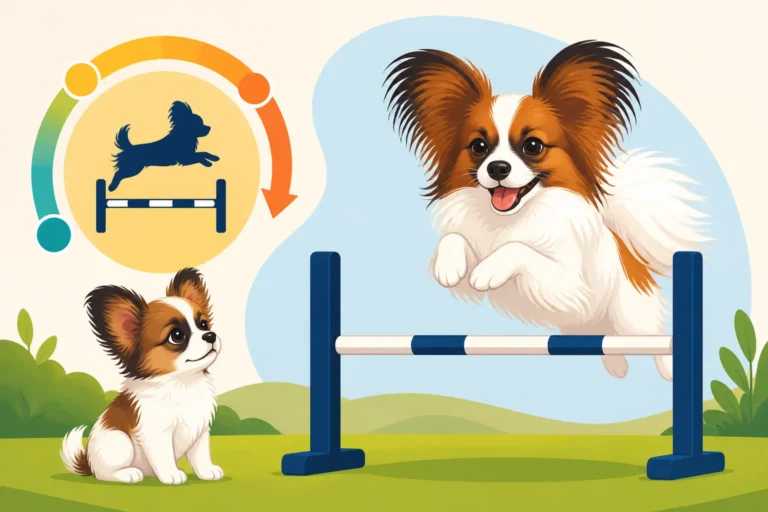
For walks, a well-fitting harness is always recommended over a collar, especially for small breeds with delicate tracheas. If a larger dog were to lunge, a harness distributes pressure more evenly, reducing the risk of neck injury. Investing in ramps or steps for furniture can also reduce the impact on your Papillon’s joints from jumping, a concern for a breed prone to luxating patella. These are readily available on platforms like Amazon.
Here's a quick look at common injury areas and preventive measures:
| Injury Type | Common Causes in Large Dog Play | Preventive Measures |
|---|---|---|
| Leg Fractures | Stepped on, pounced on, run into | Supervised play, no rough play, ramps to furniture |
| Rib Fractures | Rolled on, body slammed, accidental kick | Avoid boisterous play, intervene quickly, separate play zones |
| Head Trauma | Head shake impact, accidental paw strike, nipping | Careful introductions, gentle playmates, vigilant supervision |
| Neck/Spine Injury | Being picked up by neck, twisting, severe impact | Avoid neck collars in play, ensure gentle handling |
| Internal Injuries | Jumped on, run over, crushed by weight | Strictly supervised play, avoid high-energy interactions |
| Joint Injuries | Twisting, hard landings, impact to knees | Ramps/steps, non-slip surfaces, controlled jumps |
What to Do When an Injury Occurs: First Steps and Beyond
Despite all precautions, accidents can happen. Knowing what to do in the immediate aftermath can make a significant difference in your Papillon's recovery.
Immediate Action and First Aid
If your Papillon is injured by a larger dog, your first priority is to separate the dogs and ensure your Papillon's safety. Carefully assess the situation. Is your Papillon responsive? Is there visible bleeding, a broken limb, or signs of pain?
Handle your Papillon gently. If there's a suspected broken bone, try to keep the limb as still as possible. For bleeding, apply gentle pressure with a clean cloth. The most crucial step is to remain calm; your anxiety will only heighten your dog's stress. Even if the injury seems minor, or your Papillon appears to recover quickly, Anesthesia and a Five Pound Papillon is a real consideration when facing potential surgery or extensive diagnostics. Because of their tiny size, any medical intervention requires careful planning. It's often better to be safe than sorry and seek veterinary attention immediately.
Emergency Veterinary Care
Any incident involving a large dog and a Papillon resulting in injury or even just a hard impact warrants an emergency vet visit. Do not wait to see if symptoms develop. Internal injuries might not be immediately obvious, and conditions can rapidly deteriorate in small dogs. Call your vet or an emergency animal hospital on your way so they can be prepared for your arrival.
The vet will conduct a thorough examination, which may include X-rays to check for fractures, ultrasound to look for internal bleeding or organ damage, and blood tests. Be prepared to provide as much detail as possible about the incident: what happened, how your Papillon reacted, and any visible signs of injury. Early diagnosis and treatment are critical for the best possible outcome. How Long a Papillon Lives is often a testament to diligent care, and swift action in emergencies is a huge part of that.
Long-Term Recovery and Prevention
Recovery from a serious injury can be a long and challenging road, both for your Papillon and for you. It might involve pain management, restricted activity, physical therapy, and follow-up vet visits. Be patient and follow your vet's instructions meticulously. This period is often where the true financial costs of ownership can hit, as Knee Surgery Is the Bill Most Papillon Owners Meet is a common scenario, and trauma-induced injuries can be even more complex and expensive.
Moving forward, you'll need to re-evaluate how your Papillon interacts with other dogs. It might mean a stricter approach to supervised play, opting only for very calm and known playmates, or even avoiding interactions with large dogs altogether. Consider further training for your Papillon, perhaps with a focus on recall and disengagement cues, or even working with a professional trainer to build confidence and reinforce safe behaviors. Protecting your Papillon’s health and happiness is always the top priority.
Disclaimer
This article is for general informational purposes only and does not constitute professional advice. Laws, prices and regulations vary by location and change over time. Consult a qualified professional for guidance on your specific situation.