Whether Grooming a Papillon at Home Is Realistic
The idea of regularly grooming a Papillon at home might conjure images of elaborate show preparations and hours spent with brushes and dryers. After all, these dogs are famous for their magnificent, flowing coats and those stunning butterfly ears. It’s easy to assume such beauty demands a professional touch every week. But the truth is, while a Papillon’s coat is certainly eye-catching, keeping it pristine yourself is far more realistic than many first-time owners imagine, and this guide will walk you through exactly what that entails.
Understanding the Papillon Coat
Before you even pick up a brush, it's really helpful to understand what you're working with. A Papillon's coat isn't like that of many other long-haired breeds, and knowing its unique characteristics will save you a lot of time and frustration in the long run.
The Papillon's Unique Coat Structure
One of the biggest advantages of a Papillon's coat, and something that surprises many people, is that it's a single coat. Unlike breeds such as Pomeranians or Collies, Papillons don't have a thick, dense undercoat. This is a game-changer when it comes to grooming. A double coat often means heavy shedding, intense matting close to the skin, and a lot more effort to brush through. With a single coat, you're primarily dealing with the outer guard hairs, which are fine, silky, and lie flat. This characteristic is precisely A Papillon's Coat Is All Fringe and No Undercoat, which means less bulk and less potential for those deep, felt-like mats that can develop in other breeds.
The texture is also worth noting; it's often described as silky. This isn't just a pretty word; it means the hairs tend to slip past each other more easily than coarse, cottony hair. This is Why a Papillon Mats Less Than It Looks Like It Should given its length. While mats can and do happen, especially in friction areas, they're generally easier to brush out than those found in dogs with denser, more textured coats. You're less likely to battle giant clumps of shedding undercoat, which simplifies the entire process.
The Fringes and Their Maintenance
Now, let's talk about the parts that truly define the Papillon's look: the fringes. These aren't just decorative; they require specific attention to stay beautiful and tangle-free. The most iconic, of course, is the ear fringe, which gives the breed its name ("papillon" is French for butterfly). These long, flowing hairs often extend gracefully from the ears, mimicking butterfly wings. This beautiful feature is The Ear Fringe That Gives the Papillon Its Name, and keeping it pristine is key to the breed's aesthetic.
Beyond the ears, you'll also find exquisite feathering on the chest, forming a "frill," and on the back of the legs, often called "culottes." And, of course, the tail carries a magnificent "plume" that typically arches over the back. These areas – the ears, chest, culottes, and tail – are where the coat is longest and most prone to tangles and minor matting simply due to friction and movement. When your Papillon curls up for a nap, those culottes can get compressed, and when they shake their head, the ear fringe can get caught. Understanding The Plume, the Culottes and a Papillon's Chest Frill and their propensity for tangles is the first step in effective home grooming. Regular, gentle brushing through these longer sections prevents small tangles from escalating into painful mats that might require clipping.
Essential Home Grooming Tools and Techniques
Successfully grooming your Papillon at home really boils down to having the right gear and knowing how to use it. Don't worry, you don't need a professional salon setup. A few key items, coupled with consistent technique, will make all the difference.
The Right Tools for the Job
Let's talk essentials. A good quality pin brush is your primary tool for daily or every-other-day brushing. Look for one with smooth, rounded pins that won't scratch your dog's skin. It's excellent for gliding through the longer coat, especially on the body, ears, and tail. For those trickier spots and to get down to the skin, a metal greyhound comb with both wide and narrow teeth is indispensable. This comb is Which Comb Reaches a Papillon's Skin effectively, allowing you to check for any hidden tangles or mats that the brush might have missed. A small slicker brush can also be handy for gently working out minor snarls, particularly behind the ears where mats often form. You can find all these grooming tools and more easily at pet supply retailers like Chewy, ensuring you have everything you need.
Beyond brushes and combs, you'll need nail clippers or a nail grinder. Given the Papillon's active nature, keeping their nails short is important for comfort and joint health. If you're nervous about clipping, a grinder can offer more control. For ear care, a gentle ear cleaning solution designed for dogs and some soft cotton balls or pads are necessary. Finally, a good quality dog shampoo and conditioner suitable for long, silky coats will ensure baths are effective without stripping essential oils. Don't forget a couple of absorbent towels and a hairdryer on a cool setting.
A Step-by-Step Grooming Routine
Establishing a routine makes grooming less of a chore and more of a bonding experience. Start by laying out all your tools.
-
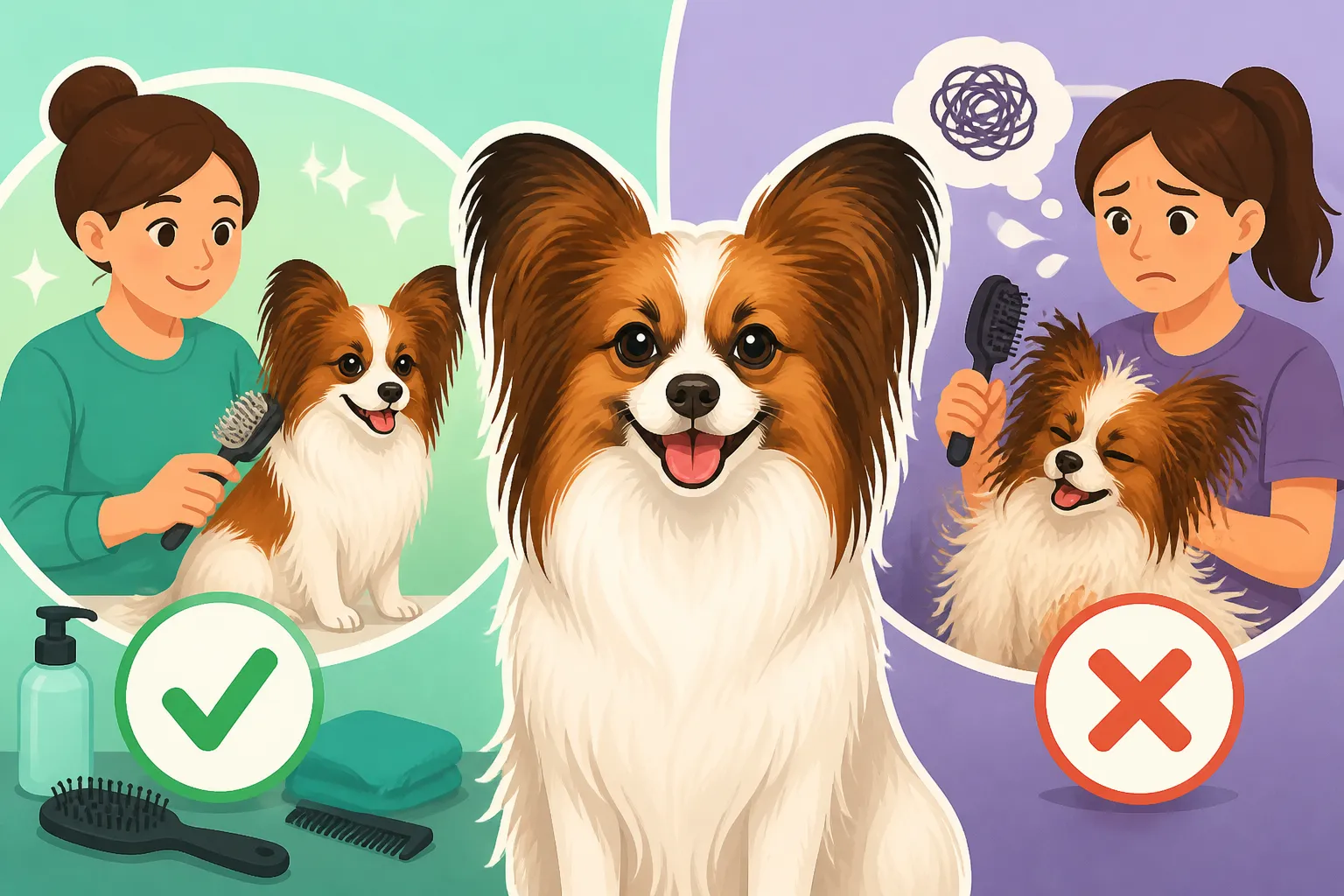
Brushing (the most frequent step): Aim for a full brush-out a few times a week, especially in high-friction areas. For a full brush-out, How Long a Papillon Takes to Brush can be as little as 15-20 minutes, which is very manageable. Begin with your pin brush, working gently through the body, then the ears, tail, and culottes. Pay close attention to behind the ears, under the elbows, and where the legs meet the body, as these are common matting zones. Once you've gone over the whole dog with the pin brush, follow up with your metal comb to check for any missed tangles. If you encounter a mat, don't pull! Gently work it apart with your fingers, then use the slicker brush or the wide teeth of your comb, holding the hair at the base to prevent pulling on the skin. A spritz of detangling spray can also be a huge help.
-
Ear Cleaning: Check your Papillon's ears weekly. Because their ears are upright and feathered, they generally have good air circulation, which can reduce the risk of infections compared to drop-eared breeds. Still, dirt and wax can accumulate. Use a vet-approved ear cleaning solution and a cotton ball to gently wipe the visible parts of the ear. Never insert anything deep into the ear canal. How Often a Papillon's Ears Need Cleaning really depends on your individual dog, but a weekly check is a good habit.
-
Nail Trimming: This is often the most daunting task for owners. Overly long nails can cause discomfort, affect gait, and even lead to orthopedic issues. A good schedule is every 3-4 weeks, or whenever you hear them clicking on hard floors. How Fast a Papillon's Nails Grow can vary, so visual inspection is key. If using clippers, take off small amounts at a time to avoid cutting the quick (the blood vessel and nerve within the nail). If you prefer a grinder, introduce it slowly and offer treats for cooperation.
-
Bathing: While Papillons don't need daily baths, a good wash every 3-4 weeks, or when they get noticeably dirty, is usually sufficient. How Often a Papillon Should Be Bathed depends on their activity level and coat condition. Before bathing, always do a thorough brush-out to remove any tangles, as water will tighten them. Use lukewarm water and apply shampoo gently, working it into the coat. Rinse thoroughly, ensuring no shampoo residue is left behind, as this can irritate the skin. Follow up with a light conditioner, especially on the longer fringes, and rinse again.
-
Drying: This is a critical step, especially for those beautiful fringes. Towel dry thoroughly first, then use a hairdryer on a cool or low-heat setting. Keep the dryer moving and brush the coat gently as you dry to prevent tangles and achieve that lovely, flowing look. It's important to ensure the coat is completely dry, especially at the skin, to prevent skin irritation. How to Dry a Papillon properly ensures their coat maintains its signature airy quality.
Handling Sensitive Areas
Some areas of your Papillon require extra delicacy. The paws are one such spot. Papillons typically have "hare feet," meaning they are longer and more slender than round "cat feet." Hair can grow between their paw pads, which, if left untrimmed, can collect debris, cause slipping on smooth floors, and even contribute to splaying of the toes. Whether Hair Between a Papillon's Pads Causes Slipping is a real concern. Carefully trim this hair flush with the pads using blunt-nosed scissors.
The ear fringes are another sensitive area, both because of their beauty and their delicacy. They are prone to collecting food residue if your Papillon is a messy eater, or simply getting tangled from everyday life. When brushing, always support the ear leather with one hand while gently brushing the fringe with the other. This prevents discomfort and pulls. It’s important to condition puppies early to accept handling of their ears and feet; positive reinforcement with treats makes a huge difference. If you encounter any unexpected skin issues or persistent matting that you can't manage, consulting your vet is always a good idea. While home grooming typically prevents major issues, having pet insurance like Healthy Paws can provide peace of mind for any unforeseen veterinary needs, whether grooming-related or otherwise.
The Reality of DIY Papillon Grooming
So, knowing all this, how realistic is it to take on all your Papillon's grooming needs yourself? The answer is: very, with a little dedication and the right approach.
Time Commitment and Consistency
The biggest factor in successful home grooming is consistency. While you might not need to spend hours every single day, regular attention prevents minor issues from becoming major problems. For example, Why a Papillon's Long Coat Takes Twenty Minutes a Week is a common misconception, as many people assume it takes longer. While a quick daily once-over is beneficial for mental stimulation and bonding, a thorough brush-out a few times a week, taking maybe 15-20 minutes each time, is usually sufficient to prevent significant matting.
This regular brushing schedule is key. How Often a Papillon Needs Brushing is ideally every other day, or at least 2-3 times a week, focusing on those fringe areas. Nails and ears can be checked weekly, with trims or cleans happening every 3-4 weeks. Baths are also a monthly affair for most Papillons. It's not an overwhelming daily commitment, but it does require a consistent presence in your dog's routine. Think of it as dedicated bonding time rather than a chore, and your Papillon will likely come to enjoy it.
Benefits and Challenges of Home Grooming
There are some fantastic benefits to grooming your Papillon at home. Firstly, it's a wonderful bonding experience. Regular gentle handling and positive reinforcement during grooming can strengthen the trust between you and your dog. Secondly, there are significant cost savings. Professional grooming can be expensive, and doing it yourself eliminates those recurring fees. Thirdly, you have complete control over the products used and the attention given to specific areas. You know your dog's sensitivities and can tailor the experience accordingly.
However, it's not without its challenges. It requires time and patience, especially when first teaching a puppy to tolerate the process. Acquiring the necessary skills, like safely trimming nails or thoroughly detangling without causing pain, takes practice. You might also lack the specialized equipment of a professional groomer, such as high-velocity dryers that can drastically cut drying time. There's also the risk of minor injury, like cutting the quick or causing skin irritation if tools aren't used correctly. For certain specialized trims, such as tidying up feet to a "hare foot" standard for show, a professional might have an edge.
When to Call in a Professional
Even if you're committed to home grooming, there are times when a professional groomer can be an invaluable resource.
- Severe Matting: If you find a mat that is too large, too tight to the skin, or too painful to remove yourself, a professional groomer has the tools and expertise to safely remove it, often without causing discomfort or stress to your dog. Trying to cut out a severe mat yourself can easily lead to accidental cuts on the skin.
- Anxiety or Aggression: If your Papillon develops significant anxiety or displays aggression during grooming, a professional groomer, especially one experienced with small breeds, might be able to work through these issues more effectively, or at least provide a less stressful experience for both of you.
- Specialized Styling: While Papillons typically don't require elaborate haircuts, if you want to maintain a very specific show-ring ready look, or simply prefer a tidier, trimmed appearance for convenience, a professional can provide this with precision.
- Health Checks: Groomers often notice skin issues, lumps, bumps, or ear problems that owners might miss. While this isn't their primary role, they can be an extra set of eyes that might prompt a vet visit.
Here's a quick comparison to help you weigh your options:
| Aspect | Home Grooming | Professional Grooming |
|---|---|---|
| Cost | Low initial tool investment, then minimal | Recurring expense, varies by location and service |
| Convenience | Schedule at your leisure, no travel needed | Requires appointments and travel |
| Skill Level | Requires learning & practice; basic skills easy | Expert techniques; often includes advanced services |
| Tools Needed | Essential brushes, combs, clippers, shampoo | Full range of specialized equipment |
| Bonding | Excellent opportunity to strengthen bond | Less direct owner-dog interaction during service |
| Potential Issues | Risk of user error (e.g., quicking nails) | Less risk of owner error; trained to handle issues |
| Matting | Manageable for minor tangles | Essential for severe, painful mats |
Ultimately, grooming a Papillon at home is not only realistic but highly rewarding. With the right tools, a consistent routine, and a bit of patience, you can keep your butterfly dog looking magnificent and feeling comfortable, all while strengthening your special bond.
Disclaimer
This article is for general informational purposes only and does not constitute professional advice. Laws, prices and regulations vary by location and change over time. Consult a qualified professional for guidance on your specific situation.