Why a Papillon’s Teeth Need Brushing Daily
One of the most disheartening things for any Papillon owner is to discover their tiny companion is suffering from painful dental disease, often much earlier than expected. Many folks assume that dental issues are just part of getting older, or that brushing is too much hassle for such a small dog. But the truth is, a Papillon's unique physiology makes them incredibly susceptible to dental problems, and neglecting their oral hygiene can lead to immense discomfort, costly vet bills, and even impact their overall health. This guide will dive deep into why daily tooth brushing is not just a recommendation but an absolute necessity for your Papillon, and how you can make it a successful part of your routine, saving your little friend from unnecessary pain.
The Unique Vulnerability of a Papillon's Mouth
It's easy to look at a Papillon's adorable, foxy face and forget that beneath that sweet expression lies a mouth that's a prime target for dental woes. Their small size, while charming, contributes significantly to their dental challenges. You might think smaller teeth mean fewer problems, but it's actually the opposite.
A Crowded Smile in a Tiny Jaw
Imagine trying to fit a full set of human teeth into a jaw the size of a teacup. That's essentially what a Papillon is dealing with. Their jaws are incredibly delicate and compact, which means their teeth are often much more crowded than those of larger breeds. This crowding creates all sorts of nooks and crannies where food particles and plaque can easily get trapped. When teeth are packed in tightly, they don't have the natural spacing that allows for self-cleaning through chewing or even just the movement of the tongue. Instead, these tight spaces become perfect breeding grounds for bacteria, quickly escalating into plaque and tartar buildup.
This crowding also sometimes manifests as retained deciduous (baby) teeth. If those tiny puppy teeth don't fall out when they should, the adult teeth can erupt alongside them, creating double rows of teeth. This traps even more food and makes effective cleaning virtually impossible. It's a common issue that often requires veterinary intervention to prevent serious problems down the line. If you've ever wondered Whether a Papillon Retains Its Baby Teeth, it's definitely something to watch for, and your vet will check for it during puppy visits.
Rapid Plaque and Tartar Accumulation
Due to their genetics and the pH balance in their mouths, many small breeds, including Papillons, tend to accumulate plaque and tartar at an astonishing rate. It's not just a matter of diet; it's often a predisposition. You could feed your Papillon the best dental kibble in the world, and without active daily care, you'd likely still see tartar forming far too quickly. This isn't your fault as an owner; it's simply a biological reality for many small dogs.
The speed at which this happens can be shocking. You might notice a bit of yellowish film on their teeth, and before you know it, that film hardens into a brownish, rock-like substance. This is tartar, and once it forms, brushing alone won't remove it. It requires professional scaling under anesthesia. This rapid accumulation is a key reason why How Early Tartar Appears on a Papillon can be quite surprising for new owners, sometimes appearing even before their first birthday.
The Grim Consequences of Neglecting Oral Hygiene
Ignoring those little teeth might seem minor, especially if your Papillon isn't showing obvious signs of pain. But dental disease is a silent, progressive condition that can cause immense suffering and lead to far more serious health complications than just a bad breath.
Painful Gum Disease and Tooth Loss
The first stage of dental disease is gingivitis, which is essentially inflammation of the gums. This occurs when plaque and tartar irritate the gum line, causing redness, swelling, and sometimes bleeding. If you've ever had gingivitis yourself, you know how uncomfortable it can be. Imagine that discomfort constantly in your mouth. Your Papillon can't tell you they're hurting, but they are.
Left untreated, gingivitis progresses to periodontitis. This is where the infection spreads beneath the gum line, destroying the supporting structures of the teeth – the bone and ligaments. Pockets form around the tooth roots, filling with bacteria and pus. This stage is excruciatingly painful. Teeth become loose, infected, and eventually fall out. You might notice your Papillon becoming reluctant to eat hard kibble, preferring softer foods, or even dropping food from their mouth. They might rub their face, or shy away when you try to touch their mouth. It’s not uncommon for Papillons to lose multiple teeth due to severe periodontal disease, impacting Whether a Papillon Eats Normally Without Teeth and often necessitating dietary changes.
The idea that losing teeth is "natural" for older dogs is a misconception. Healthy teeth, with proper care, should last a lifetime. Tooth loss is a symptom of advanced, painful disease that could often have been prevented.
Systemic Health Risks Beyond the Mouth
This is where dental disease becomes truly insidious. The mouth is not an isolated system; it's directly connected to the rest of the body. The bacteria thriving in your Papillon's infected gums don't stay put. They can enter the bloodstream through the inflamed tissues and travel to major organs, including the heart, kidneys, and liver.
Once these bacteria reach vital organs, they can cause serious infections and damage. Chronic bacterial infections can lead to conditions like endocarditis (inflammation of the heart lining), kidney disease, and liver issues. This means that seemingly "just" a dental problem can shorten your Papillon's lifespan and drastically reduce their quality of life. The connection between oral health and overall systemic health is a critical, often overlooked reason Why a Papillon's Teeth Need Brushing Daily. It's not just about fresh breath; it's about extending their healthy years.
Making Daily Brushing a Reality for Your Papillon
Knowing why daily brushing is crucial is one thing; actually doing it is another. But with the right approach, tools, and patience, it's a completely achievable goal.
The Right Tools for the Job
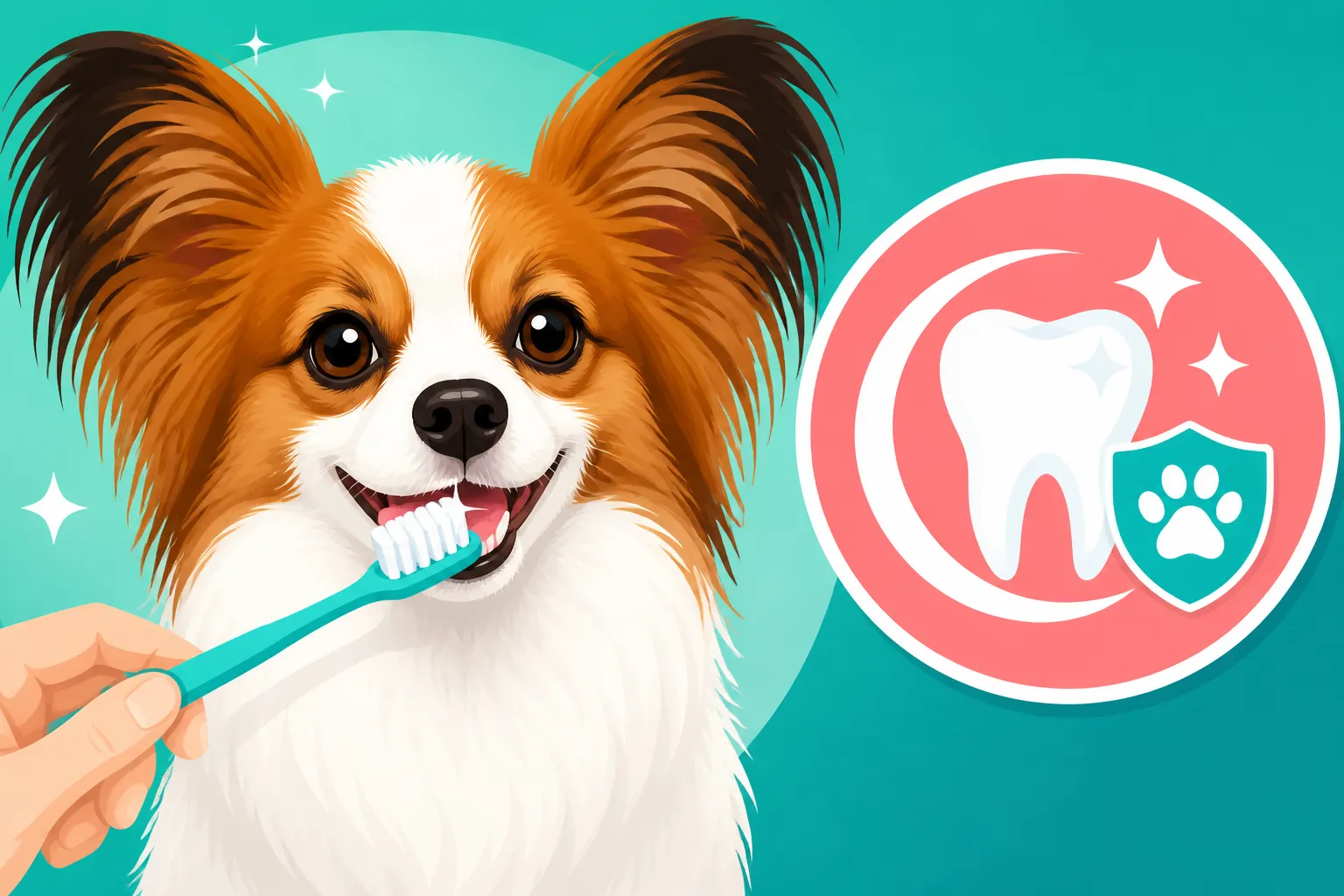
First things first, you need the right equipment. Forget human toothpaste; it contains ingredients that are toxic to dogs. You need enzymatic dog toothpaste, which comes in flavors your Papillon might actually enjoy, like poultry or peanut butter. These toothpastes are designed to be swallowed safely and help break down plaque even without vigorous scrubbing. Brands like Virbac C.E.T. or Petrodex are popular and widely available on platforms like Chewy or Amazon.
For the brush itself, a small, soft-bristled toothbrush is essential. Many pet stores and online retailers like Chewy offer brushes specifically designed for small dogs, or even finger brushes that fit over your finger for a more tactile approach. Some owners even have success with a baby toothbrush, as the bristles are incredibly soft and the head is small.
Here's a quick comparison of common brushing tools:
| Tool Type | Pros | Cons | Best For |
|---|---|---|---|
| Finger Brush | Easy to start, direct feel | Less effective scrubbing for deep plaque | Puppies, easily frightened dogs, introducing brushing |
| Small Dog Toothbrush | Better reach and scrubbing power | Can be awkward in very small mouths at first | Most adult Papillons once accustomed |
| Electric Pet Toothbrush | More efficient plaque removal | Noise and vibration can scare some dogs | Dogs tolerant of noise/vibration, advanced users |
| Gauze Wrapped Finger | Very gentle, familiar feel of your finger | Minimal abrasive action | Highly sensitive dogs, introducing toothpaste |
A Step-by-Step Approach to Brushing Success
Patience is your greatest ally here. Don't expect to conquer all four quadrants of your Papillon's mouth on the first try. The goal is to make it a positive experience, slowly building tolerance.
- Start Slow and Gentle: Begin by just letting your Papillon lick the enzymatic toothpaste off your finger. Do this for a few days, making it a tasty treat.
- Introduce the Finger/Brush: Once they associate the toothpaste with a positive experience, introduce your finger or a finger brush coated with toothpaste. Gently rub it along the outside of their gums and teeth for just a few seconds. Focus on the canine teeth (the pointy ones) and the molars, as these tend to accumulate the most plaque. Praise and reward heavily!
- Increase Duration Gradually: Over days and weeks, slowly increase the time you spend brushing. Aim for about 30 seconds per side, focusing on the outer surfaces of the teeth. Many dogs resist having the inside of their teeth brushed, and honestly, the majority of plaque builds up on the outside surfaces where the salivary glands are located. So, if you can only get the outside, that's still a huge win. How to Reach a Papillon's Back Teeth can be tricky, so don't be afraid to gently lift their lip high.
- Consistency is Key: Daily brushing is the ideal. Missing a day here and there won't ruin everything, but making it a routine will yield the best results. Pick a time that works for both of you – perhaps after their morning walk or before bed. It should be a quiet, calm time.
- Address the Muzzle Fringe: Papillons have that glorious ear and muzzle fringe, which can sometimes get in the way or even get food stuck in it. Gently push the fringe away from their mouth before you start. You don't want toothpaste or kibble residue sitting on their delicate facial hair. Learning Why a Papillon's Muzzle Fringe Gets Food In It will help you keep an eye out for this.
If your Papillon is particularly resistant, consider breaking up the brushing into even shorter sessions, doing just a few teeth at a time, multiple times a day. Always end on a positive note with praise and a small, desirable reward.
Beyond Brushing: Comprehensive Dental Health Strategies
While daily brushing is the cornerstone of good dental hygiene for your Papillon, it's part of a broader strategy that includes diet, dental chews, and regular professional care.
The Role of Diet and Dental Chews
What your Papillon eats can definitely play a supporting role in their dental health. While kibble alone won't keep teeth clean, certain formulations are designed with dental health in mind. Look for kibbles that are larger or have a unique shape that encourages chewing, which can help scrape away some plaque. Brands like Hill's Prescription Diet t/d or Royal Canin Dental are specifically formulated to help reduce tartar buildup, but always consult with your vet before making significant dietary changes.
Dental chews can also be beneficial, but choose wisely. Avoid very hard chews that could fracture teeth, especially in a small dog with delicate jaws. Look for chews that are appropriately sized for your Papillon and that have been "VOHC-approved" (Veterinary Oral Health Council). This seal indicates that the product meets certain standards for plaque and/or tartar reduction. Even popular brands often have dental-specific options; you might find a good selection on Chewy or Amazon. However, remember that chews are a supplement, not a replacement for brushing. For more info, check out Whether Dental Chews Help a Papillon.
Some owners explore fresh food diets, like those offered by Ollie, and while these can be great for overall health, they don't inherently prevent plaque buildup on their own. Fresh food can be softer, meaning less abrasive action on the teeth. If feeding a fresh food diet, consistent brushing becomes even more critical.
Regular Professional Dental Cleanings
No matter how diligently you brush, your Papillon will likely need professional dental cleanings throughout their life. Just like humans need dental check-ups and cleanings, so do our furry friends. These cleanings are performed under general anesthesia, allowing the veterinarian to thoroughly examine every tooth, clean above and below the gum line, and identify any issues that might be hiding.
During these cleanings, the vet can scale away any tartar that has hardened, polish the teeth to smooth the surface (making it harder for plaque to adhere), and take dental X-rays to check for problems beneath the gum line, such as abscesses or bone loss. This is also when extractions are performed if teeth are too diseased to save. The cost of these procedures can be significant, especially if extractions are needed. Understanding What Extractions Add to a Papillon's Dental Bill or What Anesthesia Adds to a Papillon's Dental Bill can help you budget, emphasizing further why preventative daily brushing is so valuable.
The frequency of professional cleanings varies depending on your individual Papillon and their rate of plaque accumulation. Some might need it every year, others every two or three. Your vet will advise you based on their oral health assessment. Regular vet check-ups are essential for monitoring their dental health and determining How Often a Papillon Needs a Dental Cleaning.
By combining daily brushing with a supportive diet and regular professional cleanings, you're giving your Papillon the best possible chance at a long, healthy, and pain-free life. It might seem like a lot of effort, but preventing painful disease is always preferable to treating it. And honestly, those fifteen years (or more!) of happy, healthy smiles are absolutely worth it. You'll be amazed at How Long a Papillon Keeps Its Teeth With Home Care when you put in the work.
Disclaimer
This article is for general informational purposes only and does not constitute professional advice. Laws, prices and regulations vary by location and change over time. Consult a qualified professional for guidance on your specific situation.