Whether a Papillon With PRA Goes Fully Blind
Discovering that your beloved Papillon has Progressive Retinal Atrophy (PRA) can be a profoundly upsetting moment, immediately sparking fears about their future and quality of life. The thought of your vibrant, intelligent companion losing their sight completely is truly heartbreaking, and it's natural to wonder if they will ever go totally blind. This comprehensive guide will walk you through the realities of PRA in Papillons, explaining its progression, what to expect regarding vision loss, and crucially, how to provide the best possible life for your furry friend, whether their vision diminishes partially or entirely.
Understanding Progressive Retinal Atrophy in Papillons
Progressive Retinal Atrophy, often abbreviated as PRA, is a collective term for a group of genetic eye disorders that affect the retina, the light-sensitive tissue at the back of the eye. In Papillons, the most common form is PRA1, which is specifically linked to a mutation in the CNGB1 gene. This condition causes the photoreceptor cells in the retina – the rods and cones – to degenerate over time. It's a cruel disease because it often strikes dogs in the prime of their lives, slowly robbing them of one of their primary senses. For many owners, the initial diagnosis feels like a punch to the gut, leaving them with countless questions about what comes next.
The Genetic Basis of Papillon PRA
The specific type of PRA seen in Papillons, known as PRA1, is an inherited condition passed down through a recessive gene. This means a Papillon must inherit two copies of the faulty gene – one from each parent – to be affected by the disease. Dogs that inherit only one copy are considered carriers; they won't develop PRA themselves but can pass the gene on to their offspring. This is why responsible breeders are so diligent about genetic testing. Knowing about The Papillon Type of Progressive Retinal Atrophy and the CNGB1 Gene can help owners understand the science behind their dog's diagnosis and the importance of health screening in breeding lines.
The faulty CNGB1 gene primarily affects the rods, which are the photoreceptor cells responsible for vision in low light conditions. This explains why the first signs of PRA in Papillons almost always manifest as night blindness. The cones, which handle vision in bright light and color perception, are usually affected much later in the disease's progression. This genetic predisposition means that if a Papillon's parents weren't tested, there's a higher chance of the disease appearing, even if there was no prior family history apparent to the buyer. It's an insidious disease that can hide in a family line for generations until the right combination of genes appears.
How PRA Affects the Retina
At a cellular level, What PRA1 Does to a Papillon's Retina is a gradual, destructive process. The photoreceptor cells, which are designed to capture light and convert it into electrical signals for the brain, slowly begin to die off. Initially, it's the rods, crucial for navigating in dim environments, that succumb. This degeneration is typically bilateral, meaning it affects both eyes, though the rate of progression might not be perfectly symmetrical. The retina becomes thinner as these cells disappear, and eventually, the brain receives fewer and fewer visual signals.
Over time, as the disease advances, the cone cells also start to degenerate. This is when daylight vision begins to be compromised. The changes are not usually painful for the dog, but the gradual loss of their world can be confusing and disorienting. Imagine waking up one day and the familiar landscape of your home becoming a blurry, indistinct canvas, slowly fading to black. That's a little glimpse into what our Papillons might be experiencing, even if they're remarkably resilient and adaptive.
The Progression of Vision Loss in Papillons with PRA
The journey of vision loss due to PRA in Papillons is almost universally characterized by a predictable pattern: night blindness first, followed by a slower decline in daylight vision. However, the exact timeline and severity can vary from one individual to another, making it a frustrating experience for owners trying to predict their dog's future vision capabilities.
Early Signs: Night Blindness
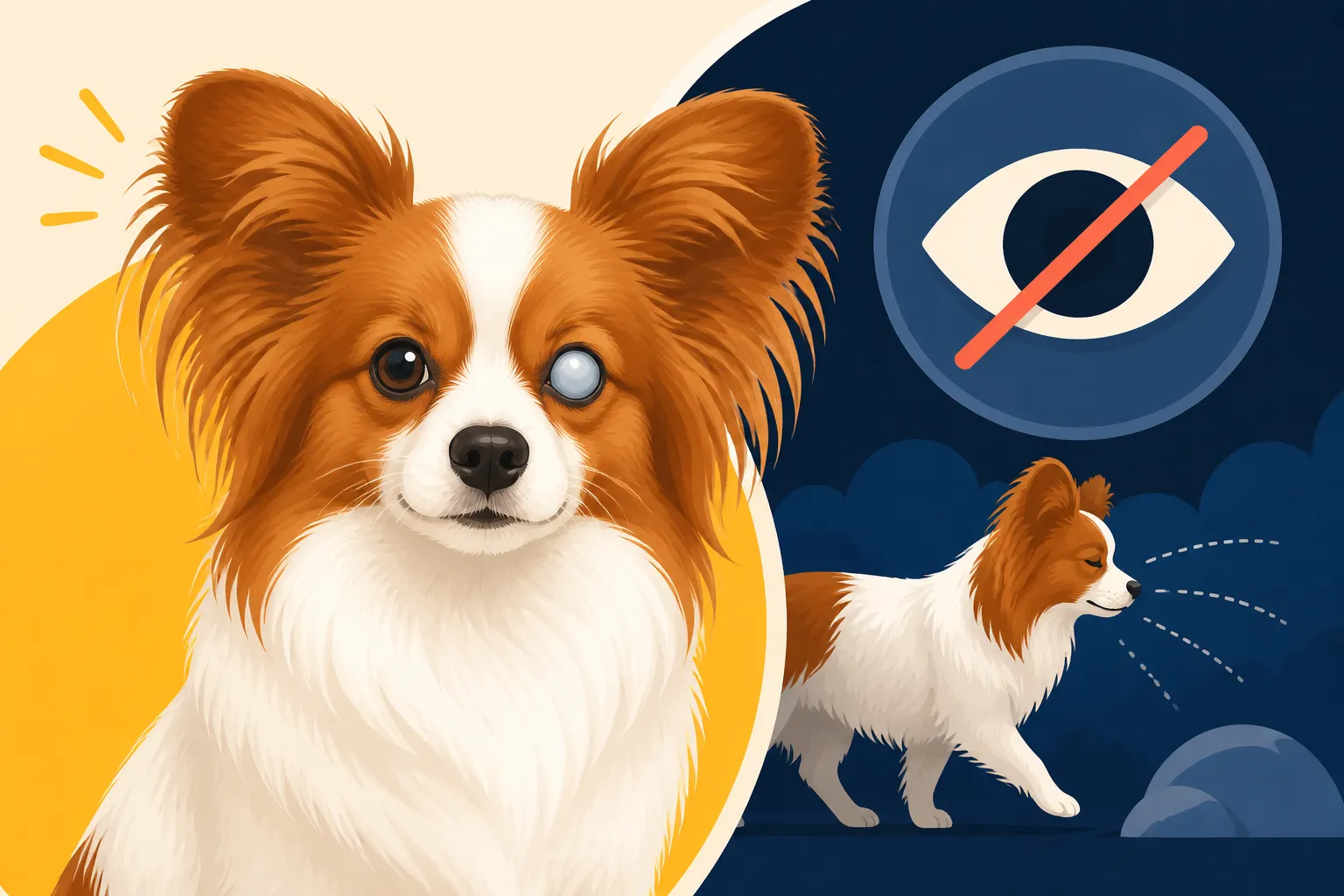
The very first symptom most Papillon owners notice in their dog with PRA is a reluctance or inability to navigate in dim light or at night. They might start bumping into furniture in a dimly lit room, hesitating before going down stairs after dusk, or appearing disoriented in familiar surroundings once the lights are low. This can be particularly noticeable during evening walks, where they might trip or seem less confident. Owners often describe their Papillon suddenly being unable to find a dropped toy under the sofa when it's getting dark, or being startled by things they can't quite see. This initial stage can be subtle, sometimes dismissed as an aging dog slowing down, but it's a critical early warning sign.
It's common for owners to initially think their dog is just being clumsy or stubborn in the dark. But as the condition progresses, the signs become more undeniable. Your Papillon, who once darted through the house with confidence, now hugs the walls, moving cautiously as evening sets in. This period can be particularly stressful for both the dog and the owner, as the dog's world begins to shrink after sunset. Understanding Why a Papillon Can Go Blind at Night and Still See in Daylight is key to recognizing these early changes and seeking veterinary guidance.
Later Stages: Daytime Vision Impairment
As the rods continue to degenerate and the disease inevitably starts to affect the cones, your Papillon's daylight vision will also begin to decline. This progression is typically much slower than the onset of night blindness, sometimes taking years. At this point, you might notice your Papillon hesitating on sunny walks, bumping into objects even in bright light, or struggling to locate treats dropped on a patterned carpet. Their pupils might appear dilated even in well-lit rooms, trying to let in as much light as possible to compensate for the failing photoreceptors.
Some Papillons with PRA may retain some degree of daylight perception for a very long time, often a kind of 'tunnel vision' or an ability to perceive light and shadow rather than clear images. The extent to which How Many Years Before a Papillon's Daylight Vision Goes can vary widely, but it is a slow process, allowing both the dog and the owner time to adapt. Complete, absolute blindness where no light perception remains is possible, but it's not a universal outcome for every Papillon with PRA. Many dogs, with dedicated care, can live fulfilling lives with significantly reduced, or even absent, vision.
Will a Papillon with PRA go Fully Blind?
This is the question that weighs heaviest on the hearts of Papillon owners, and the answer, while leaning towards yes for most, isn't always a definitive 'absolute pitch black' blindness. The reality is nuanced, with individual variations in progression and the possibility of residual light perception.
The Likelihood of Complete Vision Loss
For most Papillons diagnosed with PRA1, the eventual outcome is complete or near-complete blindness. The degenerative nature of the disease means that the photoreceptor cells continue to die off. While the rate of loss can differ, the underlying process is irreversible and progressive. This doesn't happen overnight; it’s a gradual journey that allows time for adaptation. The disease typically manifests with noticeable night blindness around 2-5 years of age, and then progresses to daytime vision loss over subsequent years. By the time a Papillon is considered senior, which is around The Age a Papillon Is Considered Senior, they often have very limited or no functional vision.
However, "fully blind" can mean different things. For some, it implies no light perception whatsoever. For others, it means no functional vision. Most Papillons with advanced PRA will lose the ability to see shapes, recognize faces, or navigate their environment visually. They might still detect strong light changes or shadows, which can sometimes provide a small amount of navigational aid, especially in familiar settings. This residual light perception, even if minimal, can be a subtle but important distinction.
Factors Influencing the Extent of Blindness
Several factors can influence how completely and how quickly a Papillon with PRA loses its sight:
- Genetic Variation: While PRA1 is linked to the CNGB1 gene, there might be subtle genetic modifiers or different mutations within the breed that influence the disease's severity and progression rate. Although Which Gene Causes PRA in a Papillon points to a specific gene, individual genetic makeups are complex.
- Individual Dog's Health: A dog's overall health, nutrition, and even stress levels might play a minor role, though the primary driver is genetic. There’s no scientific evidence to suggest diet or supplements can prevent or reverse PRA, but good overall health can certainly help a dog cope better.
- Early Diagnosis and Management: While there's no cure for PRA, early diagnosis can help owners prepare and adapt their home environment gradually, which can make the transition easier for the dog. Regular veterinary eye exams, especially if your Papillon has known carrier parents, are crucial. Understanding The DNA Test for Papillon Retinal Atrophy is vital for proactive management.
It's a distressing thought, but preparing for the possibility of complete blindness can empower owners to set up their Papillon for success.
| Stage of PRA Progression | Common Age of Onset | Observable Symptoms | Impact on Vision |
|---|---|---|---|
| Early Stage | 2-5 years | Night blindness, hesitation in dim light, bumping at night | Significant loss of night vision, daylight vision intact |
| Mid Stage | 5-8 years | Difficulty in moderate light, pupil dilation, bumping during day | Reduced daylight vision, poor depth perception |
| Late Stage | 8+ years | Severe visual impairment, light perception only, disorientation | Functional blindness, potentially residual light perception |
Note: This table provides general timelines; individual progression can vary.
Living with a Blind or Visually Impaired Papillon
Even if your Papillon eventually loses most or all of its sight, life is far from over. Papillons are incredibly resilient and adaptable dogs. With a little foresight and a lot of love, they can continue to live full, joyful lives. The key is to create a consistent, safe, and stimulating environment that caters to their other senses.
Adapting the Home Environment
The most crucial step is to make your home a safe haven. This means consistency is king. Try to avoid rearranging furniture once your Papillon's vision starts to significantly decline. Every piece of furniture, every rug, every wall becomes a landmark they memorize. If you have to move something, do it slowly and guide your dog around the new obstacle repeatedly. You’ll be surprised at How a Blind Papillon Learns a House, but it takes effort and patience from you.
Consider soft mats or runners on hard floors to prevent slipping and to provide tactile cues for navigation. Block off dangerous areas like stairs with gates, or install ramps for easy, safe access if your Papillon insists on using them. Sharp corners on coffee tables can be padded. Toys with bells or scents can help your Papillon locate them easily. Some owners even use scent markers (like essential oils on cotton balls, very sparingly applied and safe for pets) to designate different rooms or safe zones. It's about thinking like your dog and compensating for their lost sense. If your Papillon with PRA Whether a Papillon With PRA Bumps Into Things, it’s a clear sign your environment needs further adaptation.
Establishing Routines and Communication
Routines become incredibly important for a blind Papillon. Predictable feeding times, potty breaks, and playtime help them feel secure and understand what's coming next. Verbal cues and touch become their primary forms of communication. Teach them specific verbal commands for "step up," "step down," "stop," "right," and "left." Gentle touches can also guide them: a tap on the shoulder to turn, a hand under their chin to stop.
When approaching your Papillon, always speak to them first so they know you're there and aren't startled. This is especially important for Caring for a Papillon Past Eleven, as older dogs may also experience some hearing loss. A consistent tone of voice can convey reassurance and praise. Consider using a bell on your own shoes so your Papillon can always locate you in the house. Their world is no longer visual; it's a symphony of sounds, smells, and textures that you help create for them.
Supporting Your Papillon Through Vision Loss
Beyond the practical adaptations, emotional support and proactive health management are paramount for a Papillon coping with PRA. Your steady presence and understanding will be their greatest comfort.
Emotional and Mental Well-being
It’s easy to feel sad for your blind Papillon, but try not to let your emotions overwhelm them. Dogs pick up on our feelings, and your anxiety can increase theirs. Instead, project confidence and calmness. Encourage them to explore safe, familiar environments with you by their side. Keep their world stimulating through other senses: offer new textures to walk on, introduce different scents (safe essential oils diluted, or even just objects from outside), and engage them with sound-based toys. Interactive feeder toys can provide mental enrichment without relying on sight.
Socialization is still important. Introduce them carefully to other calm, well-mannered dogs or people who understand their condition. Always supervise interactions closely. Continued training, even if it's just reinforcing basic commands, provides mental engagement and a sense of purpose. A blind dog isn't a broken dog; they just experience the world differently, and they need your help to navigate it joyfully.
Veterinary Care and Monitoring
While there is no cure for PRA, regular veterinary check-ups remain essential. Your vet can monitor for any secondary eye conditions that might arise, such as cataracts, which can sometimes accompany PRA and further obscure vision. They can also offer advice on pain management if your Papillon develops other age-related issues. If your dog is microchipped, ensure your contact information is up-to-date, and consider a special tag for their collar indicating they are blind, in case they ever get lost.
Discuss with your vet any concerns about your dog's adjustment or quality of life. They can provide guidance on behavioral changes or suggest ways to enhance your Papillon's comfort. Even though the primary disease isn't treatable, ensuring your Papillon is comfortable and healthy overall is crucial.
Financial Considerations and Long-Term Planning
Caring for a dog with a chronic condition like PRA, which can lead to blindness, inevitably brings up financial considerations. While PRA itself doesn't require expensive treatments to restore vision, managing a blind dog's long-term health, adapting their environment, and regular vet check-ups can add up.
Managing Healthcare Costs
Routine vet visits are important to monitor your Papillon's overall health and to check for any secondary complications related to their eyes or age. These visits, while not directly treating PRA, ensure your dog is as comfortable and healthy as possible. Should your Papillon develop cataracts or other age-related conditions, surgery might be an option, though it won't restore vision lost to PRA. It's important to understand What Insurance Covers on a Papillon when considering a pet insurance policy.
This is where pet insurance can truly offer peace of mind. Companies like Healthy Paws, for example, can help cushion the financial impact of unexpected health issues or chronic conditions. While pre-existing conditions (like PRA diagnosed before coverage) are usually excluded, having a policy in place for other potential health problems over your Papillon's long life can be incredibly beneficial. Knowing that a large portion of future veterinary bills might be covered means you can focus on providing the best care without undue financial stress.
Long-Term Care and Quality of Life
The average How Long a Papillon Lives is a remarkable 13-15 years, and many live even longer, meaning you could be caring for a blind Papillon for several years. This long lifespan means planning for their long-term well-being is vital. This includes ensuring they have access to their favorite comfortable spots, continued mental stimulation through interactive toys or scent games, and regular, consistent walks in safe, familiar areas. Consider the overall costs involved in Fifteen Years of a Papillon, Priced Out to get a complete picture of ownership.
Your commitment to their quality of life is the most important factor. A blind Papillon can still enjoy walks, play with toys, cuddle on the sofa, and bring immense joy to your life. They might need a bit more guidance and consistency from you, but their capacity for love and happiness remains undiminished. Embrace the challenge, and you'll find an even deeper bond with your resilient companion.
Disclaimer
This article is intended for informational purposes only and does not constitute veterinary advice. Always consult with a qualified veterinarian for any health concerns or before making any decisions about your pet's medical care.