Whether a Dog Park Suits a Papillon
It’s a question many Papillon owners grapple with: that enticing promise of a wide-open space where your beloved canine companion can run free, make friends, and burn off boundless energy. But for those of us with tiny, delicate Papillons, the dog park often feels like a minefield rather than a playground, filled with dogs many times their size. This guide will help you navigate the complexities of dog park suitability for your Papillon, examining the risks, benefits, and practical considerations so you can make the safest, most informed decision for your little butterfly dog.
Understanding the Papillon's Nature in a Dog Park Setting
Papillons are delightful bundles of joy, known for their intelligence, agility, and often, an utterly fearless demeanor that belies their small stature. However, this big-dog attitude in a tiny body can sometimes lead them into situations where their physical vulnerability is easily overlooked, especially in a bustling dog park.
The Papillon's Mighty Spirit in a Small Package
If you own a Papillon, you already know they don't see themselves as small dogs. Not one bit. They are often incredibly confident, curious, and possess an almost boundless zest for life. They love to run, chase, and engage, and they're quick to make friends, often trying to initiate play with dogs significantly larger than themselves. This spirited personality is one of their most endearing traits, but it also presents a unique challenge in an environment like a dog park.
You might have seen your Papillon squaring up to a much larger dog in the neighborhood, perhaps even taking the lead in a game of chase, completely oblivious to the size difference. This fearlessness, while admirable, means they might not back down from a dog that intends harm, or even one that is simply too boisterous for their delicate frame. It’s not uncommon for Papillons to engage in play with bigger dogs, but the potential for an accidental injury, even from well-meaning roughhousing, is always present. They often carry this huge heart and bravery, sometimes to their own detriment. This isn't a breed that acts timid or shy unless they've had negative experiences. In fact, many people often comment, "That's a lot of dog in a small package!" And it's true! They are bold, inquisitive, and ready for adventure. You can read more about this spirited nature in A Papillon Has No Idea It Is Small.
Socialization Needs vs. Size Disparity
Proper socialization is crucial for any dog, and Papillons are no exception. They benefit immensely from positive interactions with other dogs and people, helping them grow into well-adjusted, confident adults. A dog park could theoretically offer this, but the reality for a Papillon often falls short. The vast size disparity between a 5-pound Papillon and a 50-pound Labrador (or a 100-pound Great Dane, for that matter) can create an inherently unbalanced and risky play dynamic.
Imagine your little Papillon, with its butterfly ears fluttering, zipping through a group of enthusiastic, much heavier dogs. Even if every single dog in that park is friendly and well-behaved, a single clumsy bump, an accidental stamp, or an overly enthusiastic tackle during play could result in serious injury for your tiny companion. This isn't about blaming larger breeds or their owners; it's simply a matter of physics and relative fragility. A German Shepherd might just be stretching its legs and happen to run into a Papillon, not even registering the collision, but for the Papillon, it could be devastating. This is why many owners struggle with the decision of taking their little ones to such environments; the desire for socialization clashes with the instinct to protect their fragile friends.
The Risk of Accidental Injury
This is, by far, the most significant concern for Papillon owners considering dog parks. Their delicate bone structure, especially around the rib cage and legs, makes them particularly susceptible to injury. A simple misstep during a chase, a fall, or a collision can lead to fractures, internal injuries, or even joint issues. We often think of injuries as something that happens during a fight, but for a Papillon, it can be entirely accidental.
Consider the common Papillon health concern of patellar luxation, where the kneecap slips out of place. While not always directly caused by trauma, repetitive stress or a hard landing from an unexpected knock could certainly aggravate or predispose them to such an issue. Whether a Papillon Gets Arthritis From a Slipping Knee highlights the long-term consequences of knee issues. Even if your Papillon has perfect knees, the risk of a larger dog stepping on them or rolling over them accidentally is very real. I've heard too many heartbreaking stories of tiny dogs sustaining injuries, sometimes fatal, from playful but poorly supervised interactions with much larger dogs. It’s not usually malice, but simply a lack of awareness of the incredible size difference, especially when dogs are running at full speed and not paying close attention to their surroundings.
Assessing the Dog Park Environment for Your Papillon
Not all dog parks are created equal, and even within a single park, conditions can vary greatly depending on the time of day, the dogs present, and the vigilance of their owners. Before you even consider taking your Papillon, a thorough assessment of the environment is critical.
Size-Segregated Areas: A Better Option?
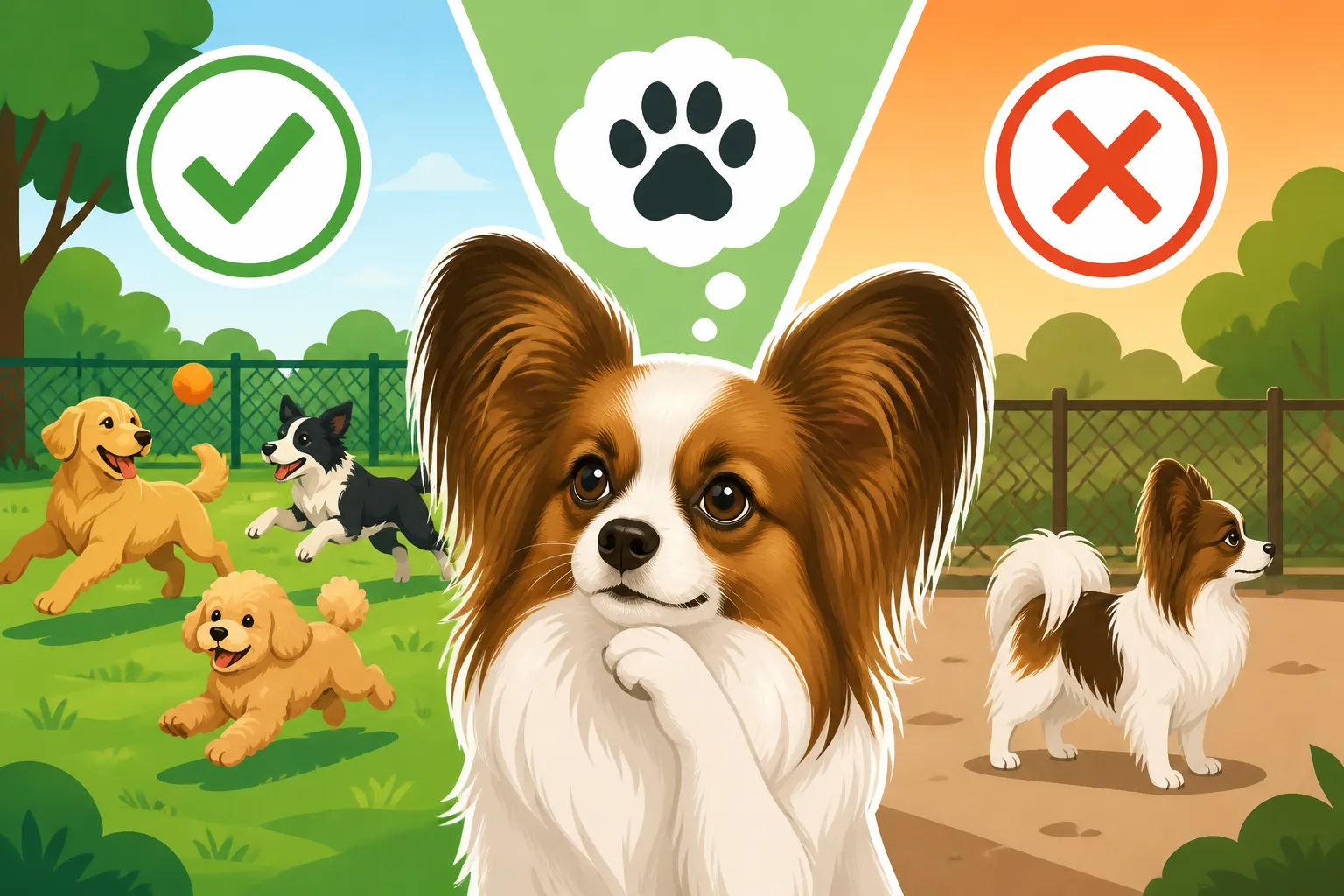
Many modern dog parks understand the issue of size disparity and offer separate areas for small and large dogs. This is a huge step in the right direction and makes dog parks a much more viable option for Papillon owners. In a small dog section, your Papillon can romp and play with dogs of similar size – Chihuahuas, Maltese, Miniature Poodles, other Papillons – where the risk of accidental injury from sheer weight and momentum is significantly reduced.
However, even segregated areas aren't foolproof. You still need to be observant. Sometimes, larger dogs (or their owners) might mistakenly enter the small dog section. Other times, a small dog might have a particularly rough play style that could still be too much for your Papillon. It's also important to remember that a "small dog" area doesn't automatically mean "well-behaved dog" area. There can still be dogs with poor social skills, excessive barking, or even aggression, regardless of their size. Always observe the dynamics before letting your Papillon off-leash.
Owner Vigilance and Park Dynamics
This is perhaps the most overlooked, yet vital, factor in dog park safety. A dog park is only as safe as its least attentive owner. Are people watching their dogs? Are they intervening when play gets too rough? Are they cleaning up after their pets? A crowded dog park where owners are more engrossed in their phones than in their dogs can quickly become a recipe for disaster.
For your Papillon, you need to be their advocate. How a Papillon Behaves With Large Dogs discusses their bold nature, which means they might not retreat even if they're uncomfortable. You need to be ready to step in at a moment's notice. This means no zoning out, no chatting endlessly on your phone, and no letting your Papillon wander too far out of sight. Pay attention to body language – both your Papillon's and the other dogs'. Are ears pinned back? Is there a lot of growling or snarling? Is your Papillon trying to disengage but being persistently pursued? These are all red flags. A truly responsible dog park experience demands constant, active supervision, especially with a tiny breed. If you see dogs that are exhibiting overly rough play, resource guarding, or outright aggression, it's time to gather your Papillon and leave, regardless of how much fun they might be having.
Alternative Socialization Methods
If, after careful consideration, you decide that dog parks (even segregated ones) aren't the right fit for your Papillon, don't despair! There are countless other ways to ensure your dog is well-socialized and gets plenty of exercise. In fact, many experienced Papillon owners opt for these alternatives for precisely the reasons mentioned above.
- Playdates with known, trusted dogs: Arrange one-on-one play sessions with friends' or neighbors' dogs that you know are gentle and well-socialized. This controlled environment drastically reduces risk.
- Structured puppy classes or obedience training: Group classes offer supervised socialization opportunities and teach your Papillon good manners around other dogs and people. Brands like BAXTER & Bella offer excellent online resources that can prepare both you and your Papillon for various social situations, helping you practice safe interactions even before you step foot in a group setting.
- Small dog meet-up groups: Search online for local groups specifically for small breeds. These often meet in private, fenced yards or rented spaces, ensuring a safer play environment.
- Doggy daycare (with careful vetting): A well-run daycare will have separate play areas for small dogs and staff trained to monitor interactions. Ask for a tour and observe the small dog area yourself.
- Leashed walks in pet-friendly areas: Simply walking your Papillon on a leash in parks, downtown areas, or outdoor malls (where dogs are permitted) allows them to experience sights, sounds, and smells, and interact briefly with people and other dogs from a safe distance. Just ensure your Papillon is comfortable on a leash and that their recall is solid, which is addressed in How Reliably a Papillon Comes When Called.
Choosing these alternatives allows you to tailor your Papillon's social experiences to their individual needs and comfort level, without exposing them to unnecessary risks. Remember, quality over quantity when it comes to doggie friends.
Mitigating Risks and Making Informed Decisions
Ultimately, the decision of whether a dog park suits your Papillon is a personal one, but it should be an informed one. Even if you decide to try a dog park, there are steps you can take to minimize potential dangers.
Training for Off-Leash Safety and Recall
No matter where your Papillon plays off-leash, a rock-solid recall is absolutely non-negotiable. Your ability to call your dog away from a potentially dangerous situation is their ultimate protection. This means practicing recall in various environments, with distractions, and consistently rewarding them for coming back. A long line can be a fantastic tool for practicing recall in open spaces before you ever trust your Papillon completely off-leash.
Beyond recall, basic obedience commands like "leave it," "stay," and "come" are essential. Teaching them to settle on a mat or a small portable bed when you need them to relax can also be incredibly useful in a busy environment. These foundational skills are not just for competition; they are life-savers. The Papillon Is the Smartest Toy Breed There Is emphasizes their intelligence, so training them should be a rewarding experience for both of you. You might even find excellent training resources on platforms like Amazon for clickers, treat pouches, and long lines to aid in this process.
Recognizing Stress Signals in Your Papillon
Your Papillon communicates constantly through body language, and it's vital that you understand what they're telling you. Learn to recognize signs of stress, fear, or discomfort. These can include:
- Lip licking or yawning (when not tired): Often a sign of appeasement or anxiety.
- Turning head away or avoiding eye contact: Trying to disengage from a perceived threat.
- Tail tucked low or between legs: Clear sign of fear.
- Cowering or trying to hide behind you: Seeking protection.
- Hackles raised: Can indicate fear or aggression.
- Panting (when not hot or exercising strenuously): A stress response.
- Freezing in place: Overwhelmed or unsure how to react.
- Excessive barking or growling: Trying to create distance.
If you observe any of these signals, it’s your cue to intervene. Gently remove your Papillon from the situation, give them a break, or simply leave the park. Pushing a stressed dog to "get over it" can lead to negative associations with other dogs and even aggression. Remember, How Sensitive a Papillon Is means they can be easily overwhelmed by chaotic environments. Understanding their cues is crucial for their well-being.
When to Say No to the Dog Park
It's okay to decide that dog parks aren't for your Papillon. In fact, for many small breed owners, it’s the most responsible choice. There’s no shame in prioritizing your dog's safety and well-being over the perceived notion of what a "dog should do." Your Papillon doesn't need a dog park to be happy or well-socialized. What they need is appropriate exercise, mental stimulation, consistent training, and safe social interactions.
You are their protector and advocate. If a dog park makes you feel anxious, or if you've had a few negative experiences, trust your gut. There are plenty of wonderful activities you can do with your Papillon that are far safer and just as enriching, such as participating in dog sports like agility or rally (with proper health clearances!), long walks, or simply enjoying their company at home. For more on what keeps them busy, see What a Papillon Does All Day. Prioritizing their safety and comfort creates a happier, healthier life for your Papillon, and for you, too.
| Factor | Papillon in a Dog Park (General) | Papillon in a Segregated Small Dog Area | Alternative Socialization |
|---|---|---|---|
| Risk of Physical Injury | High (from large dogs) | Low to Moderate (from rough play) | Very Low (controlled environment) |
| Risk of Fear/Stress | Moderate to High | Low to Moderate | Low |
| Socialization Quality | Variable, potentially overwhelming | Good (with appropriate dogs) | Excellent (controlled, positive) |
| Owner Vigilance Required | Absolute, Constant | High | Moderate to Low |
| Best For | Very rare specific situations | Well-socialized, confident Papillons with attentive owners | Most Papillons, especially puppies or those sensitive |
Disclaimer
This article is for general informational purposes only and does not constitute professional advice. Laws, prices and regulations vary by location and change over time. Consult a qualified professional for guidance on your specific situation.