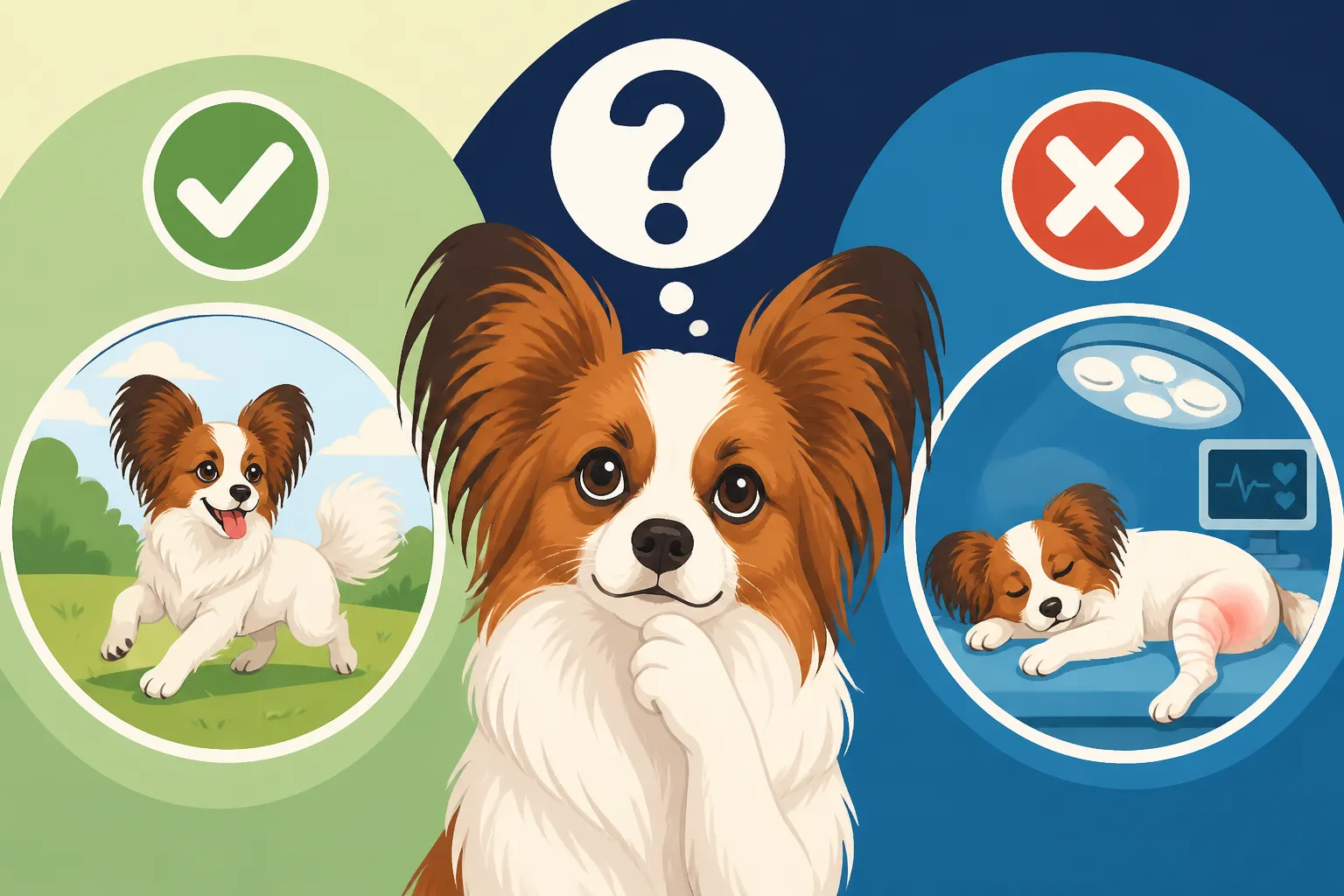
Whether a Papillon’s Knee Surgery Is Always Necessary
It can be incredibly disheartening, and frankly, quite alarming, to see your beloved Papillon suddenly skip a step, hold up a tiny leg, or even yelp in pain. Many Papillon owners eventually encounter the all-too-common issue of patellar luxation, a fancy term for a kneecap that slips out of place. The immediate question that pops into every caring owner's mind is, "Does this mean my sweet dog needs surgery, and if so, when?" This guide will meticulously walk you through understanding patellar luxation, assessing its severity, and navigating the sometimes-tough decision of whether surgery is truly necessary for your Papillon, offering peace of mind and clarity.
Understanding Patellar Luxation in Papillons
When your little Papillon starts showing signs of a sore knee, it's natural to feel a wave of worry. Patellar luxation, while prevalent in smaller breeds, isn't always a dire emergency demanding immediate surgery. Understanding what's happening inside your dog's joint is the first step toward making informed decisions.
What Exactly is Patellar Luxation?
Let's break down the technical term: "patella" is simply another name for the kneecap, and "luxation" means dislocation. So, patellar luxation is when your dog's kneecap slips out of its normal groove on the thigh bone (femur). Imagine your kneecap, which is supposed to glide smoothly up and down in a little valley at the end of your thigh bone. In dogs with patellar luxation, that kneecap jumps out of the valley, either to the inside (medial luxation) or, less commonly in Papillons, to the outside (lateral luxation).
This displacement interrupts the normal function of the leg, causing your dog to momentarily lose control or even feel pain. When the kneecap moves out of place, the leg often locks up, and your dog might hold it awkwardly. Once the patella slides back into position, either on its own or with a little manipulation, your dog can usually walk normally again, as if nothing happened. It's this intermittent nature that can make the condition so puzzling and concerning for owners.
Why Papillons are Prone to This
Unfortunately, patellar luxation is a particular concern for toy and small breed dogs, and Papillons are no exception. It’s often considered a genetic or congenital condition, meaning that puppies are born with anatomical abnormalities that predispose them to it, even if symptoms don't appear until later. You might hear people say that Patellar Luxation Is the Papillon Problem You Will Actually Meet, and they're not wrong; it's genuinely one of the most common orthopedic issues this breed faces.
The reasons for this predisposition are complex but generally involve a combination of factors. The trochlear groove, the shallow valley where the kneecap sits, might not be deep enough, allowing the patella to easily pop out. The ligaments supporting the kneecap might be too loose, or the bones of the leg (femur and tibia) might be slightly misaligned, creating an abnormal pull on the patella. While an injury can sometimes cause or worsen luxation, the underlying anatomical issues are usually present from birth. It's also quite common for both knees to be affected, though often one may be more severe than the other.
Common Signs You Might Notice
The signs of patellar luxation can range from subtle to quite obvious, depending on the severity of the condition. Many owners first notice their Papillon doing a characteristic "skip" or a "bunny hop" when running. This happens because the leg momentarily locks up when the kneecap is out of place; once it pops back in, the dog continues as if nothing happened. You might see your Papillon briefly hold one leg up for a few steps before putting it back down. This intermittent lameness is a hallmark sign.
Other owners report their Papillon being reluctant to jump onto furniture, climb stairs, or even engage in their usual playful antics. Sometimes, a dog might yelp in pain, especially if the kneecap gets truly stuck or if the luxation is severe, but often, the discomfort is more of a nuisance than acute pain. You might also notice your dog shaking a hind leg, stretching it out behind them, or even rubbing their knee in an attempt to get the kneecap back into place. For a deeper dive into what to look for, check out Signs a Papillon's Kneecap Slips. Paying close attention to these subtle changes in your Papillon's movement and behavior is crucial for early detection.
Assessing the Severity: Grades of Patellar Luxation
Once you suspect your Papillon has a slipping kneecap, a trip to the vet is in order. Your veterinarian will perform a thorough examination to determine the severity of the luxation, which is typically classified using a grading system. This grading is vital in deciding the best course of action.
The Grading System Explained
Veterinarians use a four-grade system to classify patellar luxation, from mildest to most severe:
- Grade 1: This is the mildest form. The kneecap can be manually luxated (pushed out of the groove) by your vet, but it immediately pops back into place on its own when the pressure is released. Dogs with Grade 1 luxation often show minimal to no symptoms, perhaps just an occasional skip that you might barely notice. They generally aren't in pain, and the condition might not even progress significantly.
- Grade 2: In this grade, the kneecap luxates more frequently, sometimes on its own during normal movement, but it can still be manually reduced. It might stay out of place for longer periods, causing more noticeable skipping or lameness. Your dog might show discomfort or pain, especially after exercise. This is often the point where owners start asking Which Grade of Luxation Needs Fixing in a Papillon.
- Grade 3: Here, the kneecap is luxated most of the time. While it can still be manually put back into the groove, it quickly pops out again as soon as the manipulation stops. Dogs with Grade 3 luxation usually exhibit consistent lameness, an abnormal gait, and may experience chronic pain or discomfort. Their quality of life is definitely impacted.
- Grade 4: This is the most severe grade. The kneecap is permanently luxated and cannot be manually returned to its normal position in the groove. The trochlear groove is often completely absent or very shallow, and the bones of the leg may be significantly twisted. Dogs with Grade 4 luxation often have severe lameness, may walk with a crouched gait, or might not be able to bear weight on the affected leg at all. This level of luxation causes significant debilitation and pain.
Beyond the Grade: Other Factors to Consider
While the grading system provides a critical framework, it's not the only piece of the puzzle. Your vet will look at the whole picture when determining the best treatment plan. For instance, the age of onset can be important. Did your Papillon start showing signs as a puppy or later in life? How quickly has the condition progressed? Has it remained stable, or has it gotten noticeably worse over time?
The presence and severity of pain are also paramount. A dog with a Grade 2 luxation who is constantly limping and yelping will likely need intervention more urgently than a dog with a Grade 2 who only occasionally skips and seems unfazed. Your Papillon's overall quality of life is the ultimate benchmark. Can they run, play, and enjoy their daily activities without significant discomfort? Additionally, your vet will consider if there are any other orthopedic issues at play, although less common, such as hip dysplasia, that could compound the problem. Maintaining an ideal weight is also crucial, as even a few extra ounces can put undue strain on a delicate joint, further exacerbating the condition. Understanding Whether Weight Affects a Papillon's Knees is vital for long-term management.
Diagnostic Tools Your Vet Uses
To accurately diagnose patellar luxation and rule out other potential problems, your veterinarian will typically rely on a combination of methods. The cornerstone of diagnosis is a thorough physical examination. During this exam, your vet will carefully palpate (feel) your Papillon's knee joint, gently extending and flexing the leg to try and manually luxate the patella. Their skilled hands can usually determine the grade of luxation based on how easily the kneecap slips out and if it returns to its normal position.
X-rays are also an invaluable diagnostic tool. While X-rays don't directly show the kneecap luxating (it's cartilage and ligaments), they provide clear images of the bone structure. This allows your vet to assess the depth of the trochlear groove, identify any twisting or misalignment of the femur and tibia, and look for signs of arthritis that may already be present due to the chronic instability. X-rays also help rule out other conditions that might mimic patellar luxation symptoms. In very complex cases, or if other issues are suspected, your vet might recommend advanced imaging techniques like an MRI, although this is less common for routine patellar luxation diagnosis. These comprehensive diagnostics help paint a complete picture of What Patellar Luxation Does to a Papillon.
Making the Decision: When is Surgery Necessary?
The question of whether to pursue surgery is a significant one, fraught with anxiety for any pet parent. There’s no universal answer; what’s right for one Papillon might not be right for another. It really comes down to a careful weighing of factors, guided by your veterinarian’s expertise.
Conservative Management: When it's an Option
For many Papillons, especially those with Grade 1 or even some milder Grade 2 patellar luxation that isn't causing significant pain or impacting their daily life, conservative management is often the first approach. The goal here isn't to "fix" the anatomical issue, but to manage symptoms, reduce discomfort, and slow down any potential progression. A huge part of this involves diligent weight control; keeping your Papillon at a lean, healthy weight is paramount to reduce strain on their joints.
Controlled exercise is also key. While vigorous, high-impact activities like excessive jumping or rough play should be minimized, regular, moderate leash walks can help maintain muscle strength around the knee, which provides some natural stabilization. Many owners also find success with joint supplements containing ingredients like glucosamine, chondroitin, and MSM, which can support joint health and comfort. You might wonder Whether a Papillon Needs Joint Supplements, and for dogs with patellar luxation, they can certainly be beneficial. Additionally, environmental modifications, such as providing ramps or steps for furniture, can reduce the stress on their knees. For instance, Whether a Papillon Should Be Stopped From Jumping Off Furniture is a common question, and yes, avoiding hard landings is highly recommended. Regular veterinary check-ups are essential to monitor the condition and ensure your Papillon remains comfortable.
Surgical Intervention: What it Involves
Surgery becomes a strong recommendation, or even a necessity, for Papillons with Grade 3 or 4 luxation, and sometimes for Grade 2 cases where the dog is experiencing significant pain, persistent lameness, or if the condition is rapidly worsening despite conservative efforts. The primary goal of surgery is to anatomically correct the issue, allowing the kneecap to stay securely in its groove.
There are several surgical techniques, often performed in combination:
- Trochleoplasty: This procedure involves deepening the trochlear groove (the valley in the femur) so the patella has a more secure place to sit.
- Tibial Crest Transposition: The tibial crest is a bony prominence on the shin bone where the patellar ligament attaches. If the crest is out of alignment, the surgeon will cut a section of bone, reposition it, and reattach it with pins to realign the quadriceps mechanism.
- Lateral Imbrication: This involves tightening the joint capsule on the side opposite to the luxation, providing additional stability.
These surgeries are typically performed by a board-certified veterinary orthopedic surgeon. It's not uncommon for Papillons to have luxation in both knees, and in some cases, your vet might recommend addressing Whether a Papillon Needs Both Knees Done, though often they'll be done at separate times to allow for full recovery from the first procedure. The decision to operate is always a serious one, balancing the risks of anesthesia and complications against the benefits of improving your dog's long-term mobility and comfort.
The Costs and Considerations of Surgery
Let's be realistic: veterinary orthopedic surgery, especially specialized procedures like patellar luxation repair, is a significant financial commitment. The total cost can vary widely based on your location, the specific surgical techniques required, the surgeon's fees, the length of hospitalization, and post-operative medications. You might be shocked to learn What Patellar Surgery Costs on a Papillon, which can easily run into thousands of dollars per knee. This includes everything from pre-operative bloodwork and X-rays to anesthesia, the surgery itself, pain management, and follow-up appointments.
Beyond the financial aspect, there's the emotional commitment. Your Papillon will require a dedicated recovery period, often involving strict rest, medication, and possibly physical therapy. This can be challenging for both you and your active little dog. While surgery has a high success rate, there are always potential complications, such as infection, implant failure, or, in rare cases, re-luxation. This is where pet insurance can be a true lifesaver. Companies like Healthy Paws offer comprehensive coverage that can dramatically reduce your out-of-pocket expenses for such unexpected but necessary procedures. Having a policy with Healthy Paws in place before your dog develops symptoms can give you immense peace of mind, knowing you won't have to make decisions based solely on your wallet. They can help cover the costs of these complex procedures, ensuring your Papillon gets the best care.
Life After Surgery (or without): Management and Prognosis
Whether you opt for surgery or conservative management, the journey doesn't end after the initial decision. Long-term care, rehabilitation, and diligent monitoring are crucial to ensure your Papillon maintains the best possible quality of life.
Recovery and Rehabilitation
If your Papillon undergoes surgery, the recovery phase is incredibly important for a successful outcome. Immediately after surgery, pain management is paramount, and your dog will be on a regimen of pain medications and anti-inflammatories. Strict rest, often involving crate confinement, is usually recommended for several weeks to allow the surgical site to heal properly. It's tough to keep an active Papillon still, but it's vital to prevent complications.
Following this initial rest period, a gradual return to activity begins, often guided by your veterinary surgeon or a certified canine rehabilitation therapist. This might include passive range-of-motion exercises, gentle short leash walks, and eventually, more structured physical therapy. The goal is to rebuild muscle strength, improve joint flexibility, and restore normal gait. For a detailed roadmap, read How a Papillon Recovers From Knee Surgery. Full recovery can take several weeks to a few months, and consistent follow-up appointments with your vet are crucial to monitor progress and ensure there are no setbacks. Patience and dedication during this phase are key to your Papillon's successful return to being their lively self.
Living with Patellar Luxation Without Surgery
For Papillons managing patellar luxation conservatively, life becomes a commitment to ongoing care. Regular monitoring for any signs of increased pain, lameness, or worsening symptoms is essential. You'll need to maintain a strict focus on weight management, as even slight excess weight can dramatically increase the strain on compromised knee joints. Continuing with joint supplements and appropriate pain relief medication during flare-ups will also be important for their comfort.
Environmental adjustments, like those ramps and steps to furniture, aren't just for post-surgery, they're a permanent lifestyle change for dogs managing luxation. Owners should also be mindful of activities that put excessive stress on the knees, such as jumping from heights or sudden twisting movements during play. While conservative management can be very effective for many Papillons, it's important to understand that the underlying anatomical issue remains. This means there's a higher risk of developing Whether a Papillon Gets Arthritis From a Slipping Knee later in life due to the chronic instability. Regular veterinary check-ups will help your vet detect these changes early and adjust your management plan as needed.
Long-Term Outlook and Prevention
The long-term outlook for Papillons with patellar luxation, especially those who undergo successful surgery, is generally quite good. Many dogs go on to live full, active lives with minimal to no lameness or pain. However, it's important to have realistic expectations. Even after surgery, some dogs may still develop arthritis in the affected joint later in life, simply due to the previous instability. This is why ongoing joint support, weight management, and monitoring remain important for their entire lifespan.
From a prevention standpoint, the most critical step for the breed as a whole lies with responsible breeding. Reputable Papillon breeders should be screening their breeding dogs for patellar luxation, using certifications from organizations like the Orthopedic Foundation for Animals (OFA). This helps to reduce the incidence of the condition in future generations. How Common Patellar Luxation Is in Papillons highlights why this screening is so vital. For current owners, while you can't prevent a genetic predisposition, you can minimize its impact by maintaining your Papillon's ideal weight, providing appropriate exercise, and making your home knee-friendly. Remember, having a reliable pet insurance plan, like Healthy Paws, can also be a proactive measure, ensuring you're financially prepared for any unexpected health challenges, from a luxating patella to other potential health issues, giving you invaluable peace of mind for your cherished companion's future.
Disclaimer
This article is for general informational purposes only and does not constitute professional advice. Laws, prices and regulations vary by location and change over time. Consult a qualified professional for guidance on your specific situation.