Patellar Luxation Is the Papillon Problem You Will Actually Meet
It's incredibly disheartening when you notice your beloved Papillon, full of zest and boundless energy, suddenly take a strange hop or hold a back leg up for a few steps. That fleeting moment of confusion often gives way to a creeping worry: is something wrong with their knee? For many Papillon owners, that subtle sign is the first indication of patellar luxation, a common orthopedic issue in our charming butterfly dogs. This guide is here to walk you through everything you need to know about this condition, from understanding its mechanics to managing it in your furry family member.
Understanding Papillon Patellar Luxation: What Exactly Is It?
It's easy to feel overwhelmed when a vet mentions "patellar luxation." It sounds so serious and complex, but at its heart, it's about a small bone that just won't stay where it belongs. For Papillons, with their delicate builds and lively dispositions, it’s a concern many owners will unfortunately encounter.
The Anatomy of a Papillon's Knee
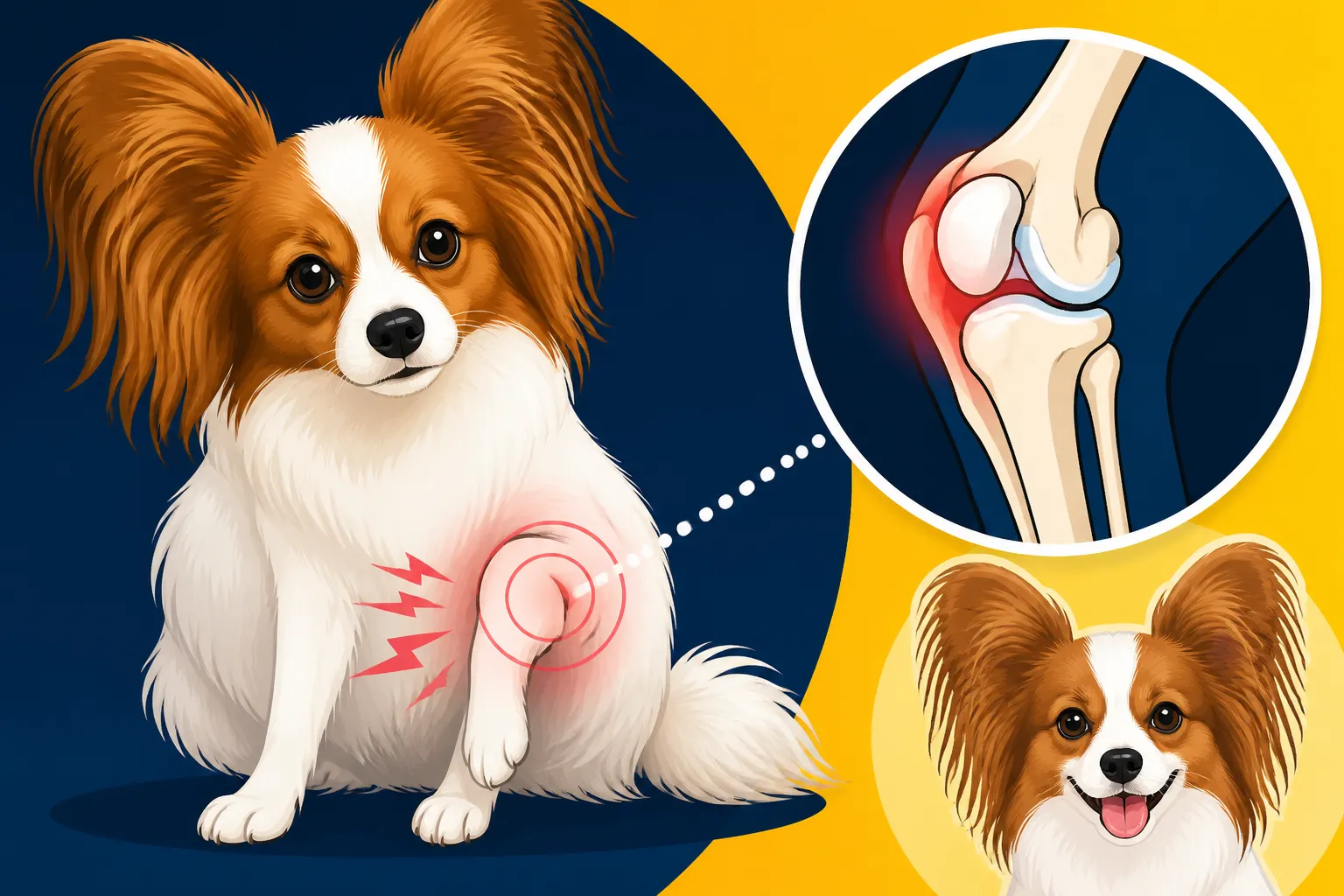
To truly grasp patellar luxation, let's break down the mechanics of a Papillon's knee, which is surprisingly similar to our own. The patella, or kneecap, is a small, oval-shaped bone that sits in a groove on the front of the femur (thigh bone), known as the trochlear groove. It's held in place by ligaments and tendons, primarily the patellar ligament, which connects it to the tibia (shin bone). This whole intricate setup acts like a pulley system, allowing the leg to extend smoothly when your Papillon runs, jumps, or even just takes a graceful step.
However, in many small breeds, including our elegant Papillons, there can be anatomical quirks that predispose them to issues. The trochlear groove might be too shallow, or the patellar ligament might not align perfectly straight. Sometimes, the bones of the leg themselves aren't quite straight. These subtle differences, often genetic, mean that the kneecap doesn't have a snug, secure path to follow. It's not your fault, or your dog's; it's just how some little bodies are built, and it can be incredibly frustrating to know your dog is predisposed to this.
The "Slipping Kneecap" Phenomenon
So, what happens when a Papillon's patella luxates? Simply put, the kneecap slips out of that trochlear groove. In small breeds like Papillons, it most commonly slips inward, towards the body, which veterinarians call medial patellar luxation. Less often, it can slip outward, which is lateral patellar luxation. When the kneecap shifts, it can't function as part of the leg's extension mechanism. This causes the leg to lock up momentarily or lose its ability to bear weight effectively.
Imagine suddenly feeling your own kneecap shift out of place—it would be jarring and likely painful. Your Papillon experiences something similar. They might yelp, hold their leg up, or skip for a few steps until the kneecap pops back into place on its own, which it often does initially. This intermittent nature can make it hard to catch, and you might find yourself questioning if you really saw what you thought you saw. It's a common story among Papillon owners, and it’s why understanding the signs is so important. You might also be wondering, How Common Patellar Luxation Is in Papillons.
Recognizing the Signs: Is Your Papillon's Kneecap Slipping?
One of the biggest challenges with patellar luxation is that the early signs can be incredibly subtle, easily dismissed as a misstep or a moment of awkwardness. Papillons are generally stoic little dogs, often eager to please, and they can be masters at hiding discomfort. This means you, their attentive owner, need to be extra vigilant.
Subtle Hints and Early Indicators
The classic, most talked-about sign of patellar luxation in a Papillon is the "skip" or "hop." Your dog might be trotting along happily, then suddenly lift one back leg, take a few steps on three legs, and then put the affected leg back down as if nothing happened. This happens when the patella slips out, causing the leg to briefly lose function, and then pops back in. It's fleeting, sometimes lasting only a second or two, and can leave you wondering if you imagined it.
You might also notice intermittent lameness, where your Papillon favors a leg or appears to be stiff after resting. They might be reluctant to engage in activities they once loved, like jumping onto the sofa or tackling the stairs with their usual abandon. Perhaps their gait just seems a little "off" sometimes, maybe a bit stiff-legged, especially after a burst of activity. These early indicators are often not painful enough to elicit a yelp, but they are crucial clues that something might be amiss. Keep a close eye on your Papillon for these subtle changes, as they can be the first whispers of a developing issue. If you're observing these types of behaviors, you might find it helpful to read about Signs a Papillon's Kneecap Slips.
More Pronounced Symptoms and When to Worry
As patellar luxation progresses, or if it's more severe from the outset, the symptoms tend to become more consistent and harder to ignore. What started as an occasional skip might turn into persistent lameness, where your Papillon consistently holds the leg up for longer periods or avoids putting weight on it altogether. You might notice them visibly uncomfortable when you gently palpate (feel) around the knee area.
In more advanced cases, there might even be some swelling around the knee joint, or in very severe, chronic cases, a visible bowing of the leg as the bones and soft tissues adapt to the misaligned kneecap. You might also start to hear an audible clicking or popping sound coming from the knee as the patella shifts. This is usually a sign that the joint is experiencing more friction and instability. When these symptoms become constant and significantly impact your Papillon's ability to walk, play, or even just rest comfortably, it's definitely time to worry and seek immediate veterinary attention. Don't wait for your little one to be in obvious, continuous pain, as early intervention can make a significant difference.
Grading the Severity: What Do the Numbers Mean?
Once you've noticed symptoms and visited your vet, one of the first things they'll do is try to determine the grade of your Papillon's patellar luxation. This isn't just an arbitrary number; it's a critical tool that helps you and your vet understand the severity of the condition and make informed decisions about treatment.
The Four Grades of Patellar Luxation
Veterinarians typically use a four-grade scale to classify patellar luxation, ranging from Grade I (the mildest) to Grade IV (the most severe).
- Grade I: This is the mildest form. The patella can be manually luxated (pushed out of the groove) by your vet, but it spontaneously returns to its normal position when the manual pressure is released. Your Papillon might show very few clinical signs, perhaps only an occasional skip. The trochlear groove is usually close to normal depth.
- Grade II: In this grade, the patella spontaneously luxates (slips out) occasionally on its own, or it can be manually luxated. Unlike Grade I, it doesn't always return to its normal position immediately. It might stay luxated for a few steps before popping back in. The trochlear groove is usually somewhat shallower, and your Papillon might show more frequent skipping or lameness. This is often the grade where owners start noticing consistent issues.
- Grade III: This is a more significant luxation. The patella is almost always luxated (out of the groove) but can be manually reduced (pushed back into place) by the vet. However, once the pressure is released, it immediately reluxates. The trochlear groove is very shallow, and there might be some deformation of the bones, such as a slight twisting of the tibia. Your Papillon will likely show consistent lameness, a crouching gait, or a reluctance to extend the knee fully.
- Grade IV: This is the most severe grade. The patella is permanently luxated and cannot be manually reduced back into the groove. The trochlear groove is either absent or extremely shallow, and there are significant bony deformities of the femur and tibia. A Papillon with Grade IV luxation will often walk with a significantly crouched or bow-legged gait, with limited ability to extend the leg. Pain and severe mobility issues are common.
Your vet will diagnose the grade by gently manipulating your Papillon's knee during an orthopedic examination. They'll feel for the patella, try to push it out of its groove, and assess how easily it moves and if it stays in place. X-rays may also be taken to assess the bone structure and identify any arthritic changes.
Why Your Papillon's Grade Matters for Treatment
The assigned grade is incredibly important because it directly influences the recommended course of action for your Papillon. It's not a one-size-fits-all situation, and what's right for a Grade I might be entirely inadequate for a Grade III.
For instance, a Grade I luxation, especially if it's intermittent and doesn't cause pain or significantly impact your Papillon's quality of life, might be managed conservatively with careful monitoring, weight control, and possibly joint supplements. The idea here is to minimize discomfort and prevent progression if possible. However, a Grade II, even though it's still considered moderate, often warrants a more serious discussion about surgical intervention, especially if it's causing consistent lameness or pain. The constant slipping in and out of the groove can lead to painful cartilage erosion and the development of arthritis over time. This is why it's worth understanding Which Grade of Luxation Needs Fixing in a Papillon.
When you get to Grade III or IV, surgical correction is almost always recommended to restore function, alleviate pain, and prevent further joint damage. In these severe cases, delaying surgery can lead to more complex procedures and potentially less optimal long-term outcomes due to the ongoing changes in the joint structure. Your vet will explain that the goal isn't just to "fix" the knee, but to give your Papillon the best chance at a pain-free, active life.
Treatment Paths: Managing Your Papillon's Luxating Patella
Discovering your Papillon has patellar luxation can feel overwhelming, but thankfully, there are clear paths to managing the condition. The approach depends heavily on the severity of the luxation, your dog's age, overall health, and your family's lifestyle. It's a joint decision between you and your veterinarian, always with your Papillon's best interest at heart.
Conservative Management for Milder Cases
For Papillons with Grade I or very mild, asymptomatic Grade II patellar luxation, surgical intervention isn't always the immediate answer. Many vets will recommend a conservative approach, focusing on supportive care to strengthen the surrounding muscles, reduce inflammation, and protect the joint.
One of the most crucial aspects of conservative management is weight control. Every extra ounce on a tiny Papillon frame puts additional strain on those delicate knee joints. Maintaining a lean body condition is paramount, reducing stress on the patella and slowing down potential arthritic changes. Your vet can help you determine your Papillon's ideal weight and how to achieve it.
Joint supplements containing ingredients like glucosamine, chondroitin, and MSM can be beneficial. These compounds are thought to support cartilage health and reduce inflammation. Omega-3 fatty acids, often found in fish oil supplements, also have anti-inflammatory properties that can help ease discomfort. Brands like Nutramax, Cosequin, and Dasuquin are commonly recommended by veterinarians. These aren't a cure, but they can provide valuable support.
Controlled exercise and physical therapy are also key. While high-impact activities like jumping or sudden stops should be minimized or avoided entirely – for example, it’s often best to address Whether a Papillon Should Be Stopped From Jumping Off Furniture – regular, low-impact exercise like leash walks helps build strong muscles around the knee, which can offer natural support. Some Papillons can also benefit from formal physical therapy, including exercises designed to improve range of motion, strength, and balance without stressing the joint. During periods where the luxation is causing discomfort, your vet might prescribe NSAIDs (non-steroidal anti-inflammatory drugs) to manage pain and inflammation. These medications are generally used for short periods or on an as-needed basis rather than as a long-term solution.
Surgical Intervention: When It Becomes Necessary
When conservative management isn't enough – typically for Papillons with Grade II luxation causing consistent issues, or most Grade III and IV cases – surgery becomes the most effective long-term solution. The goal of surgery is to anatomically correct the abnormalities that cause the patella to slip, stabilizing the joint and preventing further damage and pain.
There are several surgical techniques, and often a combination is used to achieve the best outcome:
- Trochleoplasty: This involves deepening the trochlear groove where the patella sits. If the groove is too shallow, the surgeon might cut a wedge or block of cartilage and bone from the groove, remove some underlying bone, and then replace the wedge or block back in a deeper position. This creates a more secure channel for the patella.
- Tibial Crest Transposition: If the patellar ligament is pulling the kneecap out of alignment because its attachment point on the tibia is displaced, the surgeon will carefully cut the piece of bone (the tibial crest) where the ligament attaches. This piece of bone is then moved to a more appropriate position, realigning the patella, and reattached with pins or sutures.
- Soft Tissue Release or Tightening: Sometimes, the soft tissues around the knee joint are either too tight on one side, pulling the patella out, or too loose on the other side, allowing it to slip. The surgeon might release overly tight tissues or tighten lax ones to help balance the joint.
The success rates for patellar luxation surgery in Papillons are generally very high, often exceeding 90% for restoring good limb function. However, like any surgery, there are potential complications, including infection, anesthetic risks, or the possibility of the luxation recurring. Your veterinary surgeon will discuss these thoroughly with you. Understanding Whether a Papillon Needs Knee Surgery is a big step, and it's a financial one too. This is where having a robust pet insurance plan, perhaps from a provider like Healthy Paws, can really make a difference, helping to cover a significant portion of these often substantial costs and allowing you to focus on your Papillon's recovery rather than the bill.
| Grade of Luxation | Typical Clinical Signs | Recommended Treatment Approach | Recovery Time (Approx.) |
|---|---|---|---|
| Grade I | Occasional skip, usually asymptomatic or mild lameness | Conservative: Weight management, supplements, controlled exercise | N/A (ongoing management) |
| Grade II | More frequent skips, intermittent lameness, occasional pain | Conservative initially; Surgery if persistent pain/lameness | 8-12 weeks (if surgery) |
| Grade III | Persistent lameness, crouching gait, kneecap mostly out | Surgery almost always recommended | 8-12 weeks |
| Grade IV | Severe lameness, permanent luxation, significant deformity | Surgery often required, may be more complex | 12+ weeks |
Life After Surgery: Recovery and Rehabilitation
Undergoing surgery for patellar luxation is a big decision, and it’s natural to feel anxious about the recovery process. But with patience, dedication, and strict adherence to your vet's instructions, most Papillons bounce back remarkably well and go on to live full, active lives.
The Road to Recovery: What to Expect Post-Op
The immediate post-operative period is crucial for your Papillon's healing. Expect them to come home with pain medication, possibly anti-inflammatories, and strict instructions for restricted activity. This usually means a period of crate rest or confinement in a small, secure playpen for several weeks. This isn't easy for an active Papillon, but it's absolutely vital to prevent them from damaging the surgical repair. No running, no jumping, no playing with other pets – just short, controlled leash walks for potty breaks.
You'll need to carefully monitor the incision site for any signs of redness, swelling, or discharge, and keep it clean and dry. An E-collar (cone of shame) will likely be a temporary fashion statement to prevent your Papillon from licking or chewing at the stitches. Your vet will advise on when stitches need to be removed, usually around 10-14 days post-op.
Over the next few weeks, your vet will guide you on a gradual increase in activity. This might start with slightly longer, still controlled leash walks and gentle range-of-motion exercises at home. It's a marathon, not a sprint, and sticking to the plan is essential, even if your Papillon seems to be feeling much better. Pushing them too hard, too soon, can lead to setbacks. Many owners find it reassuring to understand How a Papillon Recovers From Knee Surgery in detail, so you know exactly what to anticipate.
Physical Therapy and Long-Term Care
While the initial recovery focuses on healing, the long-term success of patellar luxation surgery often hinges on a good rehabilitation program. This is where physical therapy (PT) can make a profound difference, helping your Papillon regain full strength, flexibility, and confidence in their repaired leg.
Structured rehab often begins a few weeks after surgery, once the initial healing has occurred. This can include:
- Passive Range of Motion (PROM) Exercises: Gentle flexion and extension of the knee, performed by you under the guidance of a therapist, to prevent stiffness and maintain joint mobility.
- Therapeutic Exercises: Specific movements to strengthen the quadriceps and hamstring muscles, which are vital for supporting the knee. These might include controlled standing exercises, slow walks over cavaletti poles, or even walking on an underwater treadmill.
- Hydrotherapy: Water-based exercises, particularly on an underwater treadmill, are excellent for strengthening muscles without putting excessive weight or impact on the healing joint. The buoyancy of the water reduces stress, while the resistance builds strength.
Long-term care extends beyond formal rehab. It involves a lifelong commitment to weight management, ensuring your Papillon stays lean to protect all their joints. Regular, moderate exercise is important, but continue to avoid high-impact activities like aggressive jumping or twisting that could re-injure the knee. You’ll also need to monitor for signs of arthritis, which can sometimes develop in the joint over time, even with successful surgery. This is another area where early recognition can help manage discomfort effectively, and knowing Whether a Papillon Gets Arthritis From a Slipping Knee can help you stay vigilant. Understanding the recovery process, and the potential need for ongoing therapy, also highlights the financial aspect, another area where pet insurance like Healthy Paws can ease the burden. They can help cover significant portions of surgical costs and often contribute to rehabilitation expenses, giving you peace of mind during a stressful time.
Prevention and Proactive Measures: What Can Owners Do?
While some aspects of patellar luxation are inherited, there are definitely steps Papillon owners can take to minimize risk, promote joint health, and make informed choices to protect their furry friends. Prevention truly begins before you even bring a puppy home.
Choosing a Responsible Breeder
The single most impactful preventative measure you can take is to choose a responsible, ethical breeder. Patellar luxation has a significant genetic component, meaning it runs in families. A good breeder will be acutely aware of this and actively work to minimize the risk in their litters.
This means they will have their breeding dogs screened for patellar luxation by a qualified veterinarian, with the results often certified by organizations like the Orthopedic Foundation for Animals (OFA). The OFA maintains a public database of these health clearances, so you can often look up the parents of a potential puppy yourself. A good breeder will be transparent about their dogs' health clearances and proud to share the documentation with you. They should be able to show you OFA certifications for patellas, eyes (as Papillons are also prone to certain eye conditions), and potentially other relevant health tests. When asking about What a Papillon Breeder Should Have Tested, patellas should always be high on the list.
It's absolutely critical to ask about the parents' knee history and even the history of their lineage. A reputable breeder will openly discuss any instances of luxation in their lines and explain their breeding philosophy to avoid it. They won't breed dogs that have been diagnosed with significant patellar luxation. Remember, a breeder who shrugs off health testing or claims their dogs "just aren't prone" to issues like luxating patella might not have your Papillon's long-term health as their top priority. Finding a Papillon Breeder Who Tests Eyes and Knees is a crucial step in ensuring your puppy has the best possible start.
Lifestyle Adjustments to Protect Your Papillon's Knees
Once you bring your Papillon home, there are many everyday lifestyle adjustments you can make to help protect their delicate knees, especially if they are predisposed to luxation or already have a mild grade.
- Maintain a Healthy Weight: We can't stress this enough. Even a pound or two of extra weight on a tiny Papillon adds disproportionate stress to their joints. Work with your vet to establish and maintain an ideal body condition.
- Provide Non-Slip Surfaces: Papillons are small and agile, but slippery floors like hardwood, tile, or laminate can be treacherous for their joints. They can slip, splay their legs, or land awkwardly, putting undue strain on their knees. Placing rugs, carpet runners, or yoga mats in high-traffic areas, especially where they jump on and off furniture, can dramatically reduce the risk of injury.
- Use Ramps or Steps for Furniture: Papillons love to be close to their people, often meaning they want to be on the sofa or bed. Repeatedly jumping up and, more importantly, down from furniture creates significant impact on their small knee joints. Providing pet-specific ramps or steps can make these elevated spots safely accessible without the jarring impact of a jump.
- Appropriate Exercise: While exercise is crucial for muscle development and overall health, it needs to be the right kind. Avoid excessive, uncontrolled jumping, sudden twisting motions, or rough play that involves high-impact landings. Long, brisk walks on varied terrain are excellent, as is controlled agility training if your Papillon is cleared by a vet (but remember to consider Whether a Papillon Should Do Agility With a Bad Knee if they have any known issues). Focus on building core strength and steady endurance, not extreme acrobatics.
By being mindful of these aspects of your Papillon's daily life, you can significantly contribute to their joint health and potentially delay or prevent the progression of patellar luxation. This preventative care is key, and it's good to know that many pet insurance plans, like those from Healthy Paws, offer wellness options that can help cover these ongoing proactive measures, from annual check-ups to certain supplements or therapeutic services.
Living with a Papillon Prone to Patellar Luxation
Receiving a diagnosis of patellar luxation, or even knowing your Papillon is predisposed, can be a heavy burden. It’s not just a medical condition; it becomes a part of your daily life, influencing decisions, care routines, and even your peace of mind.
The Emotional Toll and Practical Adaptations
For many Papillon owners, the emotional toll of dealing with a chronic condition like patellar luxation is significant. You worry constantly: Did that hop mean it slipped? Are they in pain? Am I doing enough? It’s important to acknowledge these feelings and know that they are valid. You are not alone in this journey.
Practically, living with a Papillon prone to patellar luxation means making your home a safer haven. This isn't just about putting down rugs or installing ramps; it's about developing new habits. It might mean supervising playtime more closely, discouraging roughhousing with larger dogs (or even other Papillons), and always being mindful of where your dog is jumping or landing. Keeping their nails trimmed short can also improve their footing, lessening strain on their joints.
Crucially, maintaining open and honest communication with your veterinarian is paramount. They are your primary resource for managing your Papillon's condition, from prescribing pain relief to advising on diet and exercise. Don't hesitate to ask questions or voice your concerns. Building a support network, whether online or through local Papillon groups, can also provide invaluable advice and emotional understanding from others who are walking a similar path.
The Reality of Long-Term Health and Financial Planning
Patellar luxation is often a lifelong journey. Even with successful surgery, it's not always a "one and done" situation. Sometimes, luxation can recur, or the opposite knee might develop the condition. Arthritis is also a common long-term consequence, even in successfully repaired joints, requiring ongoing management. This means that you'll likely face continuous monitoring, potential medication, and perhaps future interventions over your Papillon's long life.
This reality also comes with a significant financial aspect. Surgical costs for patellar luxation can range from a few thousand dollars per knee, and if both knees are affected, or if complications arise, those costs can climb quickly. Add to that the expenses of pre-surgical diagnostics, post-operative medications, physical therapy, and lifelong joint supplements, and it truly is Knee Surgery Is the Bill Most Papillon Owners Meet.
This is precisely why many Papillon owners find peace of mind with a robust pet insurance plan, such as those offered by Healthy Paws. Getting coverage before any symptoms arise for patellar luxation (as it's considered a pre-existing condition if diagnosed prior to policy activation) can mean the difference between affordable, timely care and agonizing financial decisions. It allows you to prioritize your Papillon's health without being crippled by veterinary bills. When you consider Fifteen Years of a Papillon, Priced Out, these medical costs can truly add up, making a proactive financial plan, often including pet insurance, an invaluable asset for any Papillon owner.
Disclaimer
Please remember that this guide is intended for informational purposes only and should not be considered a substitute for professional veterinary advice. Always consult with your veterinarian for any health concerns or before making any decisions regarding your Papillon's medical care.