How a Papillon’s PRA Differs From Other Breeds
One of the most heartbreaking diagnoses a dog owner can receive is that their beloved companion is losing its sight. For Papillon owners, the specific form of Progressive Retinal Atrophy (PRA) known as PRA1 can feel particularly overwhelming, often leaving us wondering if it's the same disease that affects countless other breeds, or if our little butterflies face a unique challenge. This guide is here to shed light on what makes a Papillon's PRA distinct, helping you understand the nuances and prepare for the journey ahead with empathy and knowledge.
Understanding Progressive Retinal Atrophy (PRA) in Papillons
Progressive Retinal Atrophy (PRA) isn't just one disease; it's a blanket term for a group of genetic eye disorders that cause the retina to degenerate over time. In simple terms, the light-sensing cells at the back of the eye slowly stop working, leading to blindness. What's crucial for Papillon owners to grasp is that while the end result is often the same across many breeds – vision loss – the specific genetic cause and the way it manifests can vary significantly.
The Specific Genetic Mutation CNGB1
For our elegant Papillons, the primary culprit behind their form of PRA, often referred to as PRA1, is a specific mutation in the CNGB1 gene. This isn't just a minor detail; it's the core difference. The CNGB1 gene is responsible for producing a vital protein found in the rod cells of the retina. Rod cells are the workhorses of night vision and motion detection. When this gene has a mutation, as described in What the CNGB1 Frameshift Does to a Papillon's Rods, these rod cells begin to malfunction and die off.
Imagine trying to see in a dimly lit room, but your eyes simply aren't picking up any light. That's essentially what happens to a Papillon with PRA1. The specific frameshift mutation in CNGB1 means the protein isn't formed correctly, leading to a breakdown in the signal processing from the rods to the brain. This genetic specificity is why a Papillon PRA test is distinct from tests for other forms of PRA.
Early Onset and Night Blindness First
One of the most common frustrations for Papillon owners is noticing their dog's vision struggles primarily in low light conditions. This early sign is a direct consequence of the CNGB1 gene's impact on rod cells. Because rod cells are responsible for vision in dim light, their degeneration means that night blindness is almost always the first symptom you'll observe in a Papillon with PRA1. It's not uncommon to see a young adult Papillon, sometimes as early as three to five years old, start to hesitate in familiar dark hallways or bump into furniture at dusk. This distinct pattern of Why a Papillon Loses Night Vision First is a hallmark of the breed's PRA.
This can be incredibly bewildering. During the day, your Papillon might seem perfectly normal, navigating their environment with ease. But once the sun sets, or even on a cloudy day indoors, their confidence drops, and they might become more clingy or disoriented. It's a progressive disease, meaning it gets worse over time, but the initial phase is very much centered around this loss of night vision.
The Progression to Day Blindness
While night blindness is the first noticeable symptom, PRA1 in Papillons doesn't stop there. Over time, the disease progresses to affect the cone cells, which are responsible for day vision and color perception. This means that eventually, the dog will lose its daylight vision as well. The timeline for this can vary, but generally, it happens over several years after the onset of night blindness. Owners often ask, How Many Years Before a Papillon's Daylight Vision Goes and while there's no single answer, it's typically a gradual process that can take a significant amount of time, giving both you and your dog a chance to adjust.
This slow progression is a bittersweet reality. It allows owners to adapt their homes and routines, but it also means watching your vibrant companion slowly lose one of their primary senses. As the disease advances, you might notice your Papillon bumping into things even in well-lit environments, becoming more reliant on their other senses, like hearing and smell, to navigate. This is when the true impact of What PRA1 Does to a Papillon's Retina becomes fully apparent, as both rod and cone function diminish.
Key Differences in Papillon PRA Compared to Other Breeds
When we talk about Progressive Retinal Atrophy, it's easy to assume it's one universal condition. However, the world of canine genetics is far more complex. The PRA that affects Papillons stands apart in several key ways from the forms seen in many other breeds. Understanding these distinctions is vital for breeders, veterinarians, and owners alike.
Unique Genetic Signature
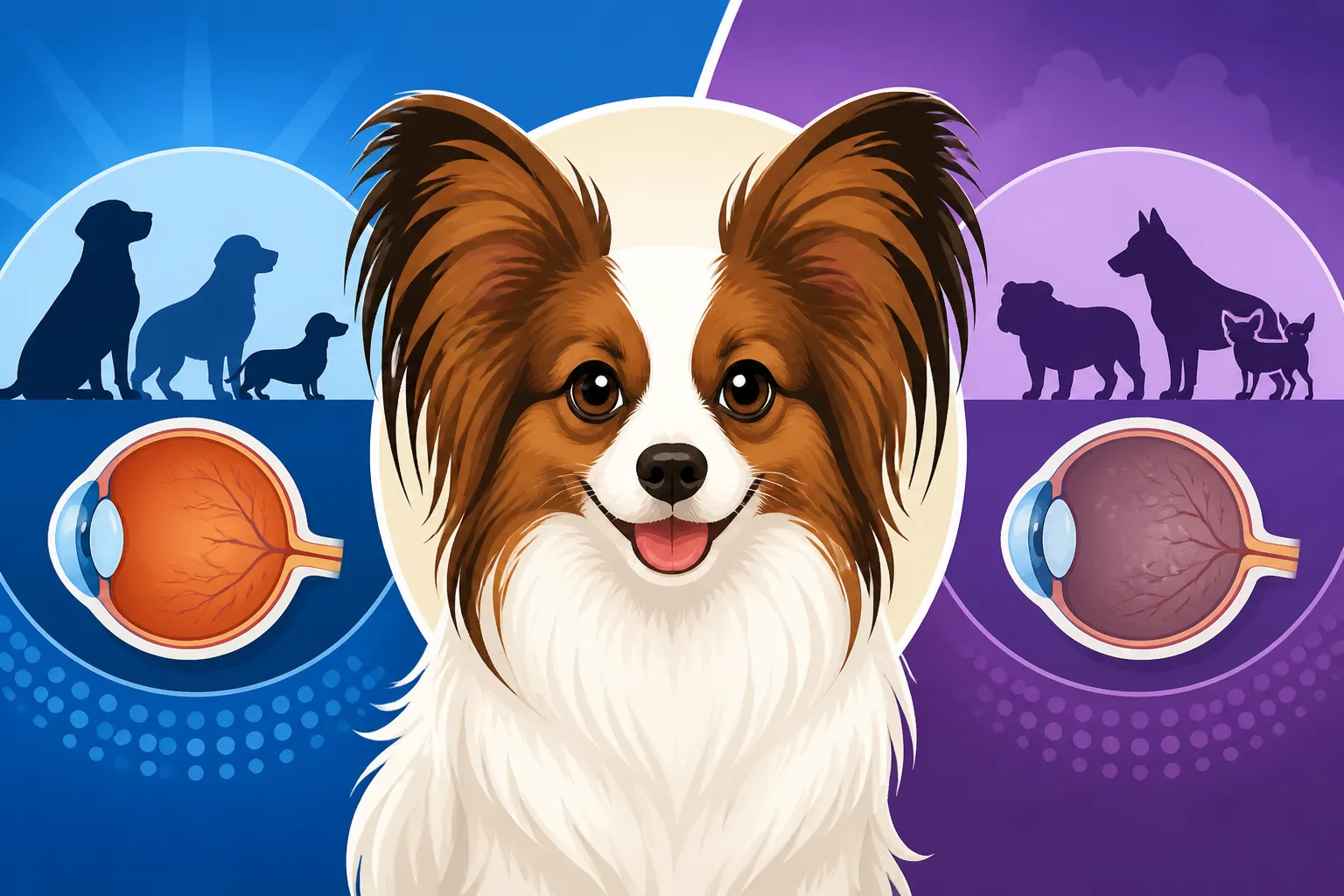
The most significant difference lies in the genetic mutation itself. As mentioned, Papillon PRA1 is caused by a mutation in the CNGB1 gene. In contrast, many other popular breeds, like Labrador Retrievers, Poodles, and Portuguese Water Dogs, are often affected by a different form of PRA called progressive rod-cone degeneration (prcd-PRA), which is linked to the PRCD gene. There are also other specific gene mutations like rcd1, rcd3, and cord1 that cause PRA in breeds such as Irish Setters, Cardigan Welsh Corgis, and Dachshunds, respectively.
This means that a DNA test for prcd-PRA, which is widely available and used for many breeds, would not detect the genetic mutation responsible for PRA1 in a Papillon. It’s crucial for Papillon owners and breeders to seek out the specific Which Gene Causes PRA in a Papillon test for CNGB1. This specificity is what makes breeding programs for Papillons effective in reducing the incidence of the disease, as they can identify carriers and affected dogs using the correct, breed-specific test, such as The DNA Test for Papillon Retinal Atrophy.
Distinct Clinical Presentation
Beyond the genetic cause, the way PRA manifests clinically in Papillons can also differ. In Papillon PRA1, the disease primarily affects the rod cells first, leading to initial night blindness, with cone cell degeneration and day blindness occurring later. The age of onset, which is typically in young to middle-aged adulthood for Papillons (around 3-5 years, sometimes earlier or later), is also a distinguishing factor. The Age PRA1 Appears in a Papillon can give you a general idea, but individual variation exists.
In some other breeds, certain forms of PRA can be much earlier onset, affecting puppies as young as six months to a year, or conversely, much later onset, not showing signs until a dog is quite senior. Some forms might also affect rod and cone cells simultaneously, leading to a more generalized vision loss from the outset, rather than the distinct night-first progression seen in Papillons. Understanding Why a Papillon Can Go Blind at Night and Still See in Daylight is a key part of appreciating this specific clinical presentation.
Breeding and Testing Implications
The unique nature of Papillon PRA has significant implications for responsible breeding practices. Breeders must use the specific CNGB1 DNA test to identify carriers and affected dogs within their lines. Since PRA1 is inherited in an autosomal recessive manner, both parents must be carriers or affected to produce affected offspring, as detailed in How PRA1 Is Inherited in Papillons. This means that even if a Papillon's parents appear sighted, they could still be carriers of the gene.
Reputable Papillon breeders will enthusiastically share their dogs' health testing results, including PRA1 clearances. If you're looking for a puppy, always ask Which Health Tests a Papillon Breeder Should Run and verify the results. Unfortunately, relying on a generic PRA test, or not testing at all, can perpetuate the disease. This breed-specific knowledge allows us to make informed decisions to protect the health and lifespan of future generations of Papillons.
Living With a Papillon Affected by PRA
Receiving a PRA diagnosis for your Papillon can be heartbreaking, but it doesn't mean the end of a happy, fulfilling life for your dog. Our Papillons are incredibly resilient, and with a little help and understanding, they can adapt remarkably well to vision loss. It's a marathon, not a sprint, and your patience and proactive care will make all the difference.
Adapting to Vision Loss
As your Papillon's vision deteriorates, especially as they begin to lose their day vision, you'll need to make some adjustments around the house. The goal is to create a safe, consistent environment that minimizes their frustration and anxiety.
Here are some practical tips:
- Keep furniture in place: Consistency is key. Once your Papillon learns the layout of your home, sudden changes can be disorienting and lead to bumps. If you must move something, guide them around the new obstacle several times.
- Create safe zones: Designate specific areas where your Papillon can relax without worrying about navigating. Their bed, food, and water bowls should always be in predictable spots.
- Use scents and textures: Scent markers (like essential oils on furniture legs) or different textures of rugs can help your dog map out their environment.
- Verbal cues are powerful: Start using verbal cues for everything – coming, stopping, going up/down steps, turning left/right. Your voice becomes their guiding light.
- Protect from hazards: Block off stairs, pools, or other dangerous areas with gates. Pad sharp furniture corners.
- Outdoor safety: Keep your Papillon on a leash in unfamiliar outdoor areas, and consider a fenced yard for safe off-leash play in a known space. You'll be amazed at How a Blind Papillon Learns a House once they have a consistent environment.
It's also important to be aware of the signs a Papillon is losing night vision, such as hesitation in dim light or bumping into objects, as these are your earliest warnings. When dealing with a condition like PRA, securing pet insurance from providers like Healthy Paws when your Papillon is young can offer peace of mind for potential future veterinary expenses, though it’s crucial to understand their policies regarding pre-existing or congenital conditions.
The Role of Regular Vet Checks
Even though there isn't a cure for PRA1 in Papillons, regular veterinary check-ups and specialized eye exams are incredibly important. Your veterinarian can confirm the diagnosis, monitor the progression, and rule out other eye conditions that might mimic PRA symptoms or exacerbate discomfort, such as cataracts or dry eye. A yearly eye exam is a good practice for any Papillon, but it becomes even more critical for those with a PRA diagnosis.
While there's no way to reverse the damage, your vet can help manage any secondary issues that might arise. Sometimes, dogs with advanced PRA can develop cataracts, or experience discomfort as their eyes change. Staying in close communication with your vet means you can address any changes promptly. Also, maintaining their overall health, including proper nutrition and weight, can support their well-being as they adapt to blindness. Providers like Healthy Paws often have options that can help with routine care or unexpected health issues, which can be invaluable over a Papillon's long life.
Regular checks are also an opportunity to discuss your Papillon's quality of life. As vision loss progresses, their other senses become heightened. Our small, intelligent Papillons are incredibly adaptable. With your love, support, and a predictable environment, a Papillon with PRA can continue to thrive and enjoy many happy years as part of your family. You might be surprised to learn Whether a Papillon With PRA Bumps Into Things less often than you'd expect once they learn their way around.
| Feature | Papillon PRA (PRA1) | General PRA (Other Breeds, e.g., prcd-PRA) |
|---|---|---|
| Genetic Cause | CNGB1 gene mutation | PRCD gene mutation (common), or other specific genes |
| Initial Symptoms | Night blindness due to rod cell loss | Variable, often night blindness or general progressive loss |
| Primary Cells Affected First | Rod cells | Rod-cone degeneration typically |
| Age of Onset | Young to middle-aged adult (3-5+ years) | Highly variable (puppyhood to senior years) |
| Progression | Rods affected first, then cones; slow progression to day blindness | Can be rapid or slow, often affecting rods and cones more simultaneously |
| Specific DNA Test | CNGB1 specific test | PRCD test (common), or other breed-specific tests |
| Inheritance Pattern | Autosomal recessive | Autosomal recessive (most common forms) |
Disclaimer
This article is for general informational purposes only and does not constitute professional advice. Laws, prices and regulations vary by location and change over time. Consult a qualified professional for guidance on your specific situation.