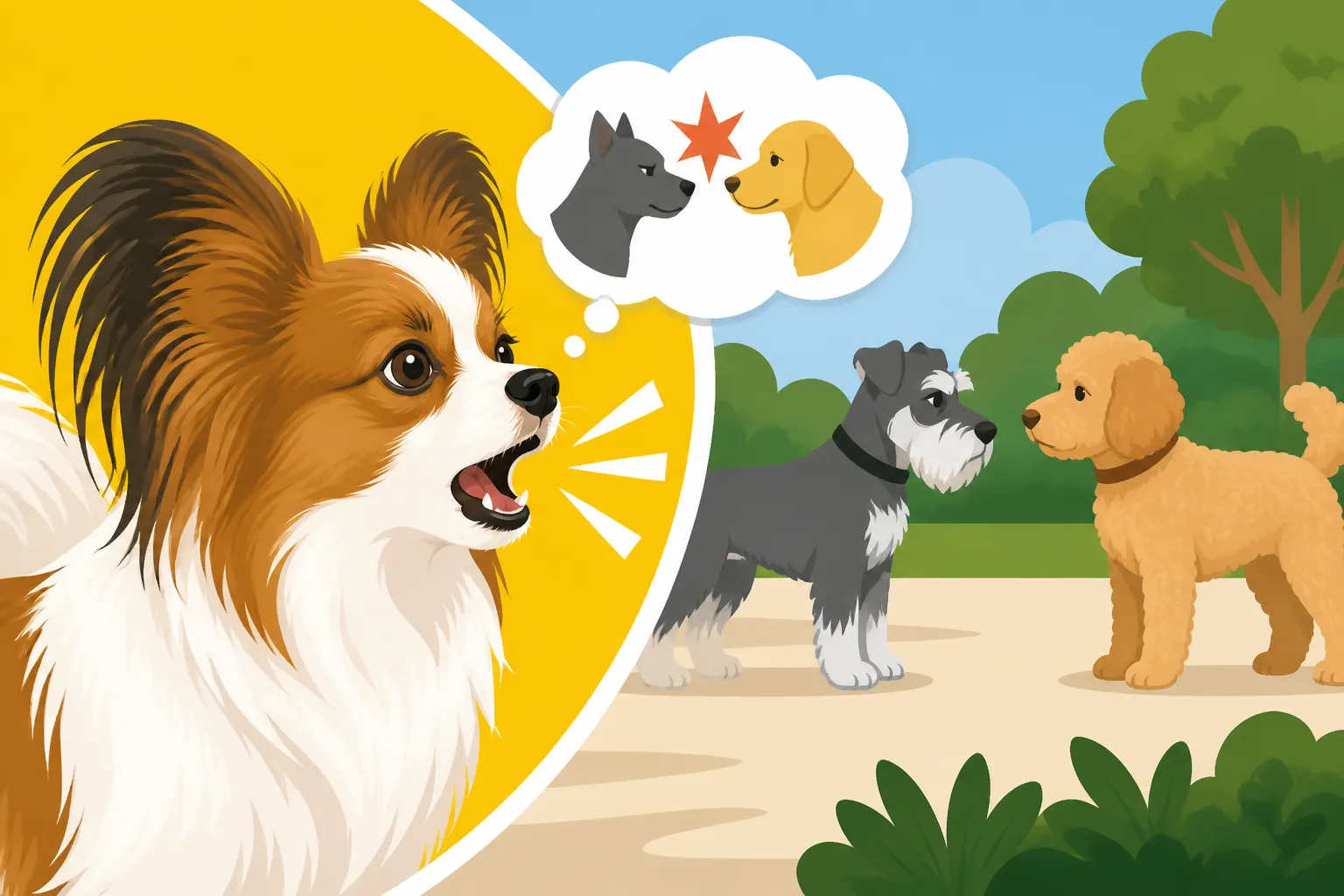
Whether a Papillon Barks at Other Dogs
It's a common frustration for many Papillon owners: that seemingly endless "yap, yap, yap" when another dog comes into view, whether on a walk, through the window, or even just in the distance. You love your bright, vivacious companion, but that excited — or sometimes fearful — outburst can be embarrassing, stressful, and make you dread those otherwise pleasant strolls around the neighborhood. This guide is here to unravel why your Papillon might be barking at other dogs and, more importantly, offer practical, empathetic strategies to help manage this vocal tendency.
Understanding the Papillon's Tendency to Bark at Other Dogs
Let's be real, Papillons are small dogs with big personalities, and sometimes that personality comes with an equally big voice. It's not always malice or aggression; often, it's a complex mix of instinct, communication, and learned behavior. Understanding these underlying reasons is the first step toward helping your little monarch of the toy breed world find a quieter way to express themselves.
Why Small Dogs Often Feel the Need to Announce Themselves
Think about it from your Papillon's perspective. The world is a much bigger place when you're only eight to eleven inches tall at the shoulder. Other dogs, especially larger breeds, can seem like giants. This size disparity can naturally lead to a heightened sense of alert and self-preservation. Many small dogs, including our beloved Papillons, develop a "small dog syndrome" where they compensate for their stature by being more vocal. They might be trying to make themselves seem bigger or more formidable, to ward off perceived threats, or simply to announce their presence in a world where they could easily be overlooked. It's their way of saying, "Hey! I'm here! Pay attention!" Sometimes, it’s a defensive strategy; other times, it's just sheer bravado. You might notice this especially if your Papillon tends to Why a Papillon Squares Up to a Big Dog.
For a Papillon, which is inherently a very intelligent and often confident breed, this vocalization can also stem from a need to communicate or control their environment. They are not dogs that like to be ignored, and barking is a highly effective way to get a reaction, whether from you, the other dog, or passersby.
The Role of Excitement, Fear, and Frustration
Barking at other dogs isn't a single, monolithic behavior; it's a symptom that can stem from various emotional states.
- Excitement: Sometimes, your Papillon is just really happy to see another dog! They might be overly social, eager to play, or just incredibly stimulated by the presence of a potential playmate. This kind of barking often sounds higher-pitched, more rapid, and might be accompanied by a wiggly body or a wagging tail. It’s an "OMG, friend!" bark, but it can still be overwhelming and incessant.
- Fear: On the flip side, barking can be a manifestation of fear. If your Papillon has had a negative experience with another dog, or if they're naturally a bit more timid, barking can be a "stay away!" signal. They might feel threatened by the approaching dog and are trying to create distance. This type of barking might be lower-pitched, more guttural, and accompanied by a stiff body, tucked tail, or ears flattened against their head. They're trying to defend themselves in the only way they know how. It's often linked to a lack of confidence, even if it looks like aggression.
- Frustration: This is a huge one, especially for dogs on leash. Your Papillon sees another dog, wants to interact (either play or check them out), but the leash prevents them from doing so. This builds up immense frustration, which then explodes into barking. It’s a "let me get to it!" bark. This "barrier frustration" is incredibly common and can be exacerbated if the Papillon is highly motivated by social interaction but consistently denied it. Imagine seeing a delicious treat you can't reach – that's the feeling. This is a good time to remember Whether a Papillon Is Reactive on Leash, as this frustration can quickly manifest as leash reactivity.
Understanding which emotion is driving the barking is crucial for choosing the right training approach. An excited barker needs different management than a fearful one.
Common Scenarios and Triggers for Papillon Barking
Papillons are keen observers, and their barking at other dogs isn't usually random. It's triggered by specific contexts and cues in their environment. Recognizing these patterns in your own Papillon can help you anticipate and manage the behavior more effectively.
On-Leash Encounters and Barrier Frustration
This is perhaps the most common scenario for Papillon barking at other dogs. You’re out for a lovely walk, enjoying the fresh air, when suddenly, a dog appears down the street. Your Papillon tenses, starts to stare, and then the barking begins – sometimes lunging and pulling on the leash, making you feel like your arm is being pulled off by a tiny missile. This is classic barrier frustration. They're physically restrained by the leash, unable to approach or retreat as their instincts dictate, leading to a build-up of tension that erupts into vocalization.
Factors that exacerbate this include:
- Lack of early socialization: If a Papillon puppy wasn't properly exposed to a wide variety of friendly dogs in a positive way during their critical developmental period, they might grow up to be more anxious or over-aroused around unfamiliar dogs.
- Previous negative experiences: A single bad encounter, like being growled at or bumped by a rude off-leash dog, can cement a fearful reaction, leading to barking as a preemptive strike.
- Your own tension: Dogs are masters at reading our body language. If you tense up on the leash or get anxious every time you see another dog, your Papillon will pick up on that, confirming their belief that there is something to worry about.
Instead of just yanking on the leash or scolding, which often makes things worse and can damage your bond, consider that your Papillon might just be trying to cope. They might be thinking, "Mom/Dad, help! Big dog coming! I need to tell it to go away!" or "OMG, a new friend! I MUST meet them!" The leash restricts their natural coping mechanisms, leading to the vocal outburst. Using a comfortable, secure harness can help prevent injury and give you better control without putting pressure on their delicate trachea, which can be a concern for small breeds. Brands available on Amazon offer a wide variety of harnesses suitable for Papillons.
Barking Through Windows or Fences
Another frequent source of barking at other dogs comes from perceived threats or exciting stimuli visible from the safety of your home. Your Papillon might be perfectly quiet when a dog walks by on the sidewalk, but put them in a window, and suddenly they transform into a tiny guard dog. This is often territorial behavior combined with frustration. They see the "intruder" in their space (your yard, your street), but a physical barrier (window, fence) prevents them from actually addressing the situation.
This type of barking can be especially grating because it feels incessant and difficult to interrupt. The dog on the other side of the fence or window never actually leaves because of the barking, reinforcing to your Papillon that their efforts are successful. This can become a deeply ingrained habit. Similarly, if you have a dog park nearby or a common walking path, your Papillon might spend hours "patrolling" the window, barking at every passing canine. This constant arousal isn't good for their stress levels, or your peace of mind.
Managing this often involves managing the environment. Can you put up privacy film on the lower part of the window? Can you use frosted glass or strategically placed plants to block their view? For outdoor barking, a solid fence rather than a chain link one can work wonders.
Off-Leash Interactions and Over-Excitement
While on-leash barking is often rooted in frustration or fear, off-leash barking at other dogs can frequently stem from over-excitement or a lack of appropriate social skills. A Papillon that barks incessantly in an off-leash setting, like a dog park, might be trying to initiate play, demanding attention, or simply overwhelmed by the chaotic energy.
While Papillons are intelligent and generally well-adjusted, they can sometimes lack the nuance of dog-to-dog communication, especially if they haven't had enough varied, positive off-leash experiences. An overly excited barker might be ignoring subtle "leave me alone" signals from other dogs, potentially leading to misunderstandings or even scuffles.
It’s important to distinguish between appropriate play vocalizations (like a happy bark during a chase) and persistent, intrusive barking that makes other dogs uncomfortable. A Papillon, with its keen mind, can pick up on social cues, but sometimes their enthusiasm just gets the better of them. The Papillon Is the Smartest Toy Breed There Is – this intelligence can be channeled into learning better social manners.
Strategies for Managing and Reducing Excessive Barking
Once you've identified why your Papillon is barking and the situations that trigger it, you can start implementing effective management and training strategies. Remember, consistency is key, and positive reinforcement works wonders with this sensitive breed. Why Harsh Correction Fails on a Papillon is a must-read for anyone thinking of a firm hand.
Positive Reinforcement and Desensitization Techniques
The goal here isn't to punish barking, but to change your Papillon's emotional response to other dogs and teach them an alternative, more appropriate behavior.
- "Look at That" (LAT) Game: This is a fantastic desensitization exercise. Start at a distance where your Papillon notices another dog but doesn't react with barking. The instant they look at the other dog (without barking), mark the behavior (with a clicker or a verbal "Yes!") and immediately give them a super high-value treat. The goal is to create a positive association: "Other dog = delicious treat!" Slowly, gradually, decrease the distance as your Papillon consistently looks at the other dog and then looks back at you for their reward, rather than barking. This teaches them that seeing another dog means good things happen, and you are the source of those good things.
- Engage and Disengage: Similar to LAT, this involves getting your Papillon's attention before they start barking. When you see another dog approaching, get your Papillon's focus with a cheerful word or noise, reward them for looking at you, and then calmly walk past the other dog. The trick is to interrupt the barking chain before it begins.
- Reward Silence: If your Papillon does bark, wait for a momentary lull in the barking, then mark and reward that tiny moment of quiet. This isn't easy, but it starts to teach them that silence, not noise, gets them what they want (your attention, treats).
- "Quiet" Cue: Teach a "quiet" cue in a low-stress environment first. When your Papillon barks (e.g., at a doorbell on TV), let them bark a couple of times, then put a high-value treat right under their nose. The moment they stop barking to sniff the treat, say "Quiet" and give the treat. Practice this repeatedly. Once they understand "quiet" in controlled settings, you can start trying it when they bark at other dogs, but managing the environment to keep arousal low is critical. Learning How to Teach a Papillon a Quiet Cue is invaluable.
Harnessing Tools and Environmental Management
Sometimes, training alone isn't enough, and we need to adjust the environment or tools we use to set our Papillon up for success.
- Front-Clip Harnesses: For Papillons that pull and lunge while barking, a front-clip harness can be incredibly helpful. Instead of pulling from the back, which often exacerbates opposition reflex and makes them pull harder, a front-clip harness redirects their forward motion when they pull, gently turning them to the side. This gives you more control and can make on-leash encounters less stressful for both of you. You can find many options on Amazon that are perfectly sized for a smaller dog like a Papillon. Whether a Papillon Should Wear a Harness Instead of a Collar is a good article to read on this topic.
- Leash Management: Use a longer leash (6-foot is ideal) to give your Papillon more freedom to sniff and explore, reducing frustration. Avoid retractable leashes, which teach them to pull and offer little control in a sudden encounter. Learn to keep a loose leash; a tight leash signals tension and danger to your dog.
- Avoid Triggers: In the beginning, it's okay to avoid situations that trigger intense barking. If walking past the dog park causes a meltdown, cross the street or take a different route. This isn't giving in; it's preventing the behavior from being practiced and reinforced while you work on foundational training. You can gradually reintroduce triggers at a distance where your Papillon can cope.
- Window and Yard Management: For barking through windows, consider applying frosted window film to the lower panes or arranging furniture to block the view. For yard barking, ensure your fence is solid, or create a visual barrier. Sometimes, simply supervising outdoor time and calling your Papillon inside when another dog passes can break the habit.
- Increase Exercise and Mental Stimulation: A bored or under-exercised Papillon is more likely to engage in attention-seeking behaviors like barking. Ensure your Papillon gets adequate physical exercise and plenty of mental stimulation through puzzle toys, training sessions, and scent games. What a Papillon Needs Every Day covers this in detail. A tired Papillon is often a quiet Papillon.
Professional Guidance and Training Resources
If you're struggling to manage your Papillon's barking on your own, don't hesitate to reach out for professional help. Sometimes, an objective eye and experienced hand can make all the difference.
- Certified Professional Dog Trainers (CPDT-KA): A good trainer can observe your Papillon's behavior in real-time, help you identify the specific triggers and motivations, and create a tailored training plan. They can teach you the mechanics of positive reinforcement and guide you through desensitization exercises. Look for trainers who use humane, force-free methods.
- Veterinary Behaviorists (DACVB): For severe cases of fear, aggression, or anxiety-driven barking, especially if it's impacting your Papillon's quality of life or becoming dangerous, a veterinary behaviorist might be necessary. These are veterinarians who specialize in animal behavior and can diagnose and treat behavioral disorders, sometimes including medication in conjunction with behavior modification.
- Online Training Programs: Many reputable online platforms offer courses specifically designed to address reactivity and barking. Programs like those offered by BAXTER & Bella can provide structured lessons and support from the comfort of your home, which can be a great starting point for understanding foundational training principles before seeking in-person help. They often cover crucial skills like impulse control and focus that help with barking at other dogs.
Remember, addressing barking isn't about silencing your Papillon entirely, but about teaching them a more appropriate way to communicate and cope with the world around them. It's about reducing their stress and yours, leading to a happier, more harmonious life together.
When to Seek Professional Help for Your Papillon's Barking
It's one thing for your Papillon to let out a few excited yips when a playmate appears, but it's another entirely when their barking at other dogs becomes a constant, distressing, or even aggressive behavior. Knowing when to call in the cavalry (aka, a professional) can save you a lot of heartache and can significantly improve your Papillon's quality of life.
Recognizing Persistent or Escalating Barking
If you find yourself constantly dreading walks because your Papillon's barking at other dogs is relentless, uncontrollable, and doesn't seem to improve despite your consistent efforts, it's time to consider professional intervention. Here are some red flags that indicate you might need expert help:
- No Improvement: You've been diligently working on positive reinforcement, counter-conditioning, and environmental management for several weeks or months, but your Papillon's barking frequency or intensity hasn't decreased. In fact, it might even be getting worse. This suggests you might be missing a key piece of the puzzle or inadvertently reinforcing the behavior.
- Escalation to Aggression: The barking is consistently accompanied by other concerning behaviors such as lunging, growling, snarling, or snapping. This isn't just a vocal outburst; it's a clear signal that your Papillon is feeling deeply threatened or overwhelmed and could potentially bite if pushed too far. How a Papillon Behaves With Large Dogs can sometimes involve this type of escalation.
- Anxiety and Stress: Your Papillon shows other signs of significant stress or anxiety around other dogs, even when not barking. This could include excessive drooling, trembling, hiding, refusing treats, or becoming completely shut down. The barking might be their desperate attempt to cope with intense fear.
- Impact on Daily Life: The barking prevents you from enjoying normal activities with your Papillon, like walks, visits to friends' houses, or trips to the pet store. You feel isolated or embarrassed, and it's negatively affecting your bond with your dog. For instance, Whether a Papillon Suits Close Neighbors might become a serious question if the barking is out of control.
- Sudden Onset: If your previously calm Papillon suddenly develops an intense barking problem at other dogs, it could indicate an underlying medical issue, pain, or a traumatic experience. A vet check-up is always a good first step in such cases to rule out any physical causes.
Consulting a Certified Professional Dog Trainer or Behaviorist
When you decide to seek help, choose wisely. Not all trainers are created equal, and some methods can actually worsen fear and aggression.
- Certified Professional Dog Trainer (CPDT-KA or KPA-CTP): These trainers have certifications that indicate they've passed exams and demonstrated knowledge in humane, science-based training methods. They can help you implement effective behavior modification protocols, teach you proper leash handling, and refine your timing with rewards. They are excellent for addressing learned behaviors and teaching new coping mechanisms. They can also provide guidance on Whether a Papillon Can Do Obedience Trials to channel their intelligence.
- Veterinary Behaviorist (DACVB or Dip ACVB): This is a specialist, a veterinarian with advanced training and certification in animal behavior. They are qualified to diagnose behavioral disorders and prescribe medication if appropriate, in conjunction with behavior modification. If your Papillon's barking is rooted in severe anxiety, phobias, or aggression, a veterinary behaviorist can offer the most comprehensive treatment plan. Think of them as the mental health specialists for pets.
- Look for Force-Free, Positive Reinforcement Methods: Avoid anyone who advocates for harsh corrections, shock collars, prong collars, or physical intimidation. These methods suppress behavior through fear and can severely damage your Papillon's emotional well-being and your relationship with them. They are particularly detrimental to sensitive breeds like Papillons. How Sensitive a Papillon Is means they will shut down, not learn, under harshness.
A professional will help you understand the root cause of your Papillon's barking at other dogs and guide you in building their confidence, teaching them better manners, and improving your communication. Investing in professional help can transform your Papillon into a more confident, calmer companion, making your shared life much more enjoyable.
Disclaimer
This article is for general informational purposes only and does not constitute professional advice. Laws, prices and regulations vary by location and change over time. Consult a qualified professional for guidance on your specific situation.